
Volume 11, Issue 4 (Summer 2026)
Health in Emergencies and Disasters Quarterly 2026, 11(4): 277-290 |
Back to browse issues page



Ethics code: IR.BMSU.BAQ.REC.1403.202


Download citation:
BibTeX | RIS | EndNote | Medlars | ProCite | Reference Manager | RefWorks
Send citation to:


BibTeX | RIS | EndNote | Medlars | ProCite | Reference Manager | RefWorks
Send citation to:
Nasiri T, Javan Biparva A. Risk Management Dimensions in CBRNE Incidents: A Scoping Review for Hospital Preparedness. Health in Emergencies and Disasters Quarterly 2026; 11 (4) :277-290
URL: http://hdq.uswr.ac.ir/article-1-726-en.html
URL: http://hdq.uswr.ac.ir/article-1-726-en.html


1- Health Management Research Center, Baqiyatallah University of Medical Sciences, Tehran, Iran & Department of Health Services Management, Faculty of Health, Baqiyatallah University of Medical Sciences, Tehran, Iran.
2- Department of Healthcare Management, Research Center for Evidence-Based Health Management, Maragheh University of Medical Sciences, Maragheh, Iran. ,akbarjavan4@gmail.com
2- Department of Healthcare Management, Research Center for Evidence-Based Health Management, Maragheh University of Medical Sciences, Maragheh, Iran. ,
Keywords: Risk management, Emergency preparedness, Hazardous substances, Biohazard release, Chemical hazard release
Full-Text [PDF 689 kb]
(549 Downloads)
| Abstract (HTML) (1927 Views)
Full-Text: (1 Views)
Introduction
The World Health Organization (WHO) has consistently urged governments to take serious measures to enhance the preparedness of hospitals and health centers for accidents and disasters. Human health is emphasized in various international documents, including the Sendai Declaration of 2015, which references health approximately 30 times. It highlights the necessity for resilience in the health sector, training for health workers, and the integration of risk management policies across all levels of prevention [1]. A lack of planning and organization to address accidents, inadequate hospital preparedness, and insufficient staff training to manage crises can lead to irreparable damage to the country’s health system [2].
Chemical, biological, radiological, and nuclear (CBRNE) incidents are among the most significant threats to health systems and undermine the foundations of security [3]. The use of these agents in terrorism and military operations over the past few decades has intensified the need for healthcare and medical personnel to be equipped with the knowledge and skills necessary to manage casualties of modern warfare. Enhancing the capabilities and preparedness of specialized teams requires developing treatment guidelines, providing practical training, and establishing specialized facilities and support systems [4].
It is essential for all healthcare centers to be prepared to respond to CBRNE incidents. However, most medical facilities in many countries are not adequately equipped to handle large numbers of these incident casualties. For many staff members, this represents an unknown and often intimidating scenario. Most emergency departments lack the capacity to decontaminate hazardous agents and do not have designated decontamination environments. Moreover, existing facilities may be basic and could quickly become overwhelmed if faced with a significant number of casualties [4, 5].
Risk management is the process of adopting policies and procedures to accept, identify, assess, control, minimize, or reduce identified risks, as well as to select and implement appropriate options [6]. It serves as a tool to enhance the quality of healthcare services and mitigate risks in hospitals and healthcare centers, making it increasingly important [7]. In the context of CBRNE incidents, it encompasses several dimensions: Human resources, organizational structure, physical space, internal and external hospital coordination, procedures and processes, and equipment [8]. The CBRNE incident risk management security cycle provides a framework illustrating the connections among the various stages, including specific measures for prevention, preparedness, response, and recovery [9]. By enhancing their capacities and standards, hospitals can better prepare for these incidents. To maintain preparedness for these crises, it is essential to provide and maintain diagnostic and therapeutic equipment, medications, and personal protective equipment. Additionally, effective management can be achieved through the timely formation of crisis committees, flexible decision-making, and the management of staff emotions and motivation [8]. Hospital management’s focus on risk management is crucial for delivering quality care and creating a safe environment for both staff and patients [10].
There is a significant research gap regarding risk management in CBRNE incidents. Chemical, biological, radiological, nuclear, and explosive events are notable for their unpredictability, rapid evolution, and potentially massive impacts. The uncertainty and rapid transformation of such scenarios require real-time, adaptive, and robust strategies. However, current research and practice often fall short in fully developing or operationalizing such approaches [5, 11].
A recent review conducted in Iran provides valuable insights into regional and global hospital preparedness for CBRNE incidents. In this study, nine main categories affecting preparedness were identified: Resources, training and exercise, contamination control and treatment, coordination, assessment, planning, and classification, and guidelines, casualty management, communications and information systems, structure, and hospital management [12]. Another study, offering a broader geographical perspective and emphasizing practical preparedness improvements in hospitals, underscores the need for policy and government support to adequately equip healthcare facilities for CBRNE threats [5].
The element of surprise associated with such incidents and their consequences can be attributed to a lack of awareness about the dimensions and characteristics of risk management, as well as insufficient resources, planning, and prior preparation [13]. Hospitals and public health systems may remain unprepared for complex CBRNE incidents, leading to delayed or ineffective responses. Lack of clear strategies can result in higher casualties, greater environmental damage, and prolonged societal disruption. Without a comprehensive framework, policymakers may struggle to develop effective, coordinated measures, undermining overall safety and resilience. Inefficient response plans could lead to misallocation of resources, further jeopardizing public health and safety.
This research identifies specific risk management components across four domains—prevention, preparedness, response, and rehabilitation—covering personnel, systems, materials, and equipment, and enhances organizational strategies to provide insights for more precise, context-specific hospital and public health readiness. To date, no other study offers a comprehensive breakdown of the dimensions and components of risk management specifically for CBRNE accidents. In addition to outlining these elements, the study offers practical guidance for hospitals and medical centers, helping them understand the actions needed at each stage. The need for this study is amplified by growing CBRNE risks in future warfare and potential community epidemics. Ignoring these issues could cause serious, irreparable societal damage. Conversely, timely and necessary measures can significantly reduce vulnerability. This study aims to identify and clarify the key dimensions of risk management in CBRNE incidents and to provide a structured framework to enhance hospital preparedness and public health responses. It seeks to address gaps in existing protocols, standardize strategies, and improve hospitals’ and health systems’ ability to manage emergencies effectively.
Materials and Methods
This scoping review was conducted using the Arksey and O’Malley framework, which includes six steps: Identifying the research question, identifying relevant studies, selecting and screening studies, scoping and organizing data, summarizing the findings, and reporting the results. An optional step is to consult with experts on the findings. This approach facilitates a thorough yet comprehensive exploration of the topic [14]. Identifying the research question: As with systematic reviews, the starting point in this method is to identify the research question, based on which search strategies are built. It should also be determined which aspect or aspects of the research question are most important. The study questions include the following: What are the characteristics of risk management programs in the field of (CBRNE) in hospitals in other countries? What dimensions do they cover? What are the basic and important characteristics of their constituent elements?
Identification of relevant studies
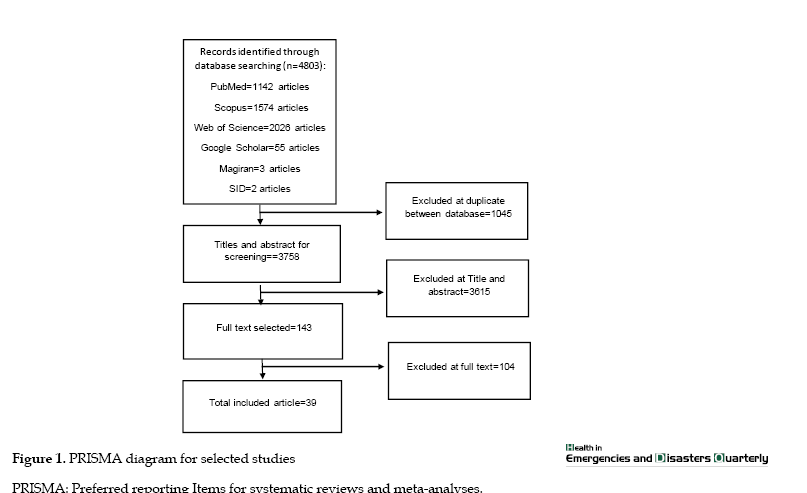
In general, the focus of an extensive review is to identify primary studies (published and gray) and review studies suitable for answering the main research question as comprehensively as possible. Effective research begins with identifying core keywords related to the research question or area of interest. This process involves breaking down the question into its main concepts and subsequently expanding them by incorporating synonyms or related terms. Tools such as thesauruses, reviews of relevant literature, and Medical Subject Headings (MeSH) in PubMed were used to identify suitable synonyms and alternative terms, thereby broadening the search scope. When selecting databases, it was important to choose those most relevant to the specific field or topic. In the present study, appropriate primary keywords and their combinations, such as risk management, hospital incident, hospital risk reporting, incident reporting, CBRNE, chemical, biological, nuclear, radiological, explosive, accidents, hospital, in various databases, such as Web of Science (WoS), PubMed, Scopus, Cochrane, and Springer, ProQuest journals, Iranian databases: Scientific Information Database (SID), Magiran, and Google Scholar, were used to conduct a search and select all published articles and reports in this field. The search was conducted in April 2024 with no restriction on publication date. In addition, a manual search of journals and sources of selected articles was conducted, and organizational reports, published government documents, websites, and other available information and gray literature were also reviewed. Conducting searches within these databases generally involved using Boolean operators (AND, OR, and NOT), which facilitated the refinement and expansion of search results. Mastery of these strategies improved the efficiency and comprehensiveness of literature searches, enabling retrieval of relevant, high-quality sources for the research inquiry. Based on the search, approximately 4,803 related articles were obtained (Figure 1).
Selection/screening of studies
All stages of article selection and screening were carried out separately by two members of the research team. Disagreements were resolved through discussion and, if necessary, referred to a third party with more information and experience. First, the titles of all studies were reviewed, and articles that were incompatible with the study objectives were excluded. In the next step, the abstracts and full texts of the articles were reviewed to identify and exclude studies that did not meet the exclusion criteria and were weakly related to the study objectives. The preferred reporting items for systematic reviews and meta-analyses (PRISMA) evaluation tool was also used to select papers. This study was conducted without time limits and according to the specified inclusion and exclusion criteria. The inclusion criteria included studies addressing CBRNE risk management programs in hospitals and healthcare settings. The exclusion criteria included studies unrelated to hospitals or healthcare settings; studies addressing non-CBRNE incidents; and articles published in languages other than English or Persian.
Data scoping/categorization
This stage involves arranging key items obtained from the reviewed reports, combining and interpreting data through screening, sorting, and classifying information according to the key research questions. The results of the final selected studies were managed using a data extraction form designed by the research team, including the authors’ names, year of publication, risk type, dimensions, and characteristics of risk management. The information was extracted by two people independently from the selected articles, and ambiguities were resolved in consultation with other members of the research team.
Conclusion, summary, and reporting of results
The results were analyzed using thematic analysis. An initial review was conducted to familiarize oneself with the extracted studies, and a thematic framework was designed based on specific codes for the studies. Another researcher reviewed each study, and the findings were placed within the specific extracted codes. In the next stage, following the framework and semantic relationships and sometimes merging codes, the main themes were extracted, and the findings are organized within them. Finally, after ensuring the validity of the main themes, they are classified according to the main research question and presented in a table of findings.
Providing practical guidelines and recommendations
After completing the previous stages, based on the extracted results and the opinions of the research team members, guidelines and recommendations were presented as an article discussion and knowledge translation.
Results
The search results included 4803 articles. After removing duplicates, 3758 articles; after extracting the title and abstract, 143 articles; and finally, after full-text screening, 39 articles were included in this study (Figure 1).
Based on the framework presented, the main themes of the findings, which include the areas of employees, systems, materials, and equipment, were divided into four main areas of risk management, prevention, preparedness, response, and rehabilitation.
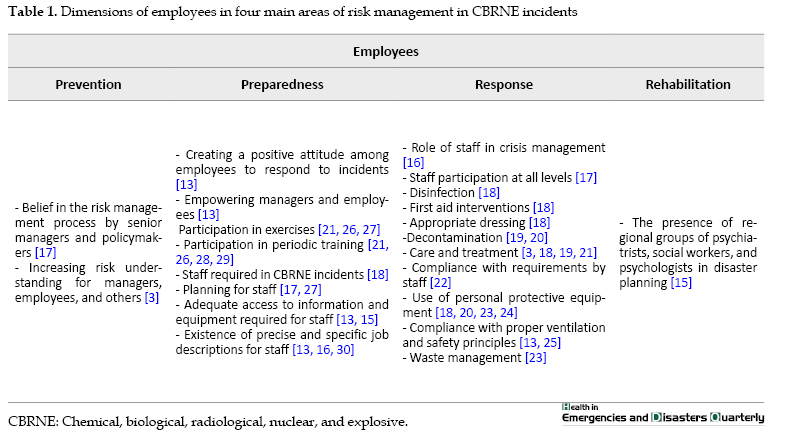
The findings of this research highlight key dimensions of employees’ roles across four main areas of risk management: Prevention, preparedness, response, and rehabilitation. In the prevention phase, fostering belief in this process by senior managers and policymakers, coupled with increasing risk awareness among managers, employees, and others, is crucial. Preparedness involves creating positive attitudes towards incident response, empowering staff, participating in drills and training, and ensuring staff are adequately planned, equipped, and informed about CBRNE incidents. Clear job descriptions and access to necessary resources are essential components that support staff readiness. During the response phase, staff play vital roles in crisis management, such as disinfection, first aid, decontamination, and care and treatment, all while adhering to safety and protective protocols. The proper use of personal protective equipment and compliance with ventilation and safety standards are emphasized to ensure effective interventions. Finally, in the rehabilitation stage, the presence of specialized regional teams comprising psychiatrists, social workers, and psychologists is recognized as important for comprehensive disaster recovery planning. These findings underscore the multifaceted nature of risk management, emphasizing the importance of staff engagement, training, resource access, and specialized mental health support throughout the disaster management cycle (Table 1).
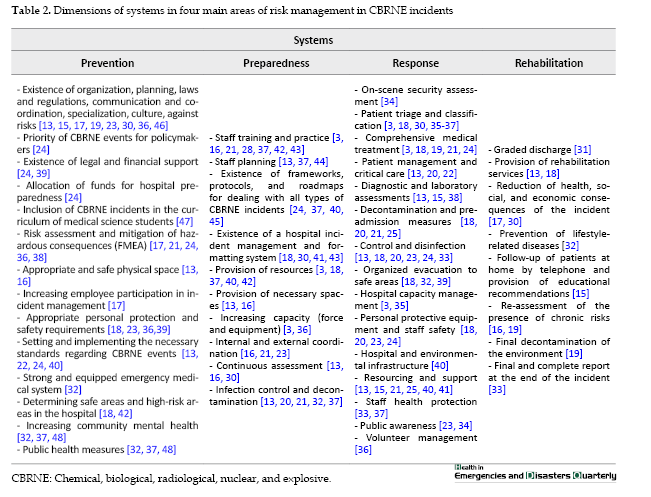
The prioritization of CBRNE events by policymakers is crucial for fostering organization, planning, the establishment of laws and regulations, effective communication and coordination, and specialization, thereby creating a culture of risk management. Legal and financial support, along with budget allocation and the creation of legal protection for personnel, are essential for enhancing staff participation in incident management. Incorporating topics on bioterrorism into the curricula for medical science students can raise awareness and prepare future generations. Risk assessment, reduction, and management of hazardous consequences are vital in identifying and minimizing weaknesses within crisis management processes. Setting and implementing necessary standards for CBRNE events, creating safe physical environments, and ensuring adherence to personal protection and safety protocols are also key considerations. Improving community mental health and public health measures can prevent various incidents. Training across various fields and equipping staff as a central component of incident management are crucial for preparing medical teams. Proper staff planning ensures effective division of tasks and enhances overall performance. A robust hospital incident management and command system is necessary for better coordination and control during incidents. Implementing frameworks, protocols, and roadmaps is vital for addressing all types of CBRNE incidents. Continuous evaluation and updating of strategies are essential for enhancing efficiency and responsiveness. Hospitals should plan to provide the necessary resources and spaces and to increase staff and equipment capacity for crises. Coordination with internal and external organizations is vital for effective collaboration in crises. Infection control and decontamination are essential for managing and mitigating the risks associated with these incidents. In crisis management, conducting a security assessment at the incident scene is the first crucial step to ensure the safety of staff and patients. Following this, triage and classification of patients are critical to prioritize medical treatment and services. Comprehensive medical treatment, intensive care, and diagnostic and laboratory assessments expedite service provision. Decontamination and pre-admission measures are vital for preventing the spread of infection, and careful environmental disinfection must be performed. Organized evacuation of patients to safe areas and effective management of hospital capacity are key elements of successful crisis response. The use of personal protective equipment (PPE) and the creation of a safe environment for both staff and patients are mandatory. Providing appropriate resources and protecting staff health enhances efficiency during crises. Public awareness and community education are essential for prevention and stress reduction, and effective volunteer management can establish a support network to distribute tasks. In disaster management, graded discharge allows for the safe release of patients based on their clinical status and specific needs. Offering rehabilitation services boosts patients’ quality of life and aids recovery. Reducing health, social, and economic impacts following an incident is a primary goal of disaster management, achievable through community-based rehabilitation programs. Preventing lifestyle-related diseases among victims and adopting preventive approaches improves public health and minimizes future pressure on the healthcare system. Follow-up care through telephone check-ins and educational recommendations is crucial for ongoing patient support. Additionally, reassessing chronic risks helps identify and manage health problems effectively. Final decontamination of the environment is necessary to safeguard public health and prevent community exposure. Finally, compiling a comprehensive report at the end of the incident allows for the summarization of experiences and lessons learned, which is vital for improving future processes and planning (Table 2).
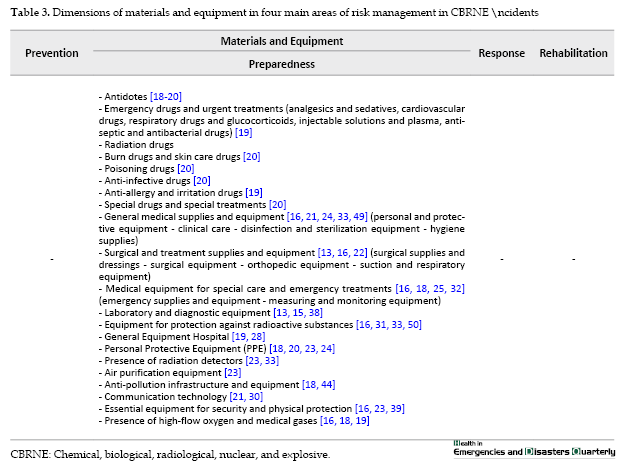
In planning for CBRNE incident response, an appropriate set of critical supplies and equipment is assembled to ensure a swift and effective response to emergencies. This includes antidotes, emergency medications, and rapid treatment supplies that are vital for managing poisoning, allergic reactions, burns, and radiation-related illnesses. Additionally, drugs for infections, specialized medications for specific conditions, general medical and surgical, and advanced monitoring and diagnostic equipment are prepared to support hospitals and medical teams. These items must be easily accessible and ready for immediate deployment to provide timely assistance to victims and patients. In contrast, protective equipment, laboratory tools, and modern technologies play a crucial role in preventing the spread of diseases and safeguarding healthcare personnel. PPE, radiation detectors, air purification systems, and infection control infrastructure are vital for environmental management and reducing biological and radiological risks. Communication devices, high-flow medical gases, and security and physical protection measures are also necessary for better crisis management and ensuring the safety of staff and injured individuals. By continuously preparing these materials and equipment, disaster management systems can respond quickly, efficiently, and cohesively to incidents and emergencies. This, in turn, helps prevent more severe consequences and reduces both human and financial losses (Table 3).
Discussion
In today’s world, crisis management is increasingly recognized as a vital component of maintaining public safety and health. In light of the unexpected events that society encounters, including chemical, biological, radiological, nuclear, and explosive incidents, the significance of effective crisis management in such situations is becoming ever more apparent.
In this discussion, we explore the various dimensions of crisis management in CBRNE incidents, focusing on personnel, systems, materials, and equipment.
Employees
A positive attitude towards risk management among employees is essential for effective incident response. Experience indicates that organizations where employees feel involved and have a sense of belonging tend to manage risks and challenges more effectively [51]. According to a study conducted in Iran, one of the most important strategies for addressing potential obstacles to hospital preparedness for CBRN incidents is a positive attitude among staff [13]. Similarly, research highlights the importance of senior managers and policymakers supporting the risk management process. When leaders recognize the significance of this process in strategic planning and integrate it as a core element, it fosters an environment conducive to establishing a risk-oriented culture within the organization [52]. The results of a study showed that, due to insufficient knowledge in the field of crisis management among senior managers, this issue was not prioritized. Therefore, the hospitals studied lacked crisis management [17].
Another crucial requirement for successful incident management is employee participation in regular training and exercises. This training not only enhances employees’ skills and readiness to respond to incidents but also boosts their self-confidence and capabilities [53]. According to studies, training and exercise influence hospital performance. Training and exercise were appropriate educational content in accordance with up-to-date changes in the field, with intermittent exercises. The training process should be structured to provide accurate information about various risks and effective methods for managing them. Additionally, proper planning for assigning responsibilities, along with providing employees with the necessary equipment and information, is vital in this regard [21].
Having a clear job description for each employee is particularly important. It not only defines their duties and responsibilities but also facilitates task performance and enhances overall productivity [54]. Employees are recognized as a key factor in various stages of crisis management. Activities such as decontamination, disinfection, care and treatment of the injured, and effective waste management heavily rely on the level of employee participation during crises [55].
The use of PPE and adherence to safety and ventilation protocols in the workplace are essential for maintaining employee health during relief efforts [56]. This underscores the necessity of providing employees with adequate support and the appropriate equipment to effectively fulfill their responsibilities. Studies have also shown that another crucial factor in preparedness for these incidents is adequate, accessible, and up-to-date storage of PPE [24].
The presence and collaboration of specialized groups, such as psychiatrists, social workers, and psychologists, play a crucial role in disaster planning. Research indicates that these professionals not only address individuals’ immediate psychological needs but also contribute to the development of comprehensive crisis management strategies [57]. Meeting the psychological and social needs of individuals following disasters helps mitigate negative psychological and social impacts, facilitating community rehabilitation. This group helps survivors process immediate distress, foster resilience, and rebuild hope by facilitating coping strategies for both affected individuals and response workers. They also conduct psychological assessments and guide mental health preparedness and risk communication [58].
System
Effective organization and planning for CBRNE incidents require careful attention to laws and regulations. Legal and financial support is critical for strengthening the infrastructure of crisis management, which depends on a transparent and enforceable system [59]. These incidents pose complex, multidimensional threats that require a comprehensive and resilient response infrastructure. The synergistic interplay between strong legal frameworks and sustainable financial mechanisms underpins effective crisis management, ensuring preparedness, timely response, transparency, and accountability. Governments and agencies must prioritize strengthening these pillars to safeguard communities and maintain national security against the evolving challenges posed by emergencies [9].
Designing educational programs on CBRNE incidents, particularly for medical students, is a key strategy for enhancing public awareness and preparing future generations. In this context, the Ministry of Health can adopt a preventive approach by organizing appropriate training courses for specialists and graduates. Only a small proportion of medical schools currently offer dedicated CBRNE education, despite recognition of the need for early, comprehensive training in this field. A 2024 study of US allopathic medical schools revealed that just under 10% provided formal instruction regarding these incidents in their curricula, pointing to a significant educational gap and the necessity for national-level strategies to address it [60].
To mitigate the dangerous consequences of incidents, conducting environmental assessments and identifying vulnerabilities are crucial. Risk and safety assessment processes not only help pinpoint and clarify these vulnerabilities but also enhance organizational preparedness to face incidents [61]. A systematic review on hospital-based preparedness for CBRNE disasters highlights the critical role of hazard vulnerability and risk assessment in identifying gaps and prioritizing preparedness measures such as decontamination, PPE, and detection capabilities. The review also discusses standardizing hospital equipment and training to improve readiness [5]. Additionally, effective intra- and inter-organizational communication plays a vital role in improving incident response [62]. A study in the US federal response framework highlights the importance of embedding scientific and technical experts in incident management systems to optimize decision-making and coordination during CBRNE incidents. Effective communication among senior responders, supported by prior training, is key to the success of tactical and strategic responses [9].
Continuous staff training is essential for successful incident management. Training programs should encompass safety protocols, the effective use of PPE, and crisis management strategies. Regular exercises and realistic simulations involving collaboration with other organizations can significantly enhance the readiness and response speed of medical teams [63]. A systematic review on hospital-based preparedness measures for CBRNE disasters highlights the critical role of regular training exercises in improving staff readiness. It emphasizes the need for incident-specific and continuing education focused on response protocols, triage, and decontamination procedures for healthcare personnel [5]. Additionally, providing adequate resources and creating a safe environment for both staff and patients are critical during crises. Infection control and effective strategies to minimize contamination are fundamental pillars of crisis management. Integrated approaches, including the establishment of disinfection procedures and medical waste management, are vital for reducing the risks associated with CBRNE incidents [64]. A detailed review of event management in Malaysian healthcare stresses the importance of rigorous infection control measures and efficient waste management protocols to safeguard healthcare providers, patients, and the community against biological and other hazards within medical facilities [65].
In CBRNE crisis management, following the initial assessment, triage, and classification of patients to prioritize treatment can be highly effective [66]. The results of an article point to the importance of detailed triage zones, protocols, such as simple triage and rapid treatment (START), and patient classification methods crucial during chemical, biological, radiological, and nuclear mass-casualty incidents. It emphasizes the importance of rapid initial triage, categorization by severity and contamination status, and coordination of triage officers in multiple zones to optimize patient care and resource allocation [67].
Decontamination measures and the establishment of a safe environment through careful control and disinfection are crucial for preventing the spread of infection [68]. Articles present optimized methods for dry and wet decontamination relevant to hospitals and first responders, underscoring early contamination removal to protect personnel and facilities [69, 70]. Additionally, organized evacuation of patients to safe areas and management of equipment and manpower capacity are key components of an effective crisis response [71]. According to study results, principles of casualty management include safety, triage, casualty hazard management, evacuation to forward casualty collection points, and coordination of medical resources and personnel during CBRN incidents [72].
The use of PPE and the provision of necessary resources not only ensure personnel protection but also enhance efficiency during a crisis [73]. Strong human resource governance during crises complements the use of PPE and resource provision, enabling organizations to maintain operational continuity and staff morale [74]. Furthermore, public education and volunteer management can significantly reduce stress and create a supportive network in these challenging situations [75]. Volunteer management supports this process by organizing community members to strengthen social support networks, provide practical help, and maintain communication channels. Engaged volunteers can aid in information dissemination, logistical support, and emotional assistance, thereby alleviating pressure on professional responders and fostering a sense of collective efficacy and resilience in the affected population [76].
The findings on the graded discharge of patients in disaster management indicate that this approach enhances both discharge quality and patient health. It enables patients to be safely released from the hospital based on their clinical status and specific needs [77]. Graded discharge, as part of disaster patient flow management, enhances patient outcomes by ensuring that discharge decisions are tailored to individual clinical conditions and recovery trajectories. It supports hospital capacity management by prioritizing ongoing care resources for more severely ill patients [78]. Additionally, the provision of rehabilitation services is recognized as a crucial tool for mitigating the health, social, and economic consequences of disasters. These services assist patients in rebuilding their quality of life after critical events and help prevent new issues from arising [79]. Disaster survivors receiving rehabilitation services have shorter hospital stays and better recovery compared to those without such services or supervision by rehabilitation specialists [80].
Moreover, preventing lifestyle-related diseases and conducting follow-ups with patients via telephone, alongside providing educational advice, can raise awareness and improve health behaviors [81]. Preventing lifestyle-related diseases through education and telephone follow-up is a validated strategy to raise health awareness and improve behaviors, safeguarding patient health during and after crisis events. These insights align with WHO and disaster health management frameworks emphasizing prevention, education, and continuity of care for non-communicable diseases in emergencies [82]. It is also essential to re-evaluate chronic risks and perform final environmental decontamination to maintain public health. Finally, providing a comprehensive report at the end of an incident can summarize experiences and inform improvements in future crisis management planning [83]. Chronic risk re-evaluation ensures that ongoing, latent hazards are identified, assessed, and mitigated as part of a continuous risk management cycle [84]. Furthermore, providing a comprehensive incident report at the conclusion of a crisis is a fundamental part of disaster risk management and continuous improvement. Comprehensive reporting summarizes the incident experience, including risk assessments, response actions, resource use, and outcomes [85].
Materials and equipment
The provision of antidotes for chemical toxins and emergency medications is crucial for the timely management of health crises. Doctors must have quick access to these drugs to minimize treatment time and improve patient outcomes [86]. In cases involving the release of radioactive materials, the availability of specific medications and related antidotes becomes even more vital, as these can effectively reduce complications associated with radiation exposure [87]. Studies have shown that stockpiling and rapid distribution systems for antidotes and emergency drugs are essential to provide frontline medical staff with fast access during mass-casualty incidents [88].
Accidents involving chemical or thermal agents often result in severe burns and serious infections [89]. Therefore, the availability of burn medications and antiseptics for infection control is essential. Additionally, having drugs to treat poisoning and anti-allergy medications can be beneficial in managing allergic reactions during CBRNE incidents [90].
The provision of general medical supplies and equipment, including PPE, clinical tools, and disinfection and sterilization devices, is crucial for planning CBRNE incidents. All equipment must comply with health and safety standards [87]. Additionally, surgical supplies, dressings, and emergency life-saving equipment must be fully stocked, as they can be vital for saving patients’ lives during crises. Adequate access to oxygen and medical gases is also vital for intensive care and effective management of health incidents during crises. Laboratory equipment for disease diagnosis and protection against radioactive materials is also an essential requirement [91]. Establishing a robust communication infrastructure and providing reliable communication technologies are critical for coordination between organizations and facilitating rapid incident response [92]. Furthermore, ensuring the security and physical protection of hospitals and health centers during incidents is essential [5].
Conclusion
Implementing crisis management methods across all organizations and institutions is vital to maximizing the ability to respond to critical incidents. When organizations align personnel preparedness with robust systemic frameworks and well-provisioned materials and equipment, crisis response becomes more efficient, transparent, and adaptable to evolving threats. Considering the key role of employees and access to resources, training, and deployment of specialized teams to crisis management will lead to enhanced employee safety, improved response to CBRNE events, and improved community recovery. A continuous approach to evaluating and updating strategies, as well as improved interdepartmental communication and collaboration, should be a key to success in risk management at the organizational and community levels. With this strategy, hospitals and healthcare institutions can better perform during crises and significantly contribute to improving and maintaining community health. By considering these elements as key strategies for responding to CBRNE incidents, we can establish a successful model for managing future crises.
Limitations
Although multiple databases were searched, some relevant databases or gray literature (e.g. government reports, organizational guidelines, and unpublished theses) may have been missed, affecting comprehensiveness.
Due to the use of articles in English and Persian, the study may be more focused on examples and experiences from countries or communities that use these languages and less concerned with global models or experiences.
CBRNE preparedness is a rapidly evolving field. Considering that this study spans a wide time range, older studies may not reflect current practices, technologies, or incident command structures, affecting applicability to present-day hospital preparedness.
Regional differences in culture, economy, infrastructure, and policies can affect every stage of risk management; therefore, a single strategy cannot be provided in this area. Effective strategies include implementing local approaches, using flexible budgets, providing training tailored to local conditions, and evaluating with local indicators.
Ethical Considerations
Compliance with ethical guidelines
This study was approved by the Research Ethics Committee of Baqiyatallah University of Medical Sciences, Tehran, Iran (Code: IR.BMSU.BAQ.REC.1403.202).
Funding
This study was supported by Baqiyatallah University of Medical Sciences, Tehran, Iran.
Authors' contributions
All authors contributed equally to the conception and design of the study, data collection and analysis, interception of the results, and manuscript drafting. Each author approved the submission of the final version of the manuscript.
Conflict of interest
The authors declared no conflict of interests.
Acknowledgments
The authors thank Baqiyatallah University of Medical Sciences, Tehran, Iran, for supporting this study.
References
The World Health Organization (WHO) has consistently urged governments to take serious measures to enhance the preparedness of hospitals and health centers for accidents and disasters. Human health is emphasized in various international documents, including the Sendai Declaration of 2015, which references health approximately 30 times. It highlights the necessity for resilience in the health sector, training for health workers, and the integration of risk management policies across all levels of prevention [1]. A lack of planning and organization to address accidents, inadequate hospital preparedness, and insufficient staff training to manage crises can lead to irreparable damage to the country’s health system [2].
Chemical, biological, radiological, and nuclear (CBRNE) incidents are among the most significant threats to health systems and undermine the foundations of security [3]. The use of these agents in terrorism and military operations over the past few decades has intensified the need for healthcare and medical personnel to be equipped with the knowledge and skills necessary to manage casualties of modern warfare. Enhancing the capabilities and preparedness of specialized teams requires developing treatment guidelines, providing practical training, and establishing specialized facilities and support systems [4].
It is essential for all healthcare centers to be prepared to respond to CBRNE incidents. However, most medical facilities in many countries are not adequately equipped to handle large numbers of these incident casualties. For many staff members, this represents an unknown and often intimidating scenario. Most emergency departments lack the capacity to decontaminate hazardous agents and do not have designated decontamination environments. Moreover, existing facilities may be basic and could quickly become overwhelmed if faced with a significant number of casualties [4, 5].
Risk management is the process of adopting policies and procedures to accept, identify, assess, control, minimize, or reduce identified risks, as well as to select and implement appropriate options [6]. It serves as a tool to enhance the quality of healthcare services and mitigate risks in hospitals and healthcare centers, making it increasingly important [7]. In the context of CBRNE incidents, it encompasses several dimensions: Human resources, organizational structure, physical space, internal and external hospital coordination, procedures and processes, and equipment [8]. The CBRNE incident risk management security cycle provides a framework illustrating the connections among the various stages, including specific measures for prevention, preparedness, response, and recovery [9]. By enhancing their capacities and standards, hospitals can better prepare for these incidents. To maintain preparedness for these crises, it is essential to provide and maintain diagnostic and therapeutic equipment, medications, and personal protective equipment. Additionally, effective management can be achieved through the timely formation of crisis committees, flexible decision-making, and the management of staff emotions and motivation [8]. Hospital management’s focus on risk management is crucial for delivering quality care and creating a safe environment for both staff and patients [10].
There is a significant research gap regarding risk management in CBRNE incidents. Chemical, biological, radiological, nuclear, and explosive events are notable for their unpredictability, rapid evolution, and potentially massive impacts. The uncertainty and rapid transformation of such scenarios require real-time, adaptive, and robust strategies. However, current research and practice often fall short in fully developing or operationalizing such approaches [5, 11].
A recent review conducted in Iran provides valuable insights into regional and global hospital preparedness for CBRNE incidents. In this study, nine main categories affecting preparedness were identified: Resources, training and exercise, contamination control and treatment, coordination, assessment, planning, and classification, and guidelines, casualty management, communications and information systems, structure, and hospital management [12]. Another study, offering a broader geographical perspective and emphasizing practical preparedness improvements in hospitals, underscores the need for policy and government support to adequately equip healthcare facilities for CBRNE threats [5].
The element of surprise associated with such incidents and their consequences can be attributed to a lack of awareness about the dimensions and characteristics of risk management, as well as insufficient resources, planning, and prior preparation [13]. Hospitals and public health systems may remain unprepared for complex CBRNE incidents, leading to delayed or ineffective responses. Lack of clear strategies can result in higher casualties, greater environmental damage, and prolonged societal disruption. Without a comprehensive framework, policymakers may struggle to develop effective, coordinated measures, undermining overall safety and resilience. Inefficient response plans could lead to misallocation of resources, further jeopardizing public health and safety.
This research identifies specific risk management components across four domains—prevention, preparedness, response, and rehabilitation—covering personnel, systems, materials, and equipment, and enhances organizational strategies to provide insights for more precise, context-specific hospital and public health readiness. To date, no other study offers a comprehensive breakdown of the dimensions and components of risk management specifically for CBRNE accidents. In addition to outlining these elements, the study offers practical guidance for hospitals and medical centers, helping them understand the actions needed at each stage. The need for this study is amplified by growing CBRNE risks in future warfare and potential community epidemics. Ignoring these issues could cause serious, irreparable societal damage. Conversely, timely and necessary measures can significantly reduce vulnerability. This study aims to identify and clarify the key dimensions of risk management in CBRNE incidents and to provide a structured framework to enhance hospital preparedness and public health responses. It seeks to address gaps in existing protocols, standardize strategies, and improve hospitals’ and health systems’ ability to manage emergencies effectively.
Materials and Methods
This scoping review was conducted using the Arksey and O’Malley framework, which includes six steps: Identifying the research question, identifying relevant studies, selecting and screening studies, scoping and organizing data, summarizing the findings, and reporting the results. An optional step is to consult with experts on the findings. This approach facilitates a thorough yet comprehensive exploration of the topic [14]. Identifying the research question: As with systematic reviews, the starting point in this method is to identify the research question, based on which search strategies are built. It should also be determined which aspect or aspects of the research question are most important. The study questions include the following: What are the characteristics of risk management programs in the field of (CBRNE) in hospitals in other countries? What dimensions do they cover? What are the basic and important characteristics of their constituent elements?
Identification of relevant studies
In general, the focus of an extensive review is to identify primary studies (published and gray) and review studies suitable for answering the main research question as comprehensively as possible. Effective research begins with identifying core keywords related to the research question or area of interest. This process involves breaking down the question into its main concepts and subsequently expanding them by incorporating synonyms or related terms. Tools such as thesauruses, reviews of relevant literature, and Medical Subject Headings (MeSH) in PubMed were used to identify suitable synonyms and alternative terms, thereby broadening the search scope. When selecting databases, it was important to choose those most relevant to the specific field or topic. In the present study, appropriate primary keywords and their combinations, such as risk management, hospital incident, hospital risk reporting, incident reporting, CBRNE, chemical, biological, nuclear, radiological, explosive, accidents, hospital, in various databases, such as Web of Science (WoS), PubMed, Scopus, Cochrane, and Springer, ProQuest journals, Iranian databases: Scientific Information Database (SID), Magiran, and Google Scholar, were used to conduct a search and select all published articles and reports in this field. The search was conducted in April 2024 with no restriction on publication date. In addition, a manual search of journals and sources of selected articles was conducted, and organizational reports, published government documents, websites, and other available information and gray literature were also reviewed. Conducting searches within these databases generally involved using Boolean operators (AND, OR, and NOT), which facilitated the refinement and expansion of search results. Mastery of these strategies improved the efficiency and comprehensiveness of literature searches, enabling retrieval of relevant, high-quality sources for the research inquiry. Based on the search, approximately 4,803 related articles were obtained (Figure 1).
Selection/screening of studies
All stages of article selection and screening were carried out separately by two members of the research team. Disagreements were resolved through discussion and, if necessary, referred to a third party with more information and experience. First, the titles of all studies were reviewed, and articles that were incompatible with the study objectives were excluded. In the next step, the abstracts and full texts of the articles were reviewed to identify and exclude studies that did not meet the exclusion criteria and were weakly related to the study objectives. The preferred reporting items for systematic reviews and meta-analyses (PRISMA) evaluation tool was also used to select papers. This study was conducted without time limits and according to the specified inclusion and exclusion criteria. The inclusion criteria included studies addressing CBRNE risk management programs in hospitals and healthcare settings. The exclusion criteria included studies unrelated to hospitals or healthcare settings; studies addressing non-CBRNE incidents; and articles published in languages other than English or Persian.
Data scoping/categorization
This stage involves arranging key items obtained from the reviewed reports, combining and interpreting data through screening, sorting, and classifying information according to the key research questions. The results of the final selected studies were managed using a data extraction form designed by the research team, including the authors’ names, year of publication, risk type, dimensions, and characteristics of risk management. The information was extracted by two people independently from the selected articles, and ambiguities were resolved in consultation with other members of the research team.
Conclusion, summary, and reporting of results
The results were analyzed using thematic analysis. An initial review was conducted to familiarize oneself with the extracted studies, and a thematic framework was designed based on specific codes for the studies. Another researcher reviewed each study, and the findings were placed within the specific extracted codes. In the next stage, following the framework and semantic relationships and sometimes merging codes, the main themes were extracted, and the findings are organized within them. Finally, after ensuring the validity of the main themes, they are classified according to the main research question and presented in a table of findings.
Providing practical guidelines and recommendations
After completing the previous stages, based on the extracted results and the opinions of the research team members, guidelines and recommendations were presented as an article discussion and knowledge translation.
Results
The search results included 4803 articles. After removing duplicates, 3758 articles; after extracting the title and abstract, 143 articles; and finally, after full-text screening, 39 articles were included in this study (Figure 1).
Based on the framework presented, the main themes of the findings, which include the areas of employees, systems, materials, and equipment, were divided into four main areas of risk management, prevention, preparedness, response, and rehabilitation.
The findings of this research highlight key dimensions of employees’ roles across four main areas of risk management: Prevention, preparedness, response, and rehabilitation. In the prevention phase, fostering belief in this process by senior managers and policymakers, coupled with increasing risk awareness among managers, employees, and others, is crucial. Preparedness involves creating positive attitudes towards incident response, empowering staff, participating in drills and training, and ensuring staff are adequately planned, equipped, and informed about CBRNE incidents. Clear job descriptions and access to necessary resources are essential components that support staff readiness. During the response phase, staff play vital roles in crisis management, such as disinfection, first aid, decontamination, and care and treatment, all while adhering to safety and protective protocols. The proper use of personal protective equipment and compliance with ventilation and safety standards are emphasized to ensure effective interventions. Finally, in the rehabilitation stage, the presence of specialized regional teams comprising psychiatrists, social workers, and psychologists is recognized as important for comprehensive disaster recovery planning. These findings underscore the multifaceted nature of risk management, emphasizing the importance of staff engagement, training, resource access, and specialized mental health support throughout the disaster management cycle (Table 1).
The prioritization of CBRNE events by policymakers is crucial for fostering organization, planning, the establishment of laws and regulations, effective communication and coordination, and specialization, thereby creating a culture of risk management. Legal and financial support, along with budget allocation and the creation of legal protection for personnel, are essential for enhancing staff participation in incident management. Incorporating topics on bioterrorism into the curricula for medical science students can raise awareness and prepare future generations. Risk assessment, reduction, and management of hazardous consequences are vital in identifying and minimizing weaknesses within crisis management processes. Setting and implementing necessary standards for CBRNE events, creating safe physical environments, and ensuring adherence to personal protection and safety protocols are also key considerations. Improving community mental health and public health measures can prevent various incidents. Training across various fields and equipping staff as a central component of incident management are crucial for preparing medical teams. Proper staff planning ensures effective division of tasks and enhances overall performance. A robust hospital incident management and command system is necessary for better coordination and control during incidents. Implementing frameworks, protocols, and roadmaps is vital for addressing all types of CBRNE incidents. Continuous evaluation and updating of strategies are essential for enhancing efficiency and responsiveness. Hospitals should plan to provide the necessary resources and spaces and to increase staff and equipment capacity for crises. Coordination with internal and external organizations is vital for effective collaboration in crises. Infection control and decontamination are essential for managing and mitigating the risks associated with these incidents. In crisis management, conducting a security assessment at the incident scene is the first crucial step to ensure the safety of staff and patients. Following this, triage and classification of patients are critical to prioritize medical treatment and services. Comprehensive medical treatment, intensive care, and diagnostic and laboratory assessments expedite service provision. Decontamination and pre-admission measures are vital for preventing the spread of infection, and careful environmental disinfection must be performed. Organized evacuation of patients to safe areas and effective management of hospital capacity are key elements of successful crisis response. The use of personal protective equipment (PPE) and the creation of a safe environment for both staff and patients are mandatory. Providing appropriate resources and protecting staff health enhances efficiency during crises. Public awareness and community education are essential for prevention and stress reduction, and effective volunteer management can establish a support network to distribute tasks. In disaster management, graded discharge allows for the safe release of patients based on their clinical status and specific needs. Offering rehabilitation services boosts patients’ quality of life and aids recovery. Reducing health, social, and economic impacts following an incident is a primary goal of disaster management, achievable through community-based rehabilitation programs. Preventing lifestyle-related diseases among victims and adopting preventive approaches improves public health and minimizes future pressure on the healthcare system. Follow-up care through telephone check-ins and educational recommendations is crucial for ongoing patient support. Additionally, reassessing chronic risks helps identify and manage health problems effectively. Final decontamination of the environment is necessary to safeguard public health and prevent community exposure. Finally, compiling a comprehensive report at the end of the incident allows for the summarization of experiences and lessons learned, which is vital for improving future processes and planning (Table 2).
In planning for CBRNE incident response, an appropriate set of critical supplies and equipment is assembled to ensure a swift and effective response to emergencies. This includes antidotes, emergency medications, and rapid treatment supplies that are vital for managing poisoning, allergic reactions, burns, and radiation-related illnesses. Additionally, drugs for infections, specialized medications for specific conditions, general medical and surgical, and advanced monitoring and diagnostic equipment are prepared to support hospitals and medical teams. These items must be easily accessible and ready for immediate deployment to provide timely assistance to victims and patients. In contrast, protective equipment, laboratory tools, and modern technologies play a crucial role in preventing the spread of diseases and safeguarding healthcare personnel. PPE, radiation detectors, air purification systems, and infection control infrastructure are vital for environmental management and reducing biological and radiological risks. Communication devices, high-flow medical gases, and security and physical protection measures are also necessary for better crisis management and ensuring the safety of staff and injured individuals. By continuously preparing these materials and equipment, disaster management systems can respond quickly, efficiently, and cohesively to incidents and emergencies. This, in turn, helps prevent more severe consequences and reduces both human and financial losses (Table 3).
Discussion
In today’s world, crisis management is increasingly recognized as a vital component of maintaining public safety and health. In light of the unexpected events that society encounters, including chemical, biological, radiological, nuclear, and explosive incidents, the significance of effective crisis management in such situations is becoming ever more apparent.
In this discussion, we explore the various dimensions of crisis management in CBRNE incidents, focusing on personnel, systems, materials, and equipment.
Employees
A positive attitude towards risk management among employees is essential for effective incident response. Experience indicates that organizations where employees feel involved and have a sense of belonging tend to manage risks and challenges more effectively [51]. According to a study conducted in Iran, one of the most important strategies for addressing potential obstacles to hospital preparedness for CBRN incidents is a positive attitude among staff [13]. Similarly, research highlights the importance of senior managers and policymakers supporting the risk management process. When leaders recognize the significance of this process in strategic planning and integrate it as a core element, it fosters an environment conducive to establishing a risk-oriented culture within the organization [52]. The results of a study showed that, due to insufficient knowledge in the field of crisis management among senior managers, this issue was not prioritized. Therefore, the hospitals studied lacked crisis management [17].
Another crucial requirement for successful incident management is employee participation in regular training and exercises. This training not only enhances employees’ skills and readiness to respond to incidents but also boosts their self-confidence and capabilities [53]. According to studies, training and exercise influence hospital performance. Training and exercise were appropriate educational content in accordance with up-to-date changes in the field, with intermittent exercises. The training process should be structured to provide accurate information about various risks and effective methods for managing them. Additionally, proper planning for assigning responsibilities, along with providing employees with the necessary equipment and information, is vital in this regard [21].
Having a clear job description for each employee is particularly important. It not only defines their duties and responsibilities but also facilitates task performance and enhances overall productivity [54]. Employees are recognized as a key factor in various stages of crisis management. Activities such as decontamination, disinfection, care and treatment of the injured, and effective waste management heavily rely on the level of employee participation during crises [55].
The use of PPE and adherence to safety and ventilation protocols in the workplace are essential for maintaining employee health during relief efforts [56]. This underscores the necessity of providing employees with adequate support and the appropriate equipment to effectively fulfill their responsibilities. Studies have also shown that another crucial factor in preparedness for these incidents is adequate, accessible, and up-to-date storage of PPE [24].
The presence and collaboration of specialized groups, such as psychiatrists, social workers, and psychologists, play a crucial role in disaster planning. Research indicates that these professionals not only address individuals’ immediate psychological needs but also contribute to the development of comprehensive crisis management strategies [57]. Meeting the psychological and social needs of individuals following disasters helps mitigate negative psychological and social impacts, facilitating community rehabilitation. This group helps survivors process immediate distress, foster resilience, and rebuild hope by facilitating coping strategies for both affected individuals and response workers. They also conduct psychological assessments and guide mental health preparedness and risk communication [58].
System
Effective organization and planning for CBRNE incidents require careful attention to laws and regulations. Legal and financial support is critical for strengthening the infrastructure of crisis management, which depends on a transparent and enforceable system [59]. These incidents pose complex, multidimensional threats that require a comprehensive and resilient response infrastructure. The synergistic interplay between strong legal frameworks and sustainable financial mechanisms underpins effective crisis management, ensuring preparedness, timely response, transparency, and accountability. Governments and agencies must prioritize strengthening these pillars to safeguard communities and maintain national security against the evolving challenges posed by emergencies [9].
Designing educational programs on CBRNE incidents, particularly for medical students, is a key strategy for enhancing public awareness and preparing future generations. In this context, the Ministry of Health can adopt a preventive approach by organizing appropriate training courses for specialists and graduates. Only a small proportion of medical schools currently offer dedicated CBRNE education, despite recognition of the need for early, comprehensive training in this field. A 2024 study of US allopathic medical schools revealed that just under 10% provided formal instruction regarding these incidents in their curricula, pointing to a significant educational gap and the necessity for national-level strategies to address it [60].
To mitigate the dangerous consequences of incidents, conducting environmental assessments and identifying vulnerabilities are crucial. Risk and safety assessment processes not only help pinpoint and clarify these vulnerabilities but also enhance organizational preparedness to face incidents [61]. A systematic review on hospital-based preparedness for CBRNE disasters highlights the critical role of hazard vulnerability and risk assessment in identifying gaps and prioritizing preparedness measures such as decontamination, PPE, and detection capabilities. The review also discusses standardizing hospital equipment and training to improve readiness [5]. Additionally, effective intra- and inter-organizational communication plays a vital role in improving incident response [62]. A study in the US federal response framework highlights the importance of embedding scientific and technical experts in incident management systems to optimize decision-making and coordination during CBRNE incidents. Effective communication among senior responders, supported by prior training, is key to the success of tactical and strategic responses [9].
Continuous staff training is essential for successful incident management. Training programs should encompass safety protocols, the effective use of PPE, and crisis management strategies. Regular exercises and realistic simulations involving collaboration with other organizations can significantly enhance the readiness and response speed of medical teams [63]. A systematic review on hospital-based preparedness measures for CBRNE disasters highlights the critical role of regular training exercises in improving staff readiness. It emphasizes the need for incident-specific and continuing education focused on response protocols, triage, and decontamination procedures for healthcare personnel [5]. Additionally, providing adequate resources and creating a safe environment for both staff and patients are critical during crises. Infection control and effective strategies to minimize contamination are fundamental pillars of crisis management. Integrated approaches, including the establishment of disinfection procedures and medical waste management, are vital for reducing the risks associated with CBRNE incidents [64]. A detailed review of event management in Malaysian healthcare stresses the importance of rigorous infection control measures and efficient waste management protocols to safeguard healthcare providers, patients, and the community against biological and other hazards within medical facilities [65].
In CBRNE crisis management, following the initial assessment, triage, and classification of patients to prioritize treatment can be highly effective [66]. The results of an article point to the importance of detailed triage zones, protocols, such as simple triage and rapid treatment (START), and patient classification methods crucial during chemical, biological, radiological, and nuclear mass-casualty incidents. It emphasizes the importance of rapid initial triage, categorization by severity and contamination status, and coordination of triage officers in multiple zones to optimize patient care and resource allocation [67].
Decontamination measures and the establishment of a safe environment through careful control and disinfection are crucial for preventing the spread of infection [68]. Articles present optimized methods for dry and wet decontamination relevant to hospitals and first responders, underscoring early contamination removal to protect personnel and facilities [69, 70]. Additionally, organized evacuation of patients to safe areas and management of equipment and manpower capacity are key components of an effective crisis response [71]. According to study results, principles of casualty management include safety, triage, casualty hazard management, evacuation to forward casualty collection points, and coordination of medical resources and personnel during CBRN incidents [72].
The use of PPE and the provision of necessary resources not only ensure personnel protection but also enhance efficiency during a crisis [73]. Strong human resource governance during crises complements the use of PPE and resource provision, enabling organizations to maintain operational continuity and staff morale [74]. Furthermore, public education and volunteer management can significantly reduce stress and create a supportive network in these challenging situations [75]. Volunteer management supports this process by organizing community members to strengthen social support networks, provide practical help, and maintain communication channels. Engaged volunteers can aid in information dissemination, logistical support, and emotional assistance, thereby alleviating pressure on professional responders and fostering a sense of collective efficacy and resilience in the affected population [76].
The findings on the graded discharge of patients in disaster management indicate that this approach enhances both discharge quality and patient health. It enables patients to be safely released from the hospital based on their clinical status and specific needs [77]. Graded discharge, as part of disaster patient flow management, enhances patient outcomes by ensuring that discharge decisions are tailored to individual clinical conditions and recovery trajectories. It supports hospital capacity management by prioritizing ongoing care resources for more severely ill patients [78]. Additionally, the provision of rehabilitation services is recognized as a crucial tool for mitigating the health, social, and economic consequences of disasters. These services assist patients in rebuilding their quality of life after critical events and help prevent new issues from arising [79]. Disaster survivors receiving rehabilitation services have shorter hospital stays and better recovery compared to those without such services or supervision by rehabilitation specialists [80].
Moreover, preventing lifestyle-related diseases and conducting follow-ups with patients via telephone, alongside providing educational advice, can raise awareness and improve health behaviors [81]. Preventing lifestyle-related diseases through education and telephone follow-up is a validated strategy to raise health awareness and improve behaviors, safeguarding patient health during and after crisis events. These insights align with WHO and disaster health management frameworks emphasizing prevention, education, and continuity of care for non-communicable diseases in emergencies [82]. It is also essential to re-evaluate chronic risks and perform final environmental decontamination to maintain public health. Finally, providing a comprehensive report at the end of an incident can summarize experiences and inform improvements in future crisis management planning [83]. Chronic risk re-evaluation ensures that ongoing, latent hazards are identified, assessed, and mitigated as part of a continuous risk management cycle [84]. Furthermore, providing a comprehensive incident report at the conclusion of a crisis is a fundamental part of disaster risk management and continuous improvement. Comprehensive reporting summarizes the incident experience, including risk assessments, response actions, resource use, and outcomes [85].
Materials and equipment
The provision of antidotes for chemical toxins and emergency medications is crucial for the timely management of health crises. Doctors must have quick access to these drugs to minimize treatment time and improve patient outcomes [86]. In cases involving the release of radioactive materials, the availability of specific medications and related antidotes becomes even more vital, as these can effectively reduce complications associated with radiation exposure [87]. Studies have shown that stockpiling and rapid distribution systems for antidotes and emergency drugs are essential to provide frontline medical staff with fast access during mass-casualty incidents [88].
Accidents involving chemical or thermal agents often result in severe burns and serious infections [89]. Therefore, the availability of burn medications and antiseptics for infection control is essential. Additionally, having drugs to treat poisoning and anti-allergy medications can be beneficial in managing allergic reactions during CBRNE incidents [90].
The provision of general medical supplies and equipment, including PPE, clinical tools, and disinfection and sterilization devices, is crucial for planning CBRNE incidents. All equipment must comply with health and safety standards [87]. Additionally, surgical supplies, dressings, and emergency life-saving equipment must be fully stocked, as they can be vital for saving patients’ lives during crises. Adequate access to oxygen and medical gases is also vital for intensive care and effective management of health incidents during crises. Laboratory equipment for disease diagnosis and protection against radioactive materials is also an essential requirement [91]. Establishing a robust communication infrastructure and providing reliable communication technologies are critical for coordination between organizations and facilitating rapid incident response [92]. Furthermore, ensuring the security and physical protection of hospitals and health centers during incidents is essential [5].
Conclusion
Implementing crisis management methods across all organizations and institutions is vital to maximizing the ability to respond to critical incidents. When organizations align personnel preparedness with robust systemic frameworks and well-provisioned materials and equipment, crisis response becomes more efficient, transparent, and adaptable to evolving threats. Considering the key role of employees and access to resources, training, and deployment of specialized teams to crisis management will lead to enhanced employee safety, improved response to CBRNE events, and improved community recovery. A continuous approach to evaluating and updating strategies, as well as improved interdepartmental communication and collaboration, should be a key to success in risk management at the organizational and community levels. With this strategy, hospitals and healthcare institutions can better perform during crises and significantly contribute to improving and maintaining community health. By considering these elements as key strategies for responding to CBRNE incidents, we can establish a successful model for managing future crises.
Limitations
Although multiple databases were searched, some relevant databases or gray literature (e.g. government reports, organizational guidelines, and unpublished theses) may have been missed, affecting comprehensiveness.
Due to the use of articles in English and Persian, the study may be more focused on examples and experiences from countries or communities that use these languages and less concerned with global models or experiences.
CBRNE preparedness is a rapidly evolving field. Considering that this study spans a wide time range, older studies may not reflect current practices, technologies, or incident command structures, affecting applicability to present-day hospital preparedness.
Regional differences in culture, economy, infrastructure, and policies can affect every stage of risk management; therefore, a single strategy cannot be provided in this area. Effective strategies include implementing local approaches, using flexible budgets, providing training tailored to local conditions, and evaluating with local indicators.
Ethical Considerations
Compliance with ethical guidelines
This study was approved by the Research Ethics Committee of Baqiyatallah University of Medical Sciences, Tehran, Iran (Code: IR.BMSU.BAQ.REC.1403.202).
Funding
This study was supported by Baqiyatallah University of Medical Sciences, Tehran, Iran.
Authors' contributions
All authors contributed equally to the conception and design of the study, data collection and analysis, interception of the results, and manuscript drafting. Each author approved the submission of the final version of the manuscript.
Conflict of interest
The authors declared no conflict of interests.
Acknowledgments
The authors thank Baqiyatallah University of Medical Sciences, Tehran, Iran, for supporting this study.
References
- UNDRR. Sendai framework for disaster risk reduction 2015-2030. Geneva: United Nations Office for Disaster Risk Reduction; 2015. [Link]
- Khirekar J, Badge A, Bandre GR, Shahu S. Disaster preparedness in hospitals. Cureus. 2023; 15(12):e50073. [DOI:10.7759/cureus.50073] [PMID] [PMCID]
- Aminizadeh M, Farrokhi M, Ebadi A, Masoumi G, Kolivand P, Khankeh H. Hospital preparedness challenges in biological disasters: A qualitative study. Disaster Medicine and Public Health Preparedness. 2022; 16(3):956-60. [DOI:10.1017/dmp.2020.434] [PMID] [PMCID]
- Khoshnudi M, Ghadamgahi F, Najjarzade G, Mud FH, Aghaei N, Arab NM, et al. Comparison of the effect of bioterrorism education through two methods of lecture and booklet on the knowledge and attitude of nurses of Shams Al-Shomus Nezaja Hospital. Journal of Education and Health Promotion. 2022;11(1):192. [DOI:10.4103/jehp.jehp_404_21] [PMID] [PMCID]
- Qzih ES, Ahmad MM. Hospital-based preparedness measures for CBRNE disasters: A systematic review. Environmental Health Insights. 2024; 18:11786302241288859. [DOI:10.1177/11786302241288859] [PMID] [PMCID]
- Shi C, Zhang Y, Li C, Li P, Zhu H. Using the Delphi method to identify risk factors contributing to adverse events in residential aged care facilities. Risk Management and Healthcare Policy. 2020; 523-37. [DOI:10.2147/RMHP.S243929] [PMID] [PMCID]
- Vosoogh Moghadam A, Zaboli R, Aarabi M. Clinical governance in primary health care based on family physicians in Mazandaran province: Stakeholders perspective. Journal of Hospital. 2020; 19(4):31-44. [Link]
- Asadi M, Mohammadian M, Shahriary A, Mesri M. Multi-purpose model of general emergency of hospitals in cbrn conditions: Narrative review. Journal of Military Medicine. 2023; 25(1):1660-74. [DOI:10.30491/jmm.2023.1001197]
- Coleman CN, Bader JL, Koerner JF, Hrdina C, Cliffer KD, Hick JL, et al. Chemical, biological, radiological, nuclear, and explosive (CBRNE) science and the CBRNE science medical operations science support expert (CMOSSE). Disaster Medicine and Public Health Preparedness. 2019; 13(5-6):995-1010. [DOI:10.1017/dmp.2018.163] [PMID] [PMCID]
- Santurro A, Frati P, Fineschi V. Risk management, patient safety and quality in health care. Current Pharmaceutical Biotechnology. 2021; 22(15):1962-3. [DOI:10.2174/138920102215210928154236] [PMID]
- Mackie B, Weber S, Mitchell M, Hammad K, Wong DF, Crilly J, et al Strategies to strengthen hospital response for chemical, biological, radiological, and nuclear incident: A multisite study. Disaster Medicine and Public Health Preparedness. 2024; 18:e292. [DOI:10.1017/dmp.2024.151] [PMID]
- Ghaffari F, Pishgooie SA, Zareiyan A, Sharififar S, Azarmi S. Factors affecting the preparedness of hospital emergency department staff in responding to hazardous materials and chemical, biological, radiological, and nuclear incidents. Iranian Journal of War and Public Health. 2025; 17(1):63-74. [DOI:10.58209/ijwph.17.1.63]
- Baikmohammadi S, Amirheidari B, Dehesh T, Moghadam MN, Yazdi-Feyzabadi V, Hassani E, et al. A qualitative study on barriers and strategies to hospital preparedness against chemical, biological, radiological, and nuclear incidents. Journal of Education and Health Promotion. 2024; 13(1):3. [DOI:10.4103/jehp.jehp_1827_22] [PMID] [PMCID]
- Levac D, Colquhoun H, O’brien KK. Scoping studies: Advancing the methodology. Implementation Science. 2010; 5:1-9. [DOI:10.1186/1748-5908-5-69] [PMID] [PMCID]
- Hendrickson RG. Terrorist chemical releases: Assessment of medical risk and implications for emergency preparedness. Human and Ecological Risk Assessment. 2005; 11(3):487-99. [DOI:10.1080/10807030590949609]
- Davari F, Zahed A. A management plan for hospitals and medical centers facing radiation incidents. Journal of Research in Medical Sciences. 2015; 20(9):871-8. [DOI:10.4103/1735-1995.170615] [PMID] [PMCID]
- Faghisolouk FA, Jazani RK, Sohrabizadeh SA. Hospital disaster risk management: The case of Urmia hospitals. Hospital. 2018; 11:447-50. [DOI:10.22159/ajpcr.2018.v11i3.23625]
- Calder A, Bland S. Chemical, biological, radiological and nuclear considerations in a major incident. Surgery. 2015; 33(9):442-8. [DOI:10.1016/j.mpsur.2015.07.006] [PMID] [PMCID]
- Schwenk M, Kluge S, Jaroni H. Toxicological aspects of preparedness and aftercare for chemical-incidents. Toxicology. 2005; 214(3):232-48. [DOI:10.1016/j.tox.2005.06.016] [PMID]
- Mishra R, Geiling J. Chemical agents in disaster: Care and management in the intensive care unit. Critical Care Clinics. 2019; 35(4):633-45. [DOI:10.1016/j.ccc.2019.05.002] [PMID]
- Sharififar S, Jahangiri K, Zareiyan A, Khoshvaghti A. Factors affecting hospital response in biological disasters: A qualitative study. Medical Journal of the Islamic Republic of Iran. 2020; 34:21. [DOI:10.47176/mjiri.34.21] [PMID] [PMCID]
- Keim M, Kaufmann AF. Principles for emergency response to bioterrorism. Annals of Emergency Medicine. 1999; 34(2):177-82. [DOI:10.1016/S0196-0644(99)70227-1] [PMID]
- Marzaleh MA, Rezaee R, Rezaianzadeh A, Rakhshan M, Haddadi G, Peyravi M. [Emergency department preparedness of hospitals for radiation, nuclear accidents, and nuclear terrorism: A qualitative study in Iran (Persian)]. Iranian Red Crescent Medical Journal. 2019; 21(5):1. [Link]
- Teymouri F, Zareiyan A, Pishgooie AM, Bagheri H. Hospital preparedness challenges in chemical incidents: A qualitative study. Iranian Journal of War and Public Health. 2022; 14(4):377-84. [Link]
- Wetter DC, Daniell WE, Treser CD. Hospital preparedness for victims of chemical or biological terrorism. American Journal of Public Health. 2001; 91(5):710. [DOI:10.2105/AJPH.91.5.710] [PMID] [PMCID]
- Avegno J, Moises J, Tatford S, Herbert K, Zickerman E. 167: A novel civilian-military partnership in emergency medical services during a prolonged disaster: Patient characteristics, resource utilization, and future recommendations. Annals of Emergency Medicine. 2006; 48(4):52. [DOI:10.1016/j.annemergmed.2006.07.621]
- Burgess JL. Hospital evacuations due to hazardous materials incidents. The American Journal of Emergency Medicine. 1999; 17(1):50-2. [DOI:10.1016/S0735-6757(99)90016-5] [PMID]
- Becker SM. Addressing the psychosocial and communication challenges posed by radiological/nuclear terrorism: key developments since NCRP Report No. 138. Health Physics. 2005; 89(5):521-30. [DOI:10.1097/01.HP.0000172142.89475.d2] [PMID]
- Balicer RD, Catlett CL, Barnett DJ, Thompson CB, Hsu EB, Morton MJ, et al. Characterizing hospital workers’ willingness to respond to a radiological event. Plos One. 2011; 6(10):e25327. [DOI:10.1371/journal.pone.0025327] [PMID] [PMCID]
- Ippolito G, Puro V, Heptonstall J. Biological weapons: Hospital preparedness to bioterrorism and other infectious disease emergencies. Cellular and Molecular Life Sciences CMLS. 2006; 63:2213-22. [DOI:10.1007/s00018-006-6309-y] [PMID] [PMCID]
- Maxwell C. Hospital organizational response to the nuclear accident at Three Mile Island: Implications for future-oriented disaster planning. American Journal of Public Health. 1982; 72(3):275-9. [DOI:10.2105/AJPH.72.3.275] [PMID] [PMCID]
- Ohtsuru A, Tanigawa K, Kumagai A, Niwa O, Takamura N, Midorikawa S, et al. Nuclear disasters and health: Lessons learned, challenges, and proposals. Lancet. 2015; 386(9992):489-97. [DOI:10.1016/S0140-6736(15)60994-1] [PMID]
- Schleipman AR, Gerbaudo VH, Castronovo Jr FP. Radiation disaster response: Preparation and simulation experience at an academic medical center. Journal of Nuclear Medicine Technology. 2004; 32(1):22-7. [Link]
- Zhang JJ, Wang TB, Fan D, Zhang J, Jiang BG. Medical response to the tianjin explosions: Lessons learned. Disaster Medicine and Public Health Preparedness. 2018; 12(3):411-4. [DOI:10.1017/dmp.2017.64] [PMID]
- Bielajs I, Burkle FM Jr, Archer FL, Smith E. Development of prehospital, population-based triage-management protocols for pandemics. Prehospital and Disaster Medicine. 2008; 23(5):420-30. [DOI:10.1017/S1049023X00006154] [PMID]
- Azarmi S, Sharififar S, Pishgooie AH, Khankeh HR, Hejrypour SZ. [Explaining the improving strategies of the disaster risk management in military hospitals (Persian)]. Journal of Military Medicine. 2022; 24(1):1057-67. [DOI:10.30491/JMM.24.1.1057]
- Smith M, Marie AS. Interim guidelines for hospital response to mass casualties from a radiological incident. Atlanta: CDC Stacks; 2003. [Link]
- Merens A, Cavallo JD, Thibault F, Salicis F, Munoz JF, Courcol R, et al. Assessment of the bio-preparedness and of the training of the French hospital laboratories in the event of biological threat. Eurosurveillance. 2012; 17(45):pii=20312. [DOI:10.2807/ese.17.45.20312-en]
- Yoshida M, Sawano T, Senoo Y, Ozaki A, Nishikawa Y, Zhao T, et al. Importance of individualized disaster preparedness for hospitalized or institutionalized patients: Lessons learned from the legal revisions made to the Basic Act on Disaster Management in Japan following the Fukushima nuclear disaster. Journal of Global Health. 2021; 11:03108. [DOI:10.7189/jogh.11.03108] [PMID] [PMCID]
- Burkle FM Jr. Mass casualty management of a large-scale bioterrorist event: An epidemiological approach that shapes triage decisions. Emergency Medicine Clinics of North America. 2002; 20(2):409-36. [DOI:10.1016/S0733-8627(01)00008-6] [PMID]
- Djalali A, Della Corte F, Segond F, Metzger MH, Gabilly L, Grieger F, et al. TIER competency-based training course for the first receivers of CBRN casualties: A European perspective. European Journal of Emergency Medicine. 2017; 24(5):371-6. [DOI:10.1097/MEJ.0000000000000383] [PMID]
- Jasper E, Lewis J, Berg D, Gates E. 166: Evaluation of full scale exercise participation as a tool to improve hospital preparedness for a radiological terrorism event. Annals of Emergency Medicine. 2006; 48(4):52. [DOI:10.1016/j.annemergmed.2006.07.620]
- Mottaghian Nezhad A, Dadgary F, Farsi Z. The effect of education of hospital incident command system on prepardness of nurses in nuclear accidents in military hospitals of Mashhad. Military Caring Sciences. 2017; 4(3):147-58.[DOI:10.29252/mcs.4.3.147]
- Lim HC, Ng KS, Tan HH, Leong KW. Hospital preparedness for radiation emergencies and medical management of multiple combined radiation injury victims. Proceedings of Singapore Healthcare. 2011; 20(3):197-207. [DOI:10.1177/201010581102000309]
- Thanabalasingham T, Beckett MW, Murray V. Hospital response to a chemical incident: Report on casualties of an ethyldichlorosilane spill. BMJ. 1991; 302(6768):101-2. [DOI:10.1136/bmj.302.6768.101] [PMID] [PMCID]
- Bushberg JT, Kroger LA, Hartman MB, Leidholdt EM Jr, Miller KL, Derlet R, et al. Nuclear/radiological terrorism: emergency department management of radiation casualties. The Journal of Emergency Medicine. 2007; 32(1):71-85. [DOI:10.1016/j.jemermed.2006.05.034] [PMID]
- Kabir B, Naik DG, Kumar VP, Bhas G. Awareness and knowledge about bioterrorism among medical students at a university in Malaysia. Malaysian Applied Biology. 2016; 45(2):63-7. [Link]
- Adinew GM, Woredekal AT, DeVos EL, Birru EM, Abdulwahib MB. Poisoning cases and their management in emergency centres of government hospitals in northwest Ethiopia. African Journal of Emergency Medicine. 2017; 7(2):74-8. [DOI:10.1016/j.afjem.2017.04.005] [PMID] [PMCID]
- De Cauwer H, Somville FJ, Joillet M. Neurological aspects of chemical and biological terrorism: Guidelines for neurologists. Acta Neurologica Belgica. 2017; 117(3):603-11. [DOI:10.1007/s13760-017-0774-y] [PMID]
- Goans RE, Waselenko JK. Medical management of radiological casualties. Health Physics. 2005; 89(5):505-12. [DOI:10.1097/01.HP.0000172144.94491.84] [PMID]
- Settembre-Blundo D, González-Sánchez R, Medina-Salgado S, García-Muiña FE. Flexibility and resilience in corporate decision making: a new sustainability-based risk management system in uncertain times. Global Journal of Flexible Systems Management. 2021; 22(Suppl 2):107-32. [DOI:10.1007/s40171-021-00277-7] [PMID] [PMCID]
- Fourie W. Leadership and risk: A review of the literature. Leadership & Organization Development Journal. 2022; 43(4):550-62. [DOI:10.1108/LODJ-08-2021-0394]
- Sakarneh BK. The role of training in effectiveness crisis management. International Journal of Recent Technology and Engineering. 2020;8(5):1069-74. [DOI:10.35940/ijrte.E4936.018520]
- Deloitte. Building our nation’s resilience to natural disasters, (Roles and responsibilities in disaster management). San Rafael: Deloitte; 2013. [Link]
- Jankelová N, Joniaková Z, Blštáková J, Skorková Z, Procházková K. Leading employees through the crises: key competences of crises management in healthcare facilities in coronavirus pandemic. Risk Management and Healthcare Policy. 2021; 14:561-73. [DOI:10.2147/RMHP.S288171] [PMID] [PMCID]
- Monternel B, Kilag OK, Restauro G. Crisis response and employee engagement: The dynamics of organizational resilience with fink's model. Excellencia: International Multi-disciplinary Journal of Education (2994-9521). 2023;1(5):279-91. [Link]
- Butler C, Walker-Springett K, Adger WN. Narratives of recovery after floods: Mental health, institutions, and intervention. Social Science & Medicine. 2018; 216:67-73. [DOI:10.1016/j.socscimed.2018.09.024] [PMID]
- Roudini J, Khankeh HR, Witruk E. Disaster mental health preparedness in the community: A systematic review study. Health Psychology Open. 2017; 4(1):2055102917711307. [DOI:10.1177/2055102917711307] [PMID] [PMCID]
- Haddow GD, Bullock JA, Coppola DP. Introduction to emergency management (butterworth-heinemann homeland security series). Edinburgh: Elsevier Science Limited; 2008. [Link]
- Lane JE, Tin D, Ali A, Ciottone G. From didactics to disasters: unveiling CBRNe and counter-terrorism medicine training in US medical schools. Prehospital and Disaster Medicine. 2024; 39(4):287-90. [DOI:10.1017/S1049023X24000335] [PMID]
- World Health Organization. Rapid risk assessment of acute public health events. Geneva: World Health Organization; 2012. [Link]
- Saoutal A, Matta N, Cahier JP. Approach to support Situational awareness within inter-organizational collaboration in crisis response. Paper presented at: Proceedings of the ISCRAM; 2015 May 24; The Hague, Netherlands. [Link]
- Kako M, Hammad K, Mitani S, Arbon P. Existing approaches to chemical, biological, radiological, and nuclear (CBRN) education and training for health professionals: findings from an integrative literature review. Prehospital and Disaster Medicine. 2018; 33(2):182-90. [DOI:10.1017/S1049023X18000043] [PMID]
- Sharma J. Management of biohazards: an occupational need. Journal of Scientific & Industrial Research. 2011; 70(3):191-8. [Link]
- Vengidasamy P, Tamrin SB, Hj MA, Rahman A. CBRN hazard management in Malaysian healthcare: A review of the literature and implications for practice. International Journal of Management and Human Science. 2024; 8(1):11-26. [DOI:10.31674/mjmr.2024.v08i01.002]
- Bertrand C, Lecarpentier E, Herodin F, Dorandeu F. Triage issues in a CBRNE crisis: Experiences from European projects. Ethics and law for chemical, biological, radiological, nuclear & explosive crises. 2019; 173-83. [DOI:10.1007/978-3-030-11977-5_14]
- Ramesh AC, Kumar S. Triage, monitoring, and treatment of mass casualty events involving chemical, biological, radiological, or nuclear agents. Journal of Pharmacy and Bioallied Sciences. 2010; 2(3):239-47. [DOI:10.4103/0975-7406.68506] [PMID] [PMCID]
- Benolli F, Guidotti M, Bisogni F. The CBRN threat. Perspective of an interagency response. International Security Management: New Solutions to Complexity. 2021; 429-48. [DOI:10.1007/978-3-030-42523-4_29]
- Chilcott RP, Larner J, Matar H. UK’s initial operational response and specialist operational response to CBRN and HazMat incidents: A primer on decontamination protocols for healthcare professionals. Emergency Medicine Journal. 2019; 36(2):117-23. [DOI:10.1136/emermed-2018-207562] [PMID] [PMCID]
- Kumar V, Goel R, Chawla R, Silambarasan M, Sharma RK. Chemical, biological, radiological, and nuclear decontamination: Recent trends and future perspective. Journal of Pharmacy and Bioallied Sciences. 2010; 2(3):220-38. [DOI:10.4103/0975-7406.68505] [PMID] [PMCID]
- Carter H, Drury J, Amlot R. Recommendations for improving public engagement with pre-incident information materials for initial response to a chemical, biological, radiological or nuclear (CBRN) incident: A systematic review. International Journal of Disaster Risk Reduction. 2020; 51:101796. [DOI:10.1016/j.ijdrr.2020.101796]
- Bland SA. Chemical, biological, radiological and nuclear (CBRN) casualty management principles. In: Ryan JM, Hopperus Buma AP, Beadling CW, Mozumder AP, Nott DM, Rich NM, et al, editors. Conflict and catastrophe medicine: A practical guide. London: Springer London; 2013. [DOI:10.1007/978-1-4471-2927-1_46]
- Noel CK, Bruce ED, Ryan BJ. Suit up: A systematic review of the personal protective equipment (PPE) recommended and utilized by various classes of responders to nuclear radiological disasters at nuclear power plants. Prehospital and Disaster Medicine. 2024; 39(1):85-93. [DOI:10.1017/S1049023X23006672] [PMID] [PMCID]
- Abedini N, Falsafi Fard M, Bakhshayesh Ardestani S, Alaee N, Askari Masuleh S. Human resource governance in crisis situations: strategies for effective management. International Journal of Innovation Management and Organizational Behavior. 2023; 3(1):114-21. [DOI:10.61838/kman.ijimob.3.1.14]
- Yumagulova L, Phibbs S, Kenney CM, Yellow Old Woman-Munro D, Christianson AC, McGee TK, et al. The role of disaster volunteering in Indigenous communities. Environmental Hazards. 2021; 20(1):45-62. [DOI:10.1080/17477891.2019.1657791]
- Ofangbonmu U, Isabu MO, Okosun M. Crisis management in school administration: Strategies for effective school planning. UNIZIK Journal of Educational Management and Policy. 2024; 6(4):99-106. [Link]
- Grandisson M, Thibeault R, Hébert M, Templeton A. Community-based rehabilitation programme evaluations: Lessons learned in the field. Disability, CBR & Inclusive Development. 2014; 25(1):55-71. [DOI:10.5463/dcid.v25i1.240]
- Lin CH, Tzeng WC, Chiang LC, Lu MC, Lee MS, Chiang SL. Effectiveness of a structured disaster management training program on nurses’ disaster readiness for response to emergencies and disasters: A randomized controlled trial. Journal of Nursing Management. 2024; 2024(1):5551894. [DOI:10.1155/2024/5551894] [PMID] [PMCID]
- Mills JA, Durham J, Packirisamy V. Rehabilitation services in disaster response. Bulletin of the World Health Organization. 2017; 95(2):162. [DOI:10.2471/BLT.15.157024] [PMID] [PMCID]
- Amatya B, Galea M, Li J, Khan F. Medical rehabiliation in disaster relief: Towards a new perspective. Journal of Rehabilitation Medicine. 2017; 49(8):620-8. [DOI:10.2340/16501977-2250] [PMID]
- Dudas V, Bookwalter T, Kerr KM, Pantilat SZ. The impact of follow-up telephone calls to patients after hospitalization. The American Journal of Medicine. 2001; 111(9):26-30. [DOI:10.1016/S0002-9343(01)00966-4] [PMID]
- World Health Organization. Disaster risk management for health: Non-communicable diseases. Geneva: World Health Organization; 2011. [Link]
- Ryan R, Wortley L, Ní Shé É. Evaluations of post-disaster recovery: A review of practice material. Evidence Base. 2016(4):1-33. [DOI:10.21307/eb-2016-001]
- Australian Emergency Management Committee. National emergency risk assessment guidelines. Hobart: Tasmanian State Emergency Service; 2009. [Link]
- Karmen PO, Ainara CV, Montserrat MF, Tomas AV, Roberto BO, Costanza BO, et al. Recommendations for national risk assessment for disaster risk management in EU. Luxembourg: Publications Office of the European :union:; 2026. [Link]
- Das S, Kataria VK. Bioterrorism: A public health perspective. Medical Journal Armed Forces India. 2010; 66(3):255-60. [DOI:10.1016/S0377-1237(10)80051-6] [PMID] [PMCID]
- Turai I, Veress K, Günalp B, Souchkevitch G. Medical response to radiation incidents and radionuclear threats. BMJ. 2004; 328(7439):568-72. [DOI:10.1136/bmj.328.7439.568] [PMID] [PMCID]
- Wanner GK, Atti S, Jasper E. Chemical disaster preparedness for hospitals and emergency departments. Delaware Journal of Public Health. 2019; 5(4):68. [DOI:10.32481/djph.2019.10.019] [PMID] [PMCID]
- Slaviero L, Avruscio G, Vindigni V, Tocco-Tussardi I. Antiseptics for burns: A review of the evidence. Annals of Burns and Fire Disasters. 2018; 31(3):198. [PMID]
- Hughes A, Almeland SK, Leclerc T, Ogura T, Hayashi M, Mills JA, et al. Recommendations for burns care in mass casualty incidents: WHO emergency medical teams technical working group on burns (WHO TWGB) 2017-2020. Burns. 2021; 47(2):349-70. [DOI:10.1016/j.burns.2020.07.001] [PMID] [PMCID]
- Gent N, Milton R. Chemical, biological, radiological and nuclear incidents: Clinical management and health protection. London: Public Health England; 2018. [Link]
- Shiri S. Multipurpose Hall for CBRNe Incidents. Romanian Journal of Regional Science. 2023; 126(4):474. [DOI:10.55453/rjmm.2023.126.4.19]
Type of article: Review |
Subject:
Risk assessment
Received: 2025/04/7 | Accepted: 2025/10/25 | Published: 2026/07/1
Received: 2025/04/7 | Accepted: 2025/10/25 | Published: 2026/07/1
Send email to the article author
| Rights and permissions | |
 |
This work is licensed under a Creative Commons Attribution-NonCommercial 4.0 International License. |

Copyright © The Author(s);
This is an open access article distributed under the terms of the Creative Commons Attribution-NonCommercial 4.0 (CC-By-NC 4.0), which permits use, distribution, and reproduction in any medium, provided the original work is properly cited and is not used for commercial purposes.
Contact Information
This is an open access article distributed under the terms of the Creative Commons Attribution-NonCommercial 4.0 (CC-By-NC 4.0), which permits use, distribution, and reproduction in any medium, provided the original work is properly cited and is not used for commercial purposes.
Contact Information
