

Volume 11, Issue 4 (Summer 2026)
Health in Emergencies and Disasters Quarterly 2026, 11(4): 311-320 |
Back to browse issues page



Ethics code: IR.ARUMS.REC.1402.153


Download citation:
BibTeX | RIS | EndNote | Medlars | ProCite | Reference Manager | RefWorks
Send citation to:


BibTeX | RIS | EndNote | Medlars | ProCite | Reference Manager | RefWorks
Send citation to:
Akhlaghi Pirposhteh E, Ghasemian M H, Hosseinpour R, Ahmadinezhad P, Hamidzadeh Arbabi Y, Aminizadeh M, et al . A Content Analysis of People’s Perception of Climate Change and Its Relationship With Flooding in Parts of Northwestern Iran. Health in Emergencies and Disasters Quarterly 2026; 11 (4) :311-320
URL: http://hdq.uswr.ac.ir/article-1-692-en.html
URL: http://hdq.uswr.ac.ir/article-1-692-en.html
Elham Akhlaghi Pirposhteh1 

 , Mohammad Hossein Ghasemian2 , Robab Hosseinpour3 , Parvin Ahmadinezhad4 , Yousef Hamidzadeh Arbabi5 , Mohsen Aminizadeh6 , Maliheh Eshaghzadeh7 , Ali Salehi Sahlabadi8 , Mohsen Poursadeghiyan *9 , Javad Vatani10
, Mohammad Hossein Ghasemian2 , Robab Hosseinpour3 , Parvin Ahmadinezhad4 , Yousef Hamidzadeh Arbabi5 , Mohsen Aminizadeh6 , Maliheh Eshaghzadeh7 , Ali Salehi Sahlabadi8 , Mohsen Poursadeghiyan *9 , Javad Vatani10
1- Research Center for Addiction and Risky Behaviors (ReCARB), Psychosocial Health Research Institute, Iran University of Medical Sciences, Tehran, Iran.
2- Student Research Committee, School of Health, Guilan University of Medical Sciences, Rasht, Iran.
3- Students Research Committee, School of Health, Ardabil University of Medical Sciences, Ardabil, Iran.
4- Department of Occupational Health and Safety Engineering, School of Health, Shiraz University of Medical Sciences, Shiraz, Iran.
5- Department of Occupational Health Engineering, School of Health, Ardabil University of Medical Sciences, Ardabil, Iran.
6- Department of Medical Emergencies, School of Medical Sciences, Sirjan University of Medical Sciences, Sirjan, Iran.
7- Department of Nursing, School of Nursing and Midwifery, Torbat Heydariyeh University of Medical Sciences, Torbat Heydariyeh, Iran.
8- Safety Promotion and Injury Prevention Research Center, Research Institute for Health Sciences and Environment, Shahid Beheshti University of Medical Sciences, Tehran, Iran.
9- Department of Occupational Health Engineering, School of Health, Ardabil University of Medical Sciences, Ardabil, Iran. & Social Determinants of Health Research Center, School of Health, Ardabil University of Medical Sciences, Ardabil, Iran. ,karchany@yahoo.com
10- Department of Occupational Health and Safety Engineering, Trauma Institute, Faculty of Public Health, Guilan University of Medical Sciences, Rasht, Iran.
2- Student Research Committee, School of Health, Guilan University of Medical Sciences, Rasht, Iran.
3- Students Research Committee, School of Health, Ardabil University of Medical Sciences, Ardabil, Iran.
4- Department of Occupational Health and Safety Engineering, School of Health, Shiraz University of Medical Sciences, Shiraz, Iran.
5- Department of Occupational Health Engineering, School of Health, Ardabil University of Medical Sciences, Ardabil, Iran.
6- Department of Medical Emergencies, School of Medical Sciences, Sirjan University of Medical Sciences, Sirjan, Iran.
7- Department of Nursing, School of Nursing and Midwifery, Torbat Heydariyeh University of Medical Sciences, Torbat Heydariyeh, Iran.
8- Safety Promotion and Injury Prevention Research Center, Research Institute for Health Sciences and Environment, Shahid Beheshti University of Medical Sciences, Tehran, Iran.
9- Department of Occupational Health Engineering, School of Health, Ardabil University of Medical Sciences, Ardabil, Iran. & Social Determinants of Health Research Center, School of Health, Ardabil University of Medical Sciences, Ardabil, Iran. ,
10- Department of Occupational Health and Safety Engineering, Trauma Institute, Faculty of Public Health, Guilan University of Medical Sciences, Rasht, Iran.
Full-Text [PDF 503 kb]
(1154 Downloads)
| Abstract (HTML) (1663 Views)
Full-Text: (1 Views)
Introduction
The significant rise in Earth’s temperature, commonly referred to as global warming, is recognized as one of the most critical manifestations of climate change [1]. Climate change, especially changes in temperature and precipitation, is among the most influential factors. This phenomenon is crucial due to its scientific and practical dimensions (including environmental, economic, and social impacts), as human systems such as agriculture, industry, and others are designed and function on the basis of climate stability. Any disruption can significantly affect all aspects of human life [2].
One of the most significant consequences of climate change is the alteration of the hydrological cycle and changes in river flow regimes within watersheds. Changes in flood and drought intensity have drawn the attention of both managers and the scientific community as major outcomes of climate change [3].
One of the most evident signs of climate change is the increase in extreme weather events. According to reports by the Intergovernmental Panel on Climate Change (IPCC), ongoing climate change and global warming have increased the likelihood of heavy rainfall events (exceeding 30 mm per hour)—and consequently, the risk of flooding caused by inadequate drainage systems, as well as various physical and environmental factors [4, 5].
Undoubtedly, flooding is recognized as a natural disaster and is considered the most devastating natural hazard worldwide in terms of both human casualties and financial losses [6]. Although the largest floods in recorded history have occurred across vast regions—from countries in Northern Europe to Eastern China—it is noteworthy that, over the past century, most of the world’s devastating floods have occurred in developing or underdeveloped countries, particularly in Asia, resulting in the deaths of thousands [7].
Iran is among the countries most vulnerable to climate change. With 31 out of the 40 recognized types of natural disasters occurring within its borders, Iran is considered one of the most disaster-prone countries in the world [8]. Many of these disasters have led to significant shifts in people’s beliefs, attitudes, and behaviors [9].
Flooding is considered one of the most unpredictable and devastating natural disasters in Iran, resulting in significant annual economic and human losses for residents of flood-prone areas. These damages are not limited to high-rainfall regions; even arid and semi-arid areas are increasingly affected by sudden floods [10]. According to data from the Road, Housing, and Urban Development Research Center, floods account for nearly 30% of total damage from natural hazards in Iran [11].
Increasing flood-related losses are partly due to human interventions in river systems and construction activities within river boundaries. Studies show that floods, accounting for approximately 41% of all natural hazard events, are the second most frequent natural disasters in the country after earthquakes [12]. Although floods account for only approximately 3% of fatalities from natural hazards in Iran, their economic damage exceeds the associated death toll, comprising nearly 30% of the total economic losses from natural hazards [13].
Additionally, Ardabil Province is among the ten provinces in Iran with the highest frequency of natural disasters. In addition to floods, the region experiences earthquakes, landslides, droughts, lightning strikes, storms, frost, heavy snow, and severe cold spells, all of which contribute to substantial damage and casualties [14].
Climate change is the primary driver of flooding. Climate change and global warming are among the greatest challenges of our time, having disrupted the hydrological cycle at both global and regional scales [6]. For instance, the Earth’s temperature has risen by 0.65 °C during the 20th century due to climate change and is expected to increase by 1.5-4.6 °C by the end of this century if greenhouse gas emissions continue to rise [15].
Iran is situated within one of Earth’s arid belts, with over 60% of its territory in arid and semi-arid climatic zones [14]. In addition to its naturally dry conditions, recent global climate changes—both in total rainfall and the intensity of extreme precipitation events—have significantly impacted the country. Therefore, recognizing the role of climate change in intensifying water scarcity and reassessing the frequency and severity of flood events is crucial for enhancing flood management capacity and minimizing losses.
This study aimed to explain people’s perception of climate change and its connection to flood-prone areas in northwestern Iran, identify related factors, and propose corrective strategies.
Materials and Methods
This study employed a qualitative (phenomenological) research design. The study population consisted of rural residents in Ardabil Province. The sample size was determined to be 33 individuals. A purposive sampling method was used. From villages that had recently experienced flooding, a few individuals—trusted community members or village elders—were selected for interviews. Sampling continued until data saturation was reached at 33 participants, meaning that additional interviews yielded no new information.
In this study, the first participant was purposively selected, and subsequent participants were selected based on insights from previous interviews (theoretical sampling). Efforts were made to ensure maximum variation in the sample across age, gender, education level, occupation, economic status, and the geographic locations of villages in Ardabil Province. In qualitative research, participants are those whom the researcher can access and who possess relevant knowledge and experience. Since the participants were selected based on specific research objectives and from specific individuals and locations, purposive sampling was employed. Given the study’s aim of exploring a broad range of experiences and perspectives, maximum variation in sampling was prioritized. Therefore, participants in this study were selected based on their experience, knowledge, and expertise, as well as their locations that were accessible to the researcher.
The primary tool for data collection was interviews. Data were collected from villagers using guided interviews. The interviews continued until data saturation was achieved. Data collection was facilitated by local (community) health workers (Behvarz) from rural health houses and through the researcher’s direct visits to the selected villages (Tables 1 and 2). The data collection period lasted from September to December 2023. Qualitative data analysis was performed using MAXQDA software, version 12.
.PNG)
.PNG)
Results
The study’s findings indicate that among the 33 participants, 23 were men and 10 were women. All participants lived in rural areas and were over the age of 35. Their educational backgrounds ranged from illiteracy to holding a master’s degree. Table 3 presents further details.
.PNG)
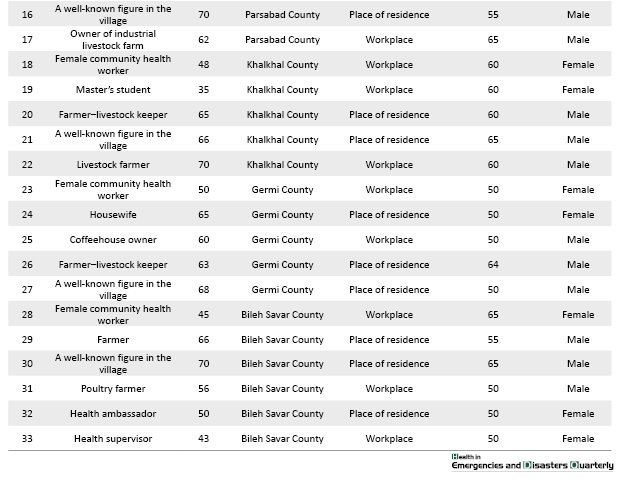
As shown in the table, interviews were conducted with 33 individuals: Seven from rural areas of Ardabil (including Namin, Nir, and Sareyn), five from Meshgin Shahr, five from Khalkhal and Kowsar, five from Parsabad, five from Germi, and six from Bileh Savar and Aslan Duz.
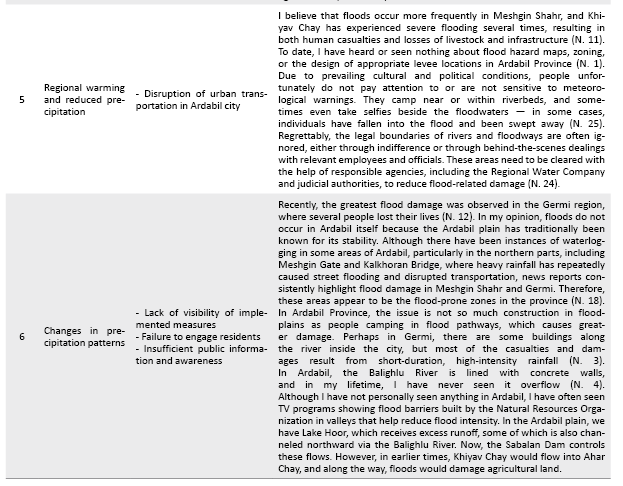
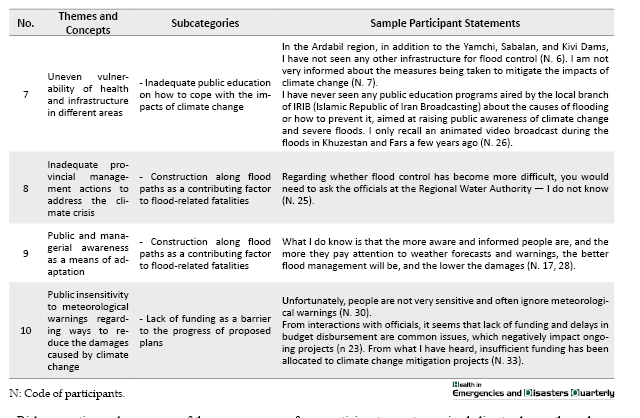
Table 4 presents the themes (categories), subcategories, and examples of statements from the interviewed rural residents.
.PNG)
Discussion
This study aimed to explain the rural residents’ perception of climate change in Ardabil Province and to propose corrective strategies. In this qualitative study, 10 main themes and 13 sub-themes were identified. Participants primarily perceived climate change through severe local events. The findings of the present study align with those of Kheirkhah et al., who also found that more than 50% of farmers recognized climate change based on its impacts on rice farming [16]. Similarly, the results of this study are consistent with those of Esmaeilnejad regarding the perception of climate change among saffron growers; many of them had also become aware of climate variations [17]. Furthermore, the findings align with those of Hashemi Sadati et al., who reported that citrus farmers’ knowledge of climate change ranged from low to moderate [18].
One of the most significant factors influencing how individuals perceive climate change is the presence of prevailing cultural, religious, and political contexts, as well as the dominant modes of information dissemination. Ordinary participants perceived climate change mainly through extreme, high-impact events. The public perception of climate risks plays a critical role in reducing the adverse social, economic, political, security, and environmental consequences of climate change, particularly those related to flooding.
Climate change alters the hydrological cycle, leading to changes in rainfall patterns, increased snowmelt, variations in river runoff, and more extreme events, such as droughts and floods [19, 20]. Depending on the region and climatic conditions, climate change can result in either an increase or a decrease in river runoff [21, 22].According to Goudarzi and Fatehi Far, rising greenhouse gas concentrations and global warming associated with climate change may increase the probability, frequency, and intensity of climatic events, such as floods, in certain parts of the world [23]. Alterations in the characteristics of floods and runoff caused by climate change are among the most pressing concerns for water resource managers in long-term flood protection planning.
Risk perception and awareness of the consequences of climate-related hazards often drive efforts to reduce the likelihood of their occurrence and enhance preparedness for potential disasters [24]. Various studies have confirmed the impact of factors such as beliefs and knowledge about climate risks, trust in climate and meteorological information, adaptability to climatic conditions, previous experience with climate-related risks, and prior preparedness on people’s perception of flood risk. Additionally, environmental attitudes, self-efficacy, concern, anxiety, and a sense of responsibility have been shown to influence risk perception of climate change, particularly flood risk [25–28].
Given the various topics discussed in this study, the effects of climate change can be observed in different ways and across multiple dimensions of human life. However, the impact of climate change will not be uniform across individuals. The way people perceive these effects, interpret events, and recognize them as manifestations of climate change depends on several factors [29].
One of the most important factors shaping public perceptions of such events is familiarity with and engagement in the prevailing cultural and political contexts of their society. In Iranian society, dominant cultural-religious, socio-political, and economic frameworks have influenced the understanding of both the most educated and the least educated rural residents. Among ordinary participants, most perceived climate change through extreme events—such as flash floods and heatwaves—and considered seasonal shifts and disruptions as examples of climate change.
In contrast, educated individuals tended to obtain their information from virtual networks and Telegram channels and had not personally or experientially observed climate change in the field. Moreover, many participants’ statements reflected a strong influence of cultural and religious values. A common theme among participants was placing blame on the government, senior officials, and responsible agencies, as they believed these entities had failed to adequately inform the public and take preventive measures regarding climate change. Additionally, there was criticism of the appointment and dismissal of officials, with claims that non-experts often occupy key positions. At the same time, while specialists are sidelined—an issue that reportedly worsens following parliamentary elections.
Climate change constitutes a crisis for many regions and communities [30]. Adaptation measures are complex and nuanced and require significant financial investments. In many vulnerable communities, deeply rooted economic, cultural, religious, social, and political realities make the implementation of adaptation and mitigation strategies unlikely. Therefore, climate change can be considered a widespread and destructive upheaval that will negatively affect every aspect of human society, potentially leading to crises. Economically, its financial burden will be very high, and in some areas and among certain groups, it will be unbearable and damaging.
In other words, climate change will directly and indirectly impose high costs on Iranian society across a wide range of areas, including livelihoods, energy, human health, employment, economic growth, poverty, migration, urban marginalization, and the environment [31]. Planning effective interventions to mitigate the consequences of climate change is a complex, challenging task that requires an integrated, multi-decade approach.
From the perspective of climate change’s impact on the fate and survival of human societies, several conclusions can be drawn: Economically and in terms of livelihoods, various aspects of agriculture are of strategic importance due to their key role in food security, exports, job creation, market regulation, inflation control, and prevention of migration. Given Iran’s hot, dry climate and limited water resources, climate change exacerbates these challenges. Human health is directly linked to various economic survival mechanisms, and climate change impacts all aspects of life. The loss of employment signals economic stagnation and, consequently, disruption in the individual and social life of communities.
Given the vital and strategic importance of these climate change-related components to the economic and social lives of human communities, addressing the economic impact of climate change should be a top priority. It also requires high levels of collective sensitivity and attention to detail. Neglecting climate change will, in the short term, lead to high and irreparable economic, social, and even political costs for human societies. Based on the findings of this study, strategies for addressing flooding in rural areas are proposed and presented in Table 5.
.PNG)
Conclusion
From the qualitative part of the study, 10 main themes and 13 sub-themes were identified, indicating that participants primarily perceived climate change through extreme weather events in the region. Scientific planning and the implementation of precise interventions tailored to the province’s conditions are essential to mitigate the consequences of climate change, especially flood-related hazards. This study provides improved insights into future challenges. It can contribute to revising goals and planning efforts regarding the impacts of flooding on strategic areas and the resulting damage in rural regions.
Ethical Considerations
Compliance with ethical guidelines
This study was approved by the Ethics Committee of Ardabil University of Medical Sciences, Ardabil, Iran (Code: IR.ARUMS.REC.1402.153). All participants were informed of the purpose of the study and provided informed consent to participate. Participants were informed that they could withdraw from the study at any time.
Funding
This research did not receive any grant from funding agencies in the public, commercial, or non-profit sectors.
Authors' contributions
All authors contributed equally to the conception and design of the study, data collection and analysis, interception of the results, and manuscript drafting. Each author approved the submission of the final version of the manuscript.
Conflict of interest
The authors declared no conflict of interests.
Acknowledgments
The authors of the article would like to thank and appreciate the letters from the residents of the villages of Ardabil Province.
References
The significant rise in Earth’s temperature, commonly referred to as global warming, is recognized as one of the most critical manifestations of climate change [1]. Climate change, especially changes in temperature and precipitation, is among the most influential factors. This phenomenon is crucial due to its scientific and practical dimensions (including environmental, economic, and social impacts), as human systems such as agriculture, industry, and others are designed and function on the basis of climate stability. Any disruption can significantly affect all aspects of human life [2].
One of the most significant consequences of climate change is the alteration of the hydrological cycle and changes in river flow regimes within watersheds. Changes in flood and drought intensity have drawn the attention of both managers and the scientific community as major outcomes of climate change [3].
One of the most evident signs of climate change is the increase in extreme weather events. According to reports by the Intergovernmental Panel on Climate Change (IPCC), ongoing climate change and global warming have increased the likelihood of heavy rainfall events (exceeding 30 mm per hour)—and consequently, the risk of flooding caused by inadequate drainage systems, as well as various physical and environmental factors [4, 5].
Undoubtedly, flooding is recognized as a natural disaster and is considered the most devastating natural hazard worldwide in terms of both human casualties and financial losses [6]. Although the largest floods in recorded history have occurred across vast regions—from countries in Northern Europe to Eastern China—it is noteworthy that, over the past century, most of the world’s devastating floods have occurred in developing or underdeveloped countries, particularly in Asia, resulting in the deaths of thousands [7].
Iran is among the countries most vulnerable to climate change. With 31 out of the 40 recognized types of natural disasters occurring within its borders, Iran is considered one of the most disaster-prone countries in the world [8]. Many of these disasters have led to significant shifts in people’s beliefs, attitudes, and behaviors [9].
Flooding is considered one of the most unpredictable and devastating natural disasters in Iran, resulting in significant annual economic and human losses for residents of flood-prone areas. These damages are not limited to high-rainfall regions; even arid and semi-arid areas are increasingly affected by sudden floods [10]. According to data from the Road, Housing, and Urban Development Research Center, floods account for nearly 30% of total damage from natural hazards in Iran [11].
Increasing flood-related losses are partly due to human interventions in river systems and construction activities within river boundaries. Studies show that floods, accounting for approximately 41% of all natural hazard events, are the second most frequent natural disasters in the country after earthquakes [12]. Although floods account for only approximately 3% of fatalities from natural hazards in Iran, their economic damage exceeds the associated death toll, comprising nearly 30% of the total economic losses from natural hazards [13].
Additionally, Ardabil Province is among the ten provinces in Iran with the highest frequency of natural disasters. In addition to floods, the region experiences earthquakes, landslides, droughts, lightning strikes, storms, frost, heavy snow, and severe cold spells, all of which contribute to substantial damage and casualties [14].
Climate change is the primary driver of flooding. Climate change and global warming are among the greatest challenges of our time, having disrupted the hydrological cycle at both global and regional scales [6]. For instance, the Earth’s temperature has risen by 0.65 °C during the 20th century due to climate change and is expected to increase by 1.5-4.6 °C by the end of this century if greenhouse gas emissions continue to rise [15].
Iran is situated within one of Earth’s arid belts, with over 60% of its territory in arid and semi-arid climatic zones [14]. In addition to its naturally dry conditions, recent global climate changes—both in total rainfall and the intensity of extreme precipitation events—have significantly impacted the country. Therefore, recognizing the role of climate change in intensifying water scarcity and reassessing the frequency and severity of flood events is crucial for enhancing flood management capacity and minimizing losses.
This study aimed to explain people’s perception of climate change and its connection to flood-prone areas in northwestern Iran, identify related factors, and propose corrective strategies.
Materials and Methods
This study employed a qualitative (phenomenological) research design. The study population consisted of rural residents in Ardabil Province. The sample size was determined to be 33 individuals. A purposive sampling method was used. From villages that had recently experienced flooding, a few individuals—trusted community members or village elders—were selected for interviews. Sampling continued until data saturation was reached at 33 participants, meaning that additional interviews yielded no new information.
In this study, the first participant was purposively selected, and subsequent participants were selected based on insights from previous interviews (theoretical sampling). Efforts were made to ensure maximum variation in the sample across age, gender, education level, occupation, economic status, and the geographic locations of villages in Ardabil Province. In qualitative research, participants are those whom the researcher can access and who possess relevant knowledge and experience. Since the participants were selected based on specific research objectives and from specific individuals and locations, purposive sampling was employed. Given the study’s aim of exploring a broad range of experiences and perspectives, maximum variation in sampling was prioritized. Therefore, participants in this study were selected based on their experience, knowledge, and expertise, as well as their locations that were accessible to the researcher.
The primary tool for data collection was interviews. Data were collected from villagers using guided interviews. The interviews continued until data saturation was achieved. Data collection was facilitated by local (community) health workers (Behvarz) from rural health houses and through the researcher’s direct visits to the selected villages (Tables 1 and 2). The data collection period lasted from September to December 2023. Qualitative data analysis was performed using MAXQDA software, version 12.
Results
The study’s findings indicate that among the 33 participants, 23 were men and 10 were women. All participants lived in rural areas and were over the age of 35. Their educational backgrounds ranged from illiteracy to holding a master’s degree. Table 3 presents further details.
As shown in the table, interviews were conducted with 33 individuals: Seven from rural areas of Ardabil (including Namin, Nir, and Sareyn), five from Meshgin Shahr, five from Khalkhal and Kowsar, five from Parsabad, five from Germi, and six from Bileh Savar and Aslan Duz.
Table 4 presents the themes (categories), subcategories, and examples of statements from the interviewed rural residents.
Discussion
This study aimed to explain the rural residents’ perception of climate change in Ardabil Province and to propose corrective strategies. In this qualitative study, 10 main themes and 13 sub-themes were identified. Participants primarily perceived climate change through severe local events. The findings of the present study align with those of Kheirkhah et al., who also found that more than 50% of farmers recognized climate change based on its impacts on rice farming [16]. Similarly, the results of this study are consistent with those of Esmaeilnejad regarding the perception of climate change among saffron growers; many of them had also become aware of climate variations [17]. Furthermore, the findings align with those of Hashemi Sadati et al., who reported that citrus farmers’ knowledge of climate change ranged from low to moderate [18].
One of the most significant factors influencing how individuals perceive climate change is the presence of prevailing cultural, religious, and political contexts, as well as the dominant modes of information dissemination. Ordinary participants perceived climate change mainly through extreme, high-impact events. The public perception of climate risks plays a critical role in reducing the adverse social, economic, political, security, and environmental consequences of climate change, particularly those related to flooding.
Climate change alters the hydrological cycle, leading to changes in rainfall patterns, increased snowmelt, variations in river runoff, and more extreme events, such as droughts and floods [19, 20]. Depending on the region and climatic conditions, climate change can result in either an increase or a decrease in river runoff [21, 22].According to Goudarzi and Fatehi Far, rising greenhouse gas concentrations and global warming associated with climate change may increase the probability, frequency, and intensity of climatic events, such as floods, in certain parts of the world [23]. Alterations in the characteristics of floods and runoff caused by climate change are among the most pressing concerns for water resource managers in long-term flood protection planning.
Risk perception and awareness of the consequences of climate-related hazards often drive efforts to reduce the likelihood of their occurrence and enhance preparedness for potential disasters [24]. Various studies have confirmed the impact of factors such as beliefs and knowledge about climate risks, trust in climate and meteorological information, adaptability to climatic conditions, previous experience with climate-related risks, and prior preparedness on people’s perception of flood risk. Additionally, environmental attitudes, self-efficacy, concern, anxiety, and a sense of responsibility have been shown to influence risk perception of climate change, particularly flood risk [25–28].
Given the various topics discussed in this study, the effects of climate change can be observed in different ways and across multiple dimensions of human life. However, the impact of climate change will not be uniform across individuals. The way people perceive these effects, interpret events, and recognize them as manifestations of climate change depends on several factors [29].
One of the most important factors shaping public perceptions of such events is familiarity with and engagement in the prevailing cultural and political contexts of their society. In Iranian society, dominant cultural-religious, socio-political, and economic frameworks have influenced the understanding of both the most educated and the least educated rural residents. Among ordinary participants, most perceived climate change through extreme events—such as flash floods and heatwaves—and considered seasonal shifts and disruptions as examples of climate change.
In contrast, educated individuals tended to obtain their information from virtual networks and Telegram channels and had not personally or experientially observed climate change in the field. Moreover, many participants’ statements reflected a strong influence of cultural and religious values. A common theme among participants was placing blame on the government, senior officials, and responsible agencies, as they believed these entities had failed to adequately inform the public and take preventive measures regarding climate change. Additionally, there was criticism of the appointment and dismissal of officials, with claims that non-experts often occupy key positions. At the same time, while specialists are sidelined—an issue that reportedly worsens following parliamentary elections.
Climate change constitutes a crisis for many regions and communities [30]. Adaptation measures are complex and nuanced and require significant financial investments. In many vulnerable communities, deeply rooted economic, cultural, religious, social, and political realities make the implementation of adaptation and mitigation strategies unlikely. Therefore, climate change can be considered a widespread and destructive upheaval that will negatively affect every aspect of human society, potentially leading to crises. Economically, its financial burden will be very high, and in some areas and among certain groups, it will be unbearable and damaging.
In other words, climate change will directly and indirectly impose high costs on Iranian society across a wide range of areas, including livelihoods, energy, human health, employment, economic growth, poverty, migration, urban marginalization, and the environment [31]. Planning effective interventions to mitigate the consequences of climate change is a complex, challenging task that requires an integrated, multi-decade approach.
From the perspective of climate change’s impact on the fate and survival of human societies, several conclusions can be drawn: Economically and in terms of livelihoods, various aspects of agriculture are of strategic importance due to their key role in food security, exports, job creation, market regulation, inflation control, and prevention of migration. Given Iran’s hot, dry climate and limited water resources, climate change exacerbates these challenges. Human health is directly linked to various economic survival mechanisms, and climate change impacts all aspects of life. The loss of employment signals economic stagnation and, consequently, disruption in the individual and social life of communities.
Given the vital and strategic importance of these climate change-related components to the economic and social lives of human communities, addressing the economic impact of climate change should be a top priority. It also requires high levels of collective sensitivity and attention to detail. Neglecting climate change will, in the short term, lead to high and irreparable economic, social, and even political costs for human societies. Based on the findings of this study, strategies for addressing flooding in rural areas are proposed and presented in Table 5.
Conclusion
From the qualitative part of the study, 10 main themes and 13 sub-themes were identified, indicating that participants primarily perceived climate change through extreme weather events in the region. Scientific planning and the implementation of precise interventions tailored to the province’s conditions are essential to mitigate the consequences of climate change, especially flood-related hazards. This study provides improved insights into future challenges. It can contribute to revising goals and planning efforts regarding the impacts of flooding on strategic areas and the resulting damage in rural regions.
Ethical Considerations
Compliance with ethical guidelines
This study was approved by the Ethics Committee of Ardabil University of Medical Sciences, Ardabil, Iran (Code: IR.ARUMS.REC.1402.153). All participants were informed of the purpose of the study and provided informed consent to participate. Participants were informed that they could withdraw from the study at any time.
Funding
This research did not receive any grant from funding agencies in the public, commercial, or non-profit sectors.
Authors' contributions
All authors contributed equally to the conception and design of the study, data collection and analysis, interception of the results, and manuscript drafting. Each author approved the submission of the final version of the manuscript.
Conflict of interest
The authors declared no conflict of interests.
Acknowledgments
The authors of the article would like to thank and appreciate the letters from the residents of the villages of Ardabil Province.
References
- Mohsenian A, Esmaeili SV, Alboghbeish A, Poursadeghiyan M, Shahsavani A, Salehi Sahlabadi A. Climate change and its implications for occupational health and safety: a comprehensive systematic review. Health in Emergencies and Disasters Quarterly. 2026; 11(3):173-90. [DOI:10.32598/hdq.2026.435.3]
- Esmaeili SV, Alboghobeish A, Salehi Sahlabadi A, Poursadeghiyan M. Impact of climate change on public health in Iran: A systematic review. Health in Emergencies and Disasters Quarterly. 2024;10(1):3-20. [DOI:10.32598/hdq.10.1.374.1]
- Salehi S, Pazukinejad Z. Adaptation of villagers to climate changes and its relationship with social factors case study: Villagers of Babolsar City, Mazandaran Province. Strategic Research on Social Problems. 2021; 10(1):47-70. [DOI:10.22108/srspi.2021.124046.1582]
- Roveshti MM, Khajehnasiri F, Pirposhteh EA, Amanat N, Sahlabadi AS, Vatani J, Poursadeqiyan M. A systematic review on the climate and ecosystem change associated with the COVID-19 epidemic: Global challenges. Avicenna Journal of Environmental Health Engineering. 2022; 9(2):117-23. [DOI:10.34172/ajehe.2022.4209]
- Porsadeqiyan M, Askari A, Pirposhteh EA, Sahlabadi AS, Amanat N. Social inequalities of climate change with a regional and global approach. Health in Emergencies & Disasters Quarterly. 2023; 8(4):289-92. [DOI:10.32598/hdq.8.4.406.3]
- Hejazizadeh Z, Akbari M, Sasanpour F, Hosseini A, Mohammadi N. Investigating the effects of climate change on torrential rains in Tehran province. Water and Soil Management and Modelling. 2022; 2(2):87-105. [DOI:10.22098/mmws.2022.9958.1075]
- Sheidaeian M, Fakhraee H, Nekooie MA. Investigating the effect of climate change on flood emergency Management. Emergency Management. 2018; 6(2):5-20. [Link]
- Ghomian Z, Yousefian S. Natural disasters in the middle-east and north africa with a focus on Iran: 1900 to 2015. Health in Emergencies and Disasters Quarterly. 2017; 2(2):53-62. [Link]
- Pirposhteh EA, Mishmast M, Pouya AB, Khammar A, Sahlabadi AS, Eshaghzadeh M, et al. Biocentric and life course perspectives on risk perception of COVID-19 and climate change: A narrative review. Shahroud Journal of Medical Sciences. 2026; 12(1):42-6. [DOI:10.22100/ijhs.v12i1.1314]
- Niyazi BA, Masoud MH, Ahmed M, Basahi JM, Rashed MA. Runoff assessment and modeling in arid regions by integration of watershed and hydrologic models with GIS techniques. Journal of African Earth Sciences. 2020; 172:103966. [DOI:10.1016/j.jafrearsci.2020.103966]
- Zarrin A, Dadashi-Roudbari A. [Assessing the effect of climate change on heavy precipitation in iran based on a cmip6 ensemble model (Persian)]. Journal of Water and Sustainable Development. 2022; 8(4):119-24. [Link]
- Arekhi S, Karkaz S, Emadodin S. Flood risk zoning due to climate change using SWAT hydrological model in GIS environment (Case study: Gharasoo watershed, Golestan province). Climate Change Research. 2023; 4(14):1-26. [DOI:10.30488/ccr.2023.394308.1127]
- Sobhani B, Frotan M. Collaborative investigation of the floods of balikhlochai watershed in Ardabil (Case Study: March 07, 2010 and December 08, 2010). Journal of Geography and Environmental Hazards. 2023; 12(1):117-35. [Link]
- Amanat N, Valinejadi A, Mehrifar Y, Poursadeqiyan M. A systematic literature review protocol on climate change perception models. Journal of Advances in Environmental Health Research. 2022; 10(3):197-204. [DOI:10.32598/JAEHR.10.3.1254]
- Rogelj J, Meinshausen M, Knutti R. Global warming under old and new scenarios using IPCC climate sensitivity range estimates. Nature Climate Change. 2012; 2(4):248-53. [DOI:10.1038/nclimate1385]
- Kheirkhah A, Kamali GA, Meshkatee AH, Babazadeh H, AsadiOskuee E. Investigation the understanding of Mazandaran›s rice farmers about the climate change and their approaches to tackle it. Nivar. 2023; 47(120-121):1-14. [Link]
- Esmailnejad M. Understanding perceptual and adaptation to climate change by the saffron farmers of the Kashmar plain. Saffron Agronomy and Technology. 2018; 6(1):105-17. [DOI:10.22048/jsat.2017.78808.1218]
- Hashemi Sadati SA, Karamidehkordi E, Tajvar Y, Mirmousavi SH. [Effect of extension and education programs and perceived climate change on citrus farmers› adapting knowledge in the Mazandaran Province (Persian)]. Agricultural Education Administration Research. 2022; 13(59):160-85. [Link]
- Gao C, He Z, Pan S, Xuan W, Xu Y-P. Effects of climate change on peak runoff and flood levels in Qu River Basin, East China. Journal of Hydro-Environment Research. 2020; 28:34-47. [DOI:10.1016/j.jher.2018.02.005]
- Yang Y, Weng B, Man Z, Yu Z, Zhao J. Analyzing the contributions of climate change and human activities on runoff in the Northeast Tibet Plateau. Journal of Hydrology: Regional Studies. 2020; 27:100639. [DOI:10.1016/j.ejrh.2019.100639]
- Zhang Q, Liu J, Singh VP, Shi P, Sun P. Hydrological responses to climatic changes in the Yellow River basin, China: Climatic elasticity and streamflow prediction. Journal of Hydrology. 2017; 554:635-45. [DOI:10.1016/j.jhydrol.2017.09.040]
- Zhai R, Tao F. Contributions of climate change and human activities to runoff change in seven typical catchments across China. Science of The Total Environment. 2017; 605:219-29. [DOI:10.1016/j.scitotenv.2017.06.210] [PMID]
- Goodarzi M, Fatehifar A. [Statistical distributions analysis for estimating of climate change effects on future floods (case study: Azarshahrchay Basin) (Persian)]. Hydrogeomorphology. 2019; 5(20):57-78. [Link]
- Imani T, Dalghandi M, Emamgholizadeh S, Ganji-noroozi Z. Effects of climate change on floods volume and peak discharge (Case Study: Qaran Talar sub-catchmaent). Journal of Ecohydrology. 2022; 9(1):259-72. [DOI:10.22059/ije.2022.333410.1576]
- Azadi Y, Yazdanpanah M, Forouzani M, Mahmoudi H. Investigating the factors affecting the risk perception of exposure to climate change: A case study of wheat farmers in Kermanshah. 2018. [DOI:10.2166/wcc.2018.242]
- Zobeidi T, Yazdanpanah M, Bakhshi A. [Climate change risk perception among agriculture students: The role of knowledge, environmental attitude, and belief in happening (Persian)]. Journal of Agricultural Science and Technology. 2020; 22(1):43-55. [Link]
- Majnouni-Toutakhane A, Zaheri M. [Investigating the perceptions of Lake Urmia drying risk in changing the patterns of rural behavior case study: Villages of the eastern side of the Lake Urmia (Persian)]. Journal of Regional Planning. 2019; 9(33):43-54. [Link]
- Roder G, Hudson P, Tarolli P. Flood risk perceptions and the willingness to pay for flood insurance in the Veneto region of Italy. International Journal of Disaster Risk Reduction. 2019; 37:101172. [DOI:10.1016/j.ijdrr.2019.101172]
- Arbuckle Jr JG, Morton LW, Hobbs J. Understanding farmer perspectives on climate change adaptation and mitigation: The roles of trust in sources of climate information, climate change beliefs, and perceived risk. Environment and Behavior. 2015; 47(2):205-34. [DOI:10.1177/0013916513503832] [PMID] [PMCID]
- Yazdanpanah M, Zobeidi T. Beliefs and risk perception of farmers› of Khuzestan province toward climate change. Journal of Natural Environmental Hazards. 2017; 6(14):123-40. [DOI:10.22111/jneh.2017.3161]
- Mazhin SA, Khankeh H, Farrokhi M, Aminizadeh M, Poursadeqiyan M. Migration health crisis associated with climate change: A systematic review. Journal of Education and Health Promotion. 2020; 9:97. [DOI:10.4103/jehp.jehp_4_20] [PMID]v
Type of article: Research |
Subject:
Risk communication
Received: 2024/12/27 | Accepted: 2025/08/18 | Published: 2026/06/21
Received: 2024/12/27 | Accepted: 2025/08/18 | Published: 2026/06/21
Send email to the article author
| Rights and permissions | |
 |
This work is licensed under a Creative Commons Attribution-NonCommercial 4.0 International License. |

Copyright © The Author(s);
This is an open access article distributed under the terms of the Creative Commons Attribution-NonCommercial 4.0 (CC-By-NC 4.0), which permits use, distribution, and reproduction in any medium, provided the original work is properly cited and is not used for commercial purposes.
Contact Information
This is an open access article distributed under the terms of the Creative Commons Attribution-NonCommercial 4.0 (CC-By-NC 4.0), which permits use, distribution, and reproduction in any medium, provided the original work is properly cited and is not used for commercial purposes.
Contact Information
