

Volume 11, Issue 3 (Spring 2026)
Health in Emergencies and Disasters Quarterly 2026, 11(3): 247-256 |
Back to browse issues page



Ethics code: IR.SBMU.PHNS.REC.1397.069


Download citation:
BibTeX | RIS | EndNote | Medlars | ProCite | Reference Manager | RefWorks
Send citation to:


BibTeX | RIS | EndNote | Medlars | ProCite | Reference Manager | RefWorks
Send citation to:
Salehi Sahlabadi A, Azizi A, Monazami Tehrani G, Feyzi V. Fire Emergency Response Modeling and Analysis in Hospital Emergency Departments Using a Petri Net Model. Health in Emergencies and Disasters Quarterly 2026; 11 (3) :247-256
URL: http://hdq.uswr.ac.ir/article-1-716-en.html
URL: http://hdq.uswr.ac.ir/article-1-716-en.html


1- Safety Promotion and Injury Prevention Research Center, Research Institute for Health Sciences and Environment, Shahid Beheshti University of Medical Sciences, Tehran, Iran. & Department of Occupational Health and Safety Engineering, School of Public Health and Safety, Shahid Beheshti University of Medical Sciences, Tehran, Iran.
2- Department of Health, Safety and Environment, School of Public Health and Safety, Shahid Beheshti University of Medical Sciences, Tehran, Iran.
3- Department of Health, Safety and Environment, School of Public Health and Safety, Shahid Beheshti University of Medical Sciences, Tehran, Iran. ,ghazaleh.monazami@sbmu.ac.ir
4- Department of Occupational Health and Safety Engineering, School of Public Health and Safety, Shahid Beheshti University of Medical Sciences, Tehran, Iran.
2- Department of Health, Safety and Environment, School of Public Health and Safety, Shahid Beheshti University of Medical Sciences, Tehran, Iran.
3- Department of Health, Safety and Environment, School of Public Health and Safety, Shahid Beheshti University of Medical Sciences, Tehran, Iran. ,
4- Department of Occupational Health and Safety Engineering, School of Public Health and Safety, Shahid Beheshti University of Medical Sciences, Tehran, Iran.
Keywords: Hospital, Fire safety, Fire emergency response, Hospital fire emergency response prediction network (HFERP-net) model, Health centers
Full-Text [PDF 992 kb]
(698 Downloads)
| Abstract (HTML) (2504 Views)
Full-Text: (132 Views)
Introduction
The issue of fire is one of the most important and pivotal issues that affect all three areas of safety, health, and environment, and fire prevention and control are crucial [1]. Fire is a major cause of life, financial, and environmental damage to buildings and people. Statistics indicate that about 75% to 80% of fires are preventable. Therefore, by employing appropriate risk assessment methods, identifying existing hazards, and implementing necessary technical and managerial measures to control or minimize the likelihood of accidents and reduce their impact, the various damages caused by fire can be significantly reduced [2]. In Iran, about 1400 people are killed in fires annually, and more than 4500 people are seriously injured [3]. Hospital buildings and medical centers, such as emergency rooms are places where many fires occur in these buildings every year [4]. In addition to having a direct role in saving lives, health care centers are a powerful symbol of social progress and a necessary condition for economic development and stability, they are among the valuable assets of any country, and their destruction will have many economic and social consequences [5]. Although hospital facilities are considered low-risk buildings in the class of buildings according to their combustible contents, but the high use of flammable chemicals, little attention to safety principles in the construction and maintenance of these buildings, as well as the characteristics of residents and visitors hospital fire safety assessments need to be multiplied [6]. According to previous studies on hospital and emergency fires, the risk in these units for reasons, such as the improper design of buildings and emergency exit doors of hospitals (a large number of visits to the emergency department and hospital) [2, 3, 7-13], lack of firefighting equipment and distance of fire station [6, 8, 14-17], lack of sufficient knowledge of employees by 77.2%, in assessing fire safety in the studied hospitals, which include issues, such as announcement, firefighting, and rapid response in case of emergency [18-21]. Individuals near emergency exits are vulnerable to injury or death from heat, smoke, and toxins. Survival chances significantly increase if evacuation occurs within 5 seconds. Given the potential lack of effective emergency response plans in hospitals and emergency units, a comprehensive evacuation plan should be developed and readily accessible to all staff and individuals within the hospital [18]. The emergency response process involves analyzing and deploying fire resources and tasks to identify and prevent incidents. For instance, increasing the number of fire hydrants improves fire control effectiveness by reducing the time fire trucks spend waiting to refill. Another factor in accelerating fire suppression is the extinguishing agent (fire extinguishing foam). Proper emergency response to fire requires proper planning to identify jobs, describe the duties of individuals on emergency teams, and identify resources. The advantage of this emergency response model is to reduce or eliminate this vulnerability of all participants in the emergency plan proper understanding of their duties, improving and increasing job skills and knowledge, and improving the reliability and credibility of the emergency response plan with a pre-training process. In the absence of proper planning in the fire response model, performing maneuvers and preventive measures will cause irreparable accidents for the hospital [5, 6, 19, 21-27].
Materials and Methods
This research is a cross-sectional study in the Emergency Department of the Hospital, which was conducted in 2019. First, the building risk assessment was performed using the fire risk assessment method for engineering (FRAME) method (Figure 1).
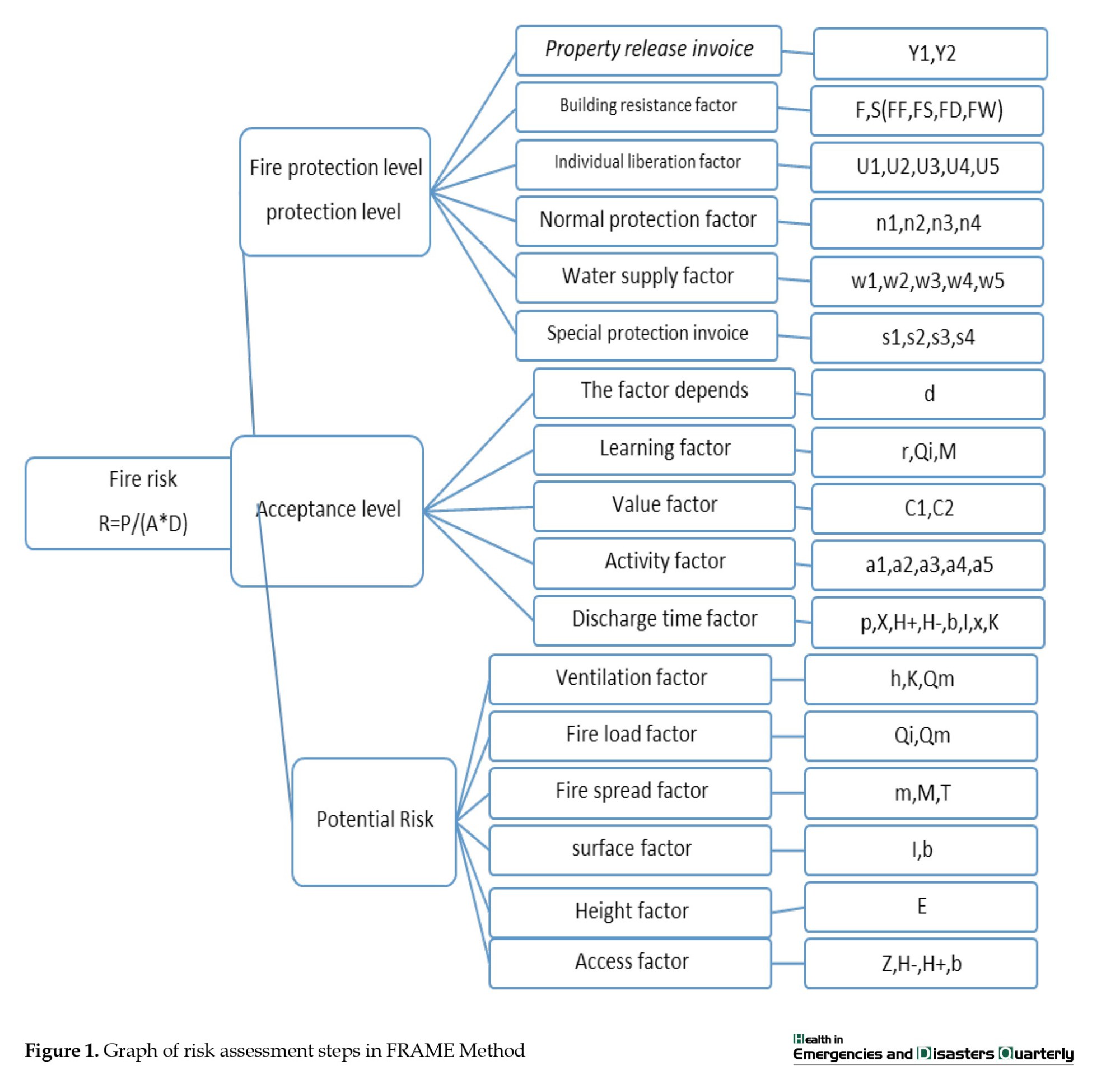 FRAME is a systematic and engineering-based approach for a comprehensive assessment of fire risk in buildings and industries. This method determines the overall level of fire risk by considering the probability of fire occurrence, the flammability of materials and structure, the potential severity and consequences of a fire, and the effectiveness of existing fire protection and extinguishing systems. This assessment aims to identify strengths and weaknesses in fire safety and to provide appropriate solutions for risk reduction, the protection of life and property, and ensuring the continuity of operations against the hazard of fire. Ultimately, FRAME helps in establishing a balanced and effective fire safety strategy.
Data collection
In this study, data collection was done by attending study units and using checklists. For risk assessment through inspections (structural information of buildings, electrical systems, fire extinguishing systems and water, electricity and gas facilities, number of employees, etc.). Also interviews with relevant officials or by referring to documents (such as emergency operation plan, ICS chart) for the required information has been conducted. According to the collected information, the result of risk assessment by the FRAME method is expressed numerically. It means that the fire risk is the quotient of the potential risk division on the level of acceptance and protection.
If the R≤1 is, the level of risk acceptance and conservation measures are equal to or higher than the potential risk, which is acceptable. The second case is R≥1, i.e. the potential risk is higher than the multiplication of risk acceptance and protective measures. As a result, protective measures are not sufficient and are unacceptable [3]. Therefore, since it is possible to cause a fire, more measures are needed, such as forming crisis teams, and in the next stage, preparing an emergency fire response process and creating an hospital fire emergency response prediction network (HFERP-net) model based on the Petri network. This modeling is done in 5 steps.
Data analyses
First of all, defining tasks and a set of them and then defining the required resources and tasks. After that determining the connections and contradictions between resources and tasks and then determining the time of execution of existing tasks and resources based on the relationship of these resources with each other. Finally drawing and preparing model and chart analysis. In this model, a relationship between resources and responsibilities is prepared, which includes performing drills and preparing the time of execution of each responsibility and using resources, so that contradictions between responsibilities and sources are revealed in these relationships to find the necessary coordination to respond to fire emergencies.
A Petri net is a set of (P, T, I, O, M), which are defined as: P: Set of places, T: Set of transfers, I: Set of inputs, O: Set of outputs, and M: Displays motion set. One of the important features of Petri Net is its applying, and in Petri networks, analysis and steps are always performed simultaneously.
Results
Risk assessment and model creation
In the evaluation, the risk numbers are shown in Table 1.
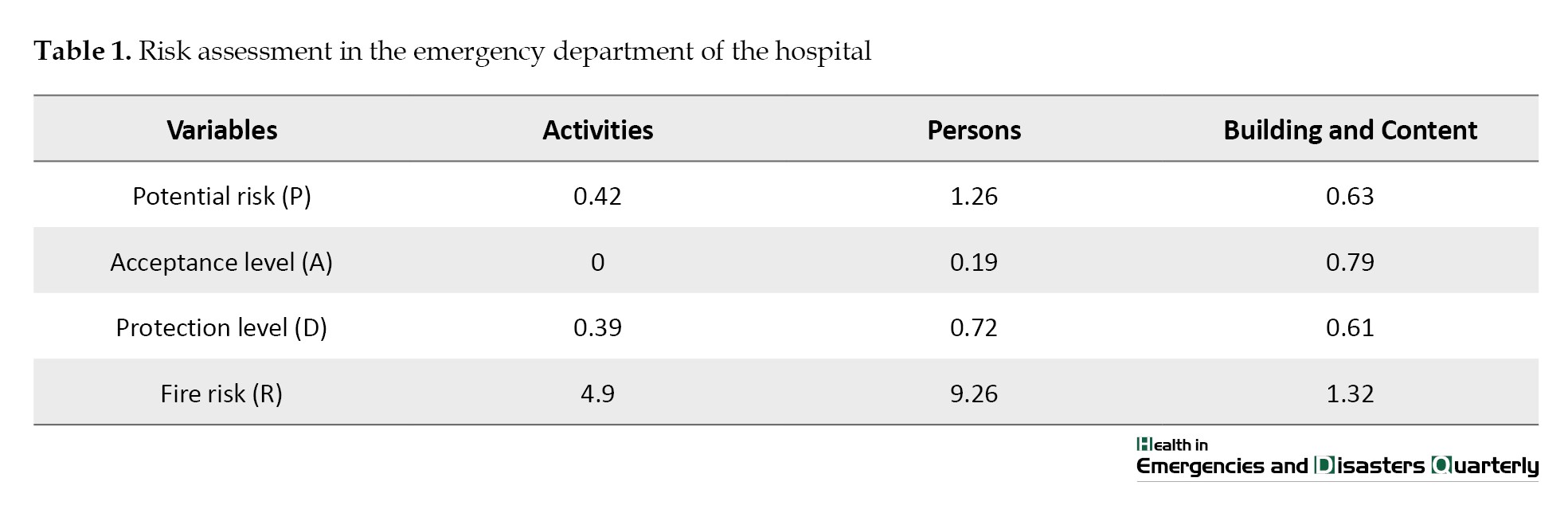
Many cases have a high risk of fire, the fire risk for buildings is 1.32, for people 9.26 and for activities 4.9, all of which are higher than 1. Because the numbers are higher than an unacceptable one, it requires more control measures as well as a fire response plan. Table 1 presents risk assessment in the Emergency Department of Shahid Lavasani Hospital.
The results of the risk assessment Table in the hospital Emergency Department indicate significant differences in the level of fire risk between the three main areas of activities, personnel, and building and contents. According to the risk assessment and review of documents, it was shown that there is no specific system in the field of fire response management in the emergency. It was only a crisis chart in which the duties of people are not well defined. People at the time of crisis do not know their duty and are waiting for the orders of the upstream people, which causes a waste of time and the spread of the fire, so the response to the fire should be planned using the Petri net model.
Table 2 describes the duties and places of individuals in the event of a fire in an emergency time to extinguish the fire and save people, each person has specific tasks performed at the specified time in Table 3.
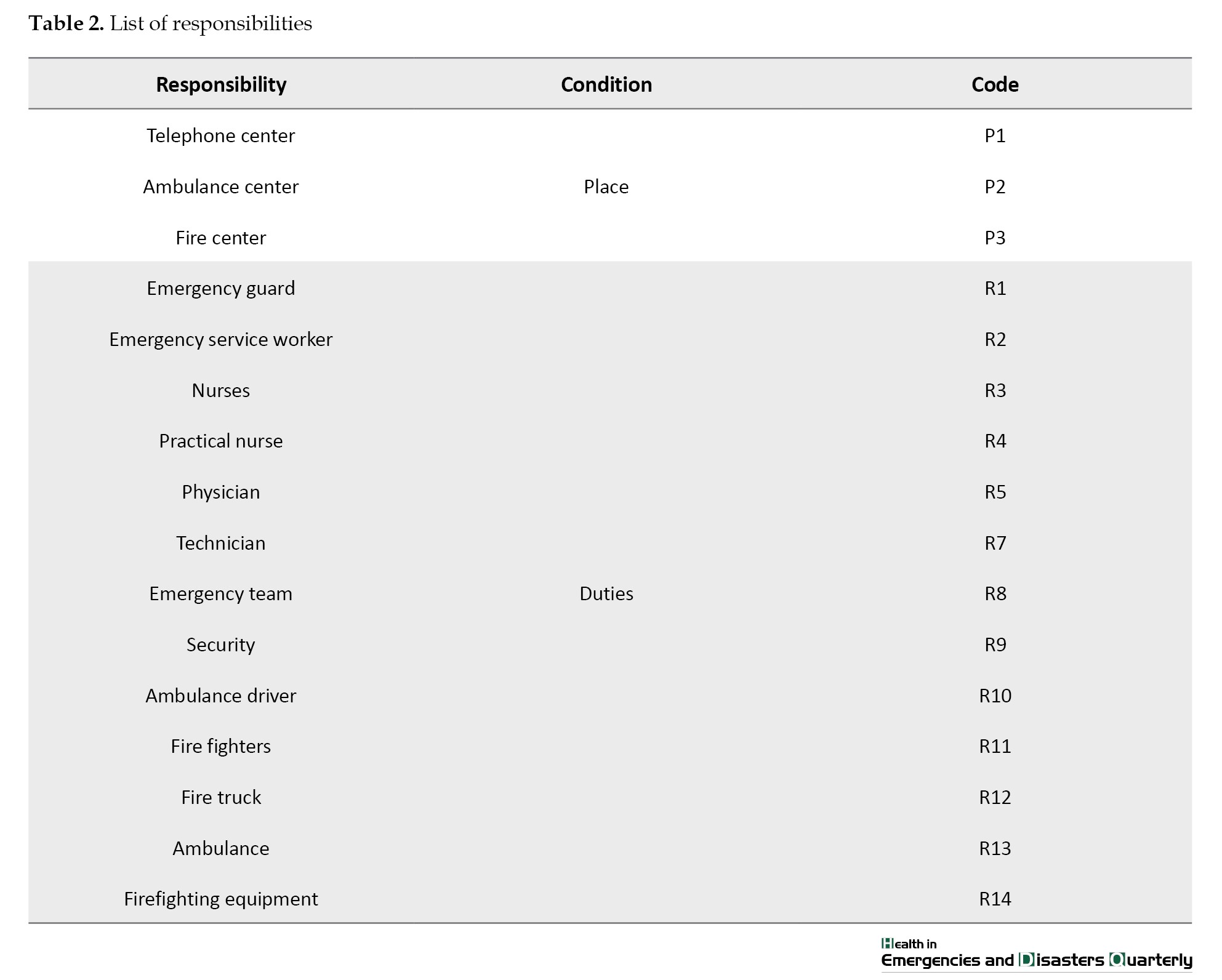
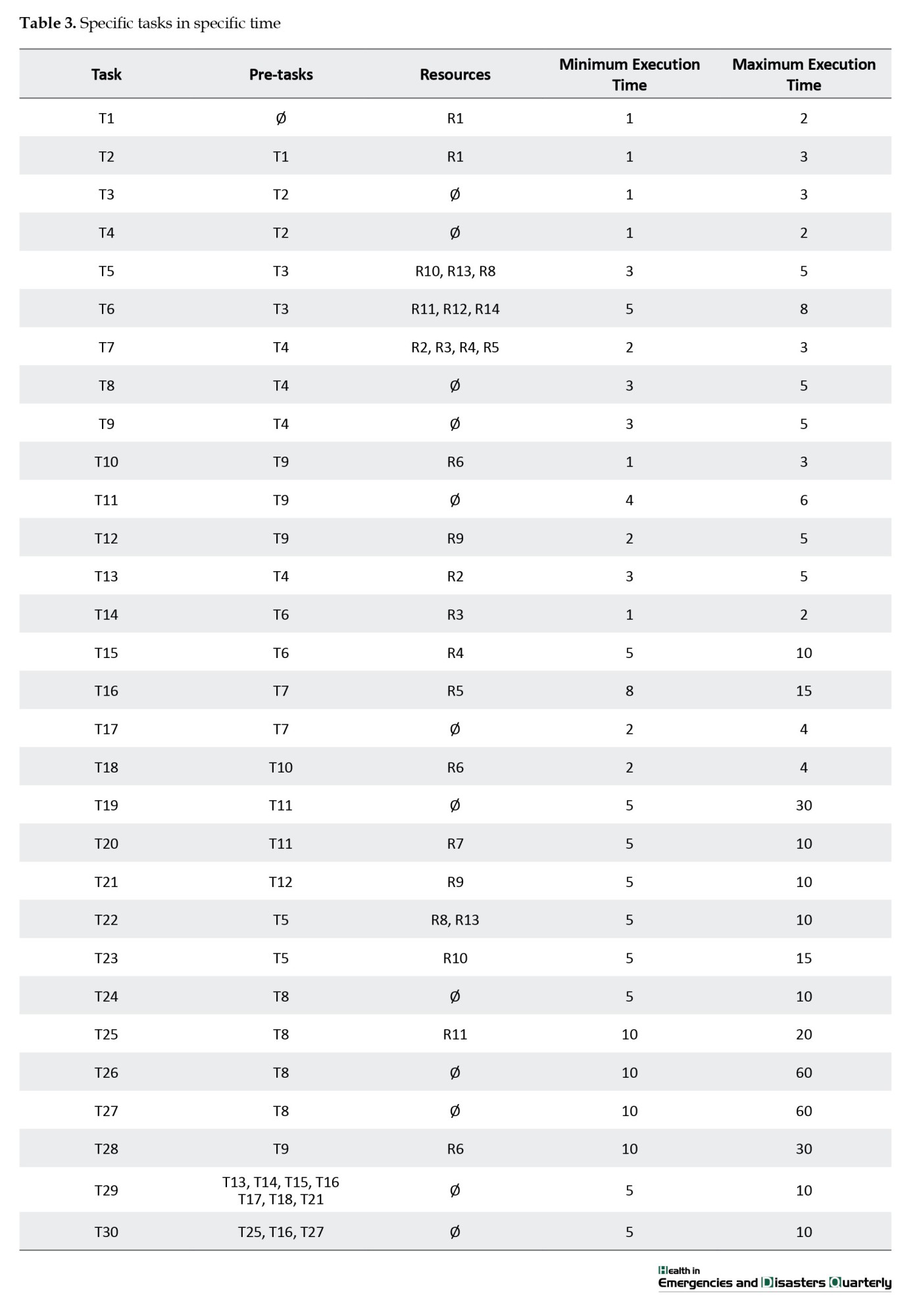
Table 3 lists the times required to perform the tasks; as shown in the table, the task is the same as the individual task. In this task, the pre-tasks time must be completed first, so that this job can complete its task properly. And if this job description requires key jobs (Resources), these key jobs must perform their tasks, and this table specifies the minimum and maximum time required for these tasks, which varies according to the circumstances. Figure 2 shows the relationship between tasks and resources.
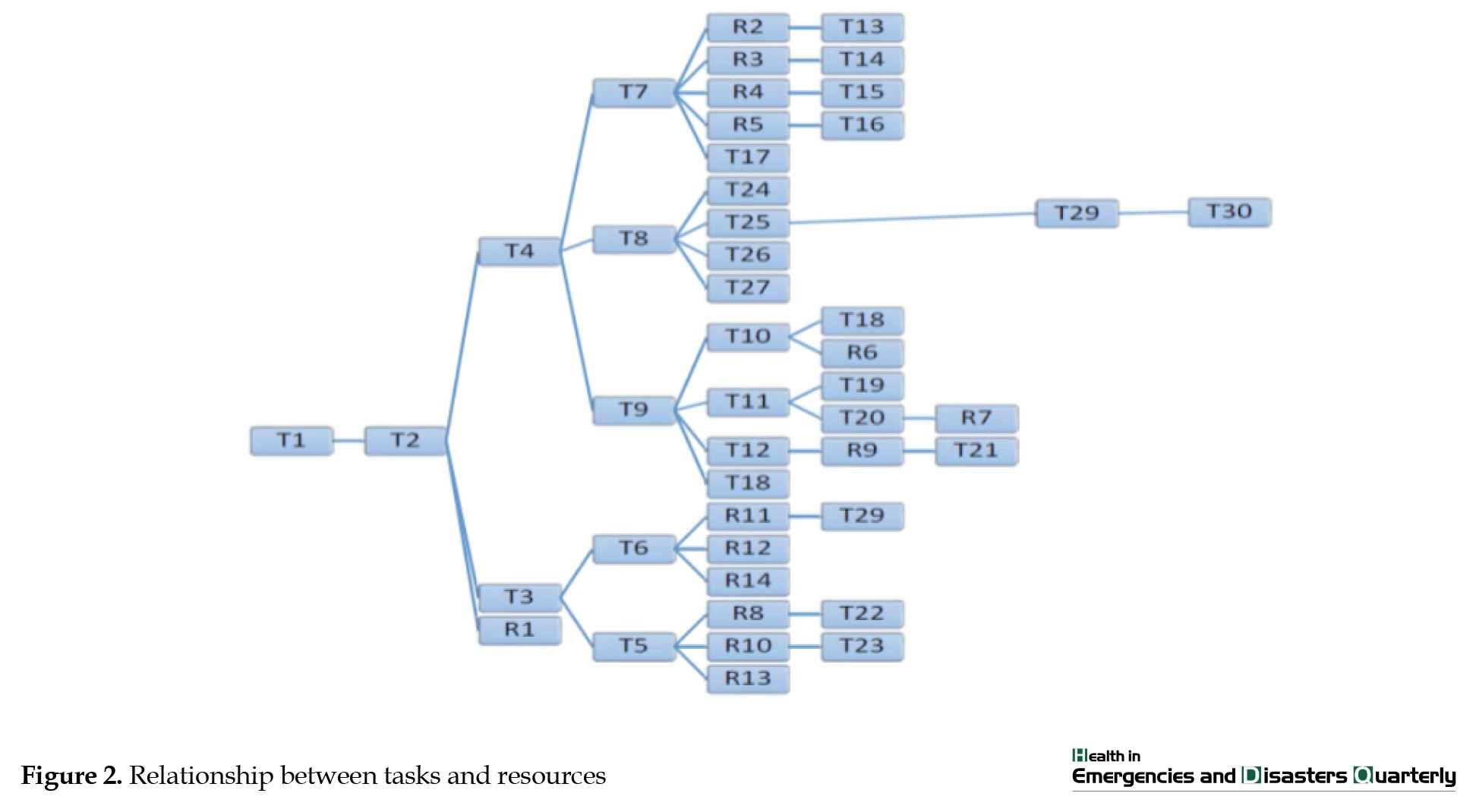 Figure 3 shows the HFERP-Net model, and Table 3 shows the timing of each task.
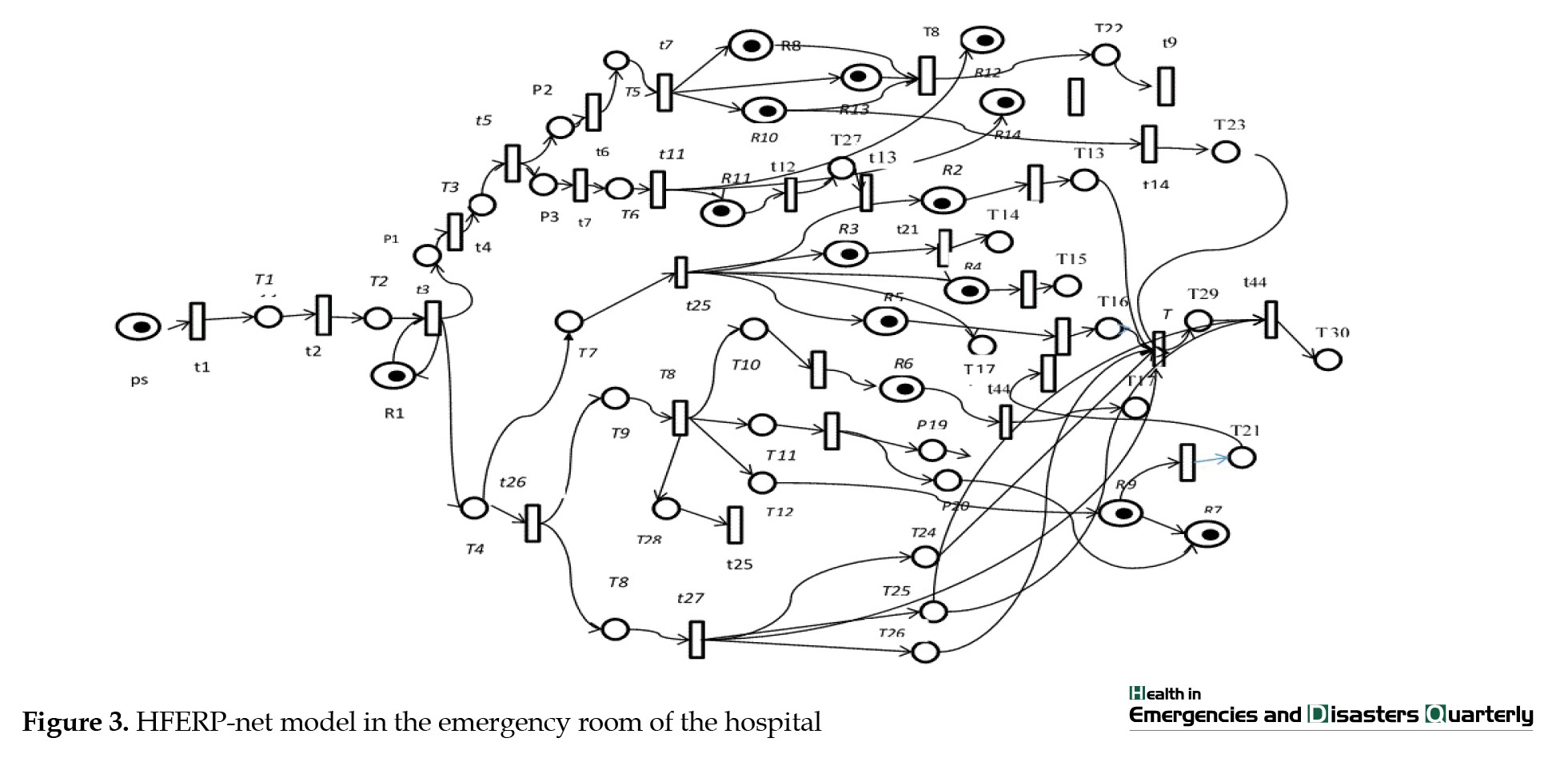 In Table 3, R indicates that these occupations and job descriptions are key and important in the fire response model. Their absence in the model causes a disturbance and P indicates location. In designing the scheduling model, the person who observed the fire (T1) must notify the emergency services of the occurrence of the fire (T2) and the emergency must notify the supervisor (T4), the call center (P1) and the door guard (R1). So, they prevent people from entering the scene of the fire. The call center operator (P1) notifies the fire department after receiving information from the emergency reception unit (T2) and inform to the hospital ambulance center (P2) and 125 (fire call center) (P3). At the same time, Supervisor (T4) reports the fire to the Emergency Department Manager (T7), senior public relations (T8), and crisis manager (T9). The ambulance center (P2) forwards the ambulance driver (R10) and the emergency team (R8) to the Emergency Department and 125 (fire call center) notifies the fire station (T6), so that these people can provide services, such as treating injured people and referring them to other medical centers by the emergency team (R8), ambulance driver (P10), and firefighting by the fire team (R11). The head of the Emergency Department (T7) announces the fire code to the emergency worker (R2), paramedic (R4), emergency nurses (R3), doctor (R5), and patients (T17) so that these people can perform their duties, which include extinguishing the initial fire by an emergency service worker, power outage by nurses and helping to evacuate people, evacuation of patients with beds by paramedics, examination of physical condition by doctors, and necessary instructions for the type of evacuation (with beds and equipment or without equipment). Also, the evacuation of patients should be done according to the condition (if able to walk).
The senior public relations (T8) informs the cost calculation manager (T27), the damages and Claims Manager (T26), the manager of return to normal conditions (T25), and the status assessment manager (T24). Managers have the tasks, including maintaining information about the accident situation for all hospital staff, planning and responding to emergencies in other hospitals, gathering the information needed to investigate and research the accommodation of the injured inside and outside the hospital with the cooperation of the Red Crescent and the Organization of Relief and Charities. They assess the capabilities of the hospital and report to the head of the planning unit. They start by evaluating the priority of outgoing patients, admit patients whose discharge is not possible, appoint a supervisor in the areas of incoming patients, prepare and analyze cost and damage data related to the crisis by the damage manager and receivables and maintenance of its documents. They report to the head of the Financial Administrative Unit, and prepare a report of claims and financial payment related to the head of the Financial Administration Department. The cost is calculated by the Manager every 6 hours. The crisis manager (T9) contacts the support manager (T11), the regulatory and security manager (T12), the service manager (T10), and the engineering services manager (T28) to initiate relief operations. Following this notification, the responsible units carry out operational tasks, including unloading equipment, evacuating equipment, and collecting waste after fire control under the supervision of the Director of Services and Transportation. In addition, the installation and electrical affairs unit is responsible for disconnecting and reconnecting essential utilities, including electricity, water, and gas, as required during the emergency response process. The support manager and the director of law enforcement call their staff to control the transport of people and evacuate them. The Director of Engineering Services performs the task of protecting food and water reserves with the help of the chief of safety and the director of law enforcement and report to the head of the support unit and the collection of surplus and suspicious foods for transfer to places far from crisis and their sanitary disposal. The fire brigade informs the fire department manager (T29) and informs the crisis manager about the normal situation so that they can declare the normal situation (T30).
In the analysis of the data presented in Figure 4, it is observed that the most time spent is related to activities T25 to T28.
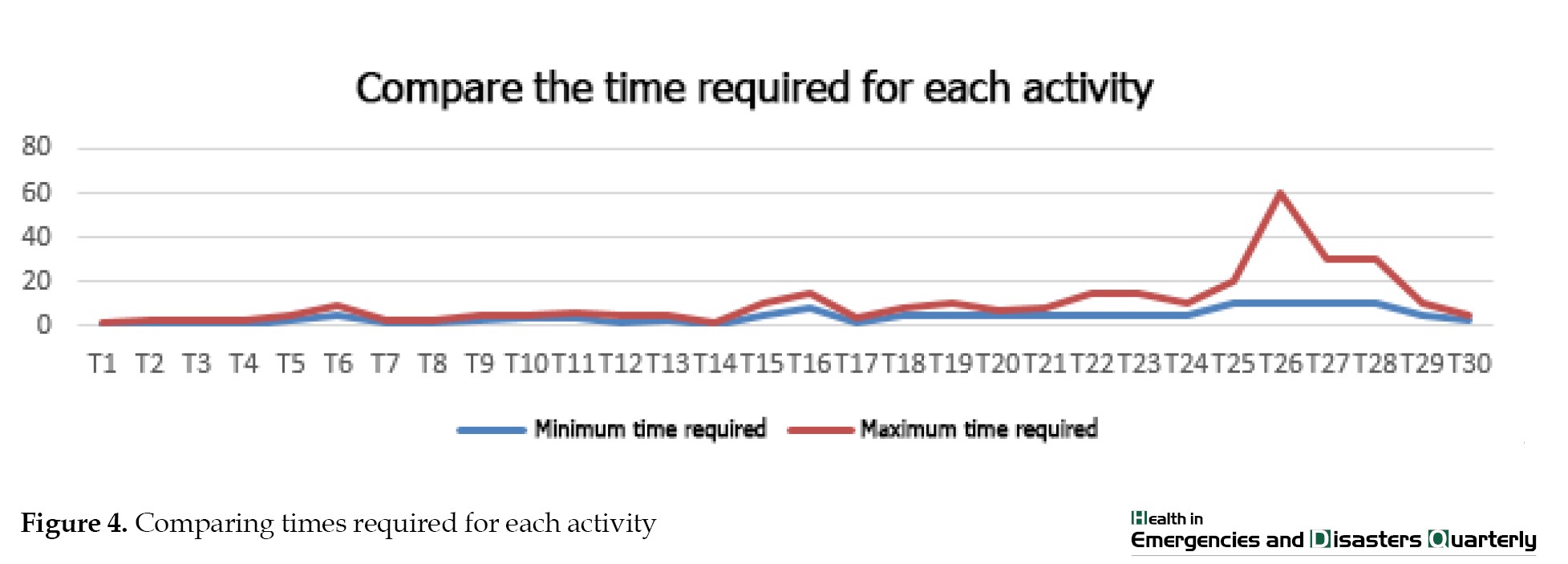 These activities are usually carried out alongside other actions and mostly involve reporting, administrative coordination or documentation. However, these tasks lack a direct impact on the fire control time and are classified as non-critical tasks. In contrast, the highest critical times are related to T6 (dispatching the fire brigade) and T29 (extinguishing the fire and preventing re-ignition). T6 is mainly due to the distance of the fire from the fire station, which leads to delays in the team’s arrival at the scene. This factor is one of the key points for improvement and can be cut by deploying mobile stations in high-risk areas or using early warning systems. On the other hand, T29 is related to fire suppression operations and ensuring that it is completely extinguished; the time required for which depends on factors such as fire intensity, type of fuel and equipment used. Optimizing equipment or increasing operational training can be effective in reducing this time. In addition, T16, which is related to triage (classification of casualties) by the emergency team, requires a relatively long time, as it includes providing first aid and transporting patients to medical centers. To speed up this process, medical teams based on the site or increasing medical transportation facilities can be used.
Discussion
In the hospital emergency and fire emergency response, the task description, task scheduling, and the relationship between them were not well defined and it was time consuming. By developing this model and performing a fire maneuver in a unit, it was found that due to the tasks being identified, the time required for proper communication between them decreased. All hospitals should have a strategic, comprehensive, and standard plan to deal with emergencies [28]. Weakness in management and communication, structural problems, lack of facilities, improper organization of human resources, and improper construction of hospitals are the most important problems of hospitals in the face of fire. Hospital preparedness in emergencies is related to many variables (time, geographical conditions, type of accident and the number of patients) [29]. Reconstructing a fire disaster scene, showed that it took a total of 9 minutes and 18 seconds for a patient to leave the operating room. While studying the timekeeping, they observed that this case takes only 22 seconds, so that after hearing the fire alarm, the medical staff can take the anesthetized patient out of the room but they 599 need seconds during thoracic tumor surgery for this scenario [30]. The distance of the fire station from the hospital causes the fire truck to arrive late for about 9 minutes to respond quickly to a fire in this hospital, a fire brigade in the hospital or rapid response teams must be established. In addition urban and street design is particularly effective in responding to emergency calls [19]. Those developing emergency scenarios often concentrated primarily on scenario preparation and hospital drills overlooking other crucial aspects. Consequently, given the potential weaknesses of scenarios used in the country’s process industries regarding certain vital factors, training for individuals involved in scenario development based on standard principles is essential, making the proposed model necessary [22]. Utilizing a Petri net, this model systematically presents and executes actions. It assesses coordination in drills, message volume, and appropriate resource sharing timing. This net serves as a training tool to identify weaknesses, analyze key process points, and improve emergency response efficiency, ensuring all participants in the emergency program understand their roles during a fire and contribute to increased system efficiency [14]. In this model, decision-making strategies at the level of incident and response should be managed [31]. The results of this model help to evaluate and understand the effects of fire risks but some points need to be improved, resulting in increasing the level of safety, reducing hospital costs by increasing the rapid response to prevent equipment damage and injury to people, and increasing the hospital’s credibility [25, 32]. Also predicting evacuation duration can provide accurate information and true analyses of these events for the managers. Therefore, health policy makers can promote preparedness and responsiveness during fire with appropriate plans [10, 33-34]. Jahangiri et al. proposed detailed processes and frameworks for applying Foresight to improve the future identification of disaster management [35].
Conclusion
Finally, the results showed that the fire risk level in the studied unit was unacceptable and it is necessary to improve fire safety measures to an acceptable level. The method presented in this study can be effectively used for emergency response planning and identification of high-risk areas. To improve the practical implementation of this method, it is suggested to use real-time monitoring systems for dynamic fire risk assessment. Also, conducting regular operational exercises can help identify conflicts in the allocation of tasks and resources and lead to improved emergency response plans. In line with the development of this research, future studies can investigate the feasibility of extending this method to more complex environments such as multi-unit industrial facilities or mixed environments (such as urban-industrial areas).
Ethical Considerations
Compliance with ethical guidelines
This study was approved by the Research Ethics Committee of Shahid Beheshti University of Medical Sciences, Tehran, Iran (Code: IR.SBMU.PHNS.REC.1397.069).
Funding
This study was a part of a master thesis Of, Abbas Azizi, approved by the School of Public Health and Safety, Shahid Beheshti University of Medical Sciences, Tehran, Iran. This study was financially supported by Shahid Beheshti University of Medical Sciences, Tehran, Iran.
Authors' contributions
Study design: Ghazaleh Monazami Tehrani; Data collection: Abbas Azizi; Data analysis: Ghazaleh Monazami Tehrani, Ali Salehi Sahlabadi, and Vafa Feyzi; Final approval: All authors.
Conflict of interest
The authors declared no conflict of interest.
Acknowledgments
The authors would like to thank all those who helped them in preparing this article.
References
The issue of fire is one of the most important and pivotal issues that affect all three areas of safety, health, and environment, and fire prevention and control are crucial [1]. Fire is a major cause of life, financial, and environmental damage to buildings and people. Statistics indicate that about 75% to 80% of fires are preventable. Therefore, by employing appropriate risk assessment methods, identifying existing hazards, and implementing necessary technical and managerial measures to control or minimize the likelihood of accidents and reduce their impact, the various damages caused by fire can be significantly reduced [2]. In Iran, about 1400 people are killed in fires annually, and more than 4500 people are seriously injured [3]. Hospital buildings and medical centers, such as emergency rooms are places where many fires occur in these buildings every year [4]. In addition to having a direct role in saving lives, health care centers are a powerful symbol of social progress and a necessary condition for economic development and stability, they are among the valuable assets of any country, and their destruction will have many economic and social consequences [5]. Although hospital facilities are considered low-risk buildings in the class of buildings according to their combustible contents, but the high use of flammable chemicals, little attention to safety principles in the construction and maintenance of these buildings, as well as the characteristics of residents and visitors hospital fire safety assessments need to be multiplied [6]. According to previous studies on hospital and emergency fires, the risk in these units for reasons, such as the improper design of buildings and emergency exit doors of hospitals (a large number of visits to the emergency department and hospital) [2, 3, 7-13], lack of firefighting equipment and distance of fire station [6, 8, 14-17], lack of sufficient knowledge of employees by 77.2%, in assessing fire safety in the studied hospitals, which include issues, such as announcement, firefighting, and rapid response in case of emergency [18-21]. Individuals near emergency exits are vulnerable to injury or death from heat, smoke, and toxins. Survival chances significantly increase if evacuation occurs within 5 seconds. Given the potential lack of effective emergency response plans in hospitals and emergency units, a comprehensive evacuation plan should be developed and readily accessible to all staff and individuals within the hospital [18]. The emergency response process involves analyzing and deploying fire resources and tasks to identify and prevent incidents. For instance, increasing the number of fire hydrants improves fire control effectiveness by reducing the time fire trucks spend waiting to refill. Another factor in accelerating fire suppression is the extinguishing agent (fire extinguishing foam). Proper emergency response to fire requires proper planning to identify jobs, describe the duties of individuals on emergency teams, and identify resources. The advantage of this emergency response model is to reduce or eliminate this vulnerability of all participants in the emergency plan proper understanding of their duties, improving and increasing job skills and knowledge, and improving the reliability and credibility of the emergency response plan with a pre-training process. In the absence of proper planning in the fire response model, performing maneuvers and preventive measures will cause irreparable accidents for the hospital [5, 6, 19, 21-27].
Materials and Methods
This research is a cross-sectional study in the Emergency Department of the Hospital, which was conducted in 2019. First, the building risk assessment was performed using the fire risk assessment method for engineering (FRAME) method (Figure 1).
Data collection
In this study, data collection was done by attending study units and using checklists. For risk assessment through inspections (structural information of buildings, electrical systems, fire extinguishing systems and water, electricity and gas facilities, number of employees, etc.). Also interviews with relevant officials or by referring to documents (such as emergency operation plan, ICS chart) for the required information has been conducted. According to the collected information, the result of risk assessment by the FRAME method is expressed numerically. It means that the fire risk is the quotient of the potential risk division on the level of acceptance and protection.
If the R≤1 is, the level of risk acceptance and conservation measures are equal to or higher than the potential risk, which is acceptable. The second case is R≥1, i.e. the potential risk is higher than the multiplication of risk acceptance and protective measures. As a result, protective measures are not sufficient and are unacceptable [3]. Therefore, since it is possible to cause a fire, more measures are needed, such as forming crisis teams, and in the next stage, preparing an emergency fire response process and creating an hospital fire emergency response prediction network (HFERP-net) model based on the Petri network. This modeling is done in 5 steps.
Data analyses
First of all, defining tasks and a set of them and then defining the required resources and tasks. After that determining the connections and contradictions between resources and tasks and then determining the time of execution of existing tasks and resources based on the relationship of these resources with each other. Finally drawing and preparing model and chart analysis. In this model, a relationship between resources and responsibilities is prepared, which includes performing drills and preparing the time of execution of each responsibility and using resources, so that contradictions between responsibilities and sources are revealed in these relationships to find the necessary coordination to respond to fire emergencies.
A Petri net is a set of (P, T, I, O, M), which are defined as: P: Set of places, T: Set of transfers, I: Set of inputs, O: Set of outputs, and M: Displays motion set. One of the important features of Petri Net is its applying, and in Petri networks, analysis and steps are always performed simultaneously.
Results
Risk assessment and model creation
In the evaluation, the risk numbers are shown in Table 1.
Many cases have a high risk of fire, the fire risk for buildings is 1.32, for people 9.26 and for activities 4.9, all of which are higher than 1. Because the numbers are higher than an unacceptable one, it requires more control measures as well as a fire response plan. Table 1 presents risk assessment in the Emergency Department of Shahid Lavasani Hospital.
The results of the risk assessment Table in the hospital Emergency Department indicate significant differences in the level of fire risk between the three main areas of activities, personnel, and building and contents. According to the risk assessment and review of documents, it was shown that there is no specific system in the field of fire response management in the emergency. It was only a crisis chart in which the duties of people are not well defined. People at the time of crisis do not know their duty and are waiting for the orders of the upstream people, which causes a waste of time and the spread of the fire, so the response to the fire should be planned using the Petri net model.
Table 2 describes the duties and places of individuals in the event of a fire in an emergency time to extinguish the fire and save people, each person has specific tasks performed at the specified time in Table 3.
Table 3 lists the times required to perform the tasks; as shown in the table, the task is the same as the individual task. In this task, the pre-tasks time must be completed first, so that this job can complete its task properly. And if this job description requires key jobs (Resources), these key jobs must perform their tasks, and this table specifies the minimum and maximum time required for these tasks, which varies according to the circumstances. Figure 2 shows the relationship between tasks and resources.
The senior public relations (T8) informs the cost calculation manager (T27), the damages and Claims Manager (T26), the manager of return to normal conditions (T25), and the status assessment manager (T24). Managers have the tasks, including maintaining information about the accident situation for all hospital staff, planning and responding to emergencies in other hospitals, gathering the information needed to investigate and research the accommodation of the injured inside and outside the hospital with the cooperation of the Red Crescent and the Organization of Relief and Charities. They assess the capabilities of the hospital and report to the head of the planning unit. They start by evaluating the priority of outgoing patients, admit patients whose discharge is not possible, appoint a supervisor in the areas of incoming patients, prepare and analyze cost and damage data related to the crisis by the damage manager and receivables and maintenance of its documents. They report to the head of the Financial Administrative Unit, and prepare a report of claims and financial payment related to the head of the Financial Administration Department. The cost is calculated by the Manager every 6 hours. The crisis manager (T9) contacts the support manager (T11), the regulatory and security manager (T12), the service manager (T10), and the engineering services manager (T28) to initiate relief operations. Following this notification, the responsible units carry out operational tasks, including unloading equipment, evacuating equipment, and collecting waste after fire control under the supervision of the Director of Services and Transportation. In addition, the installation and electrical affairs unit is responsible for disconnecting and reconnecting essential utilities, including electricity, water, and gas, as required during the emergency response process. The support manager and the director of law enforcement call their staff to control the transport of people and evacuate them. The Director of Engineering Services performs the task of protecting food and water reserves with the help of the chief of safety and the director of law enforcement and report to the head of the support unit and the collection of surplus and suspicious foods for transfer to places far from crisis and their sanitary disposal. The fire brigade informs the fire department manager (T29) and informs the crisis manager about the normal situation so that they can declare the normal situation (T30).
In the analysis of the data presented in Figure 4, it is observed that the most time spent is related to activities T25 to T28.
Discussion
In the hospital emergency and fire emergency response, the task description, task scheduling, and the relationship between them were not well defined and it was time consuming. By developing this model and performing a fire maneuver in a unit, it was found that due to the tasks being identified, the time required for proper communication between them decreased. All hospitals should have a strategic, comprehensive, and standard plan to deal with emergencies [28]. Weakness in management and communication, structural problems, lack of facilities, improper organization of human resources, and improper construction of hospitals are the most important problems of hospitals in the face of fire. Hospital preparedness in emergencies is related to many variables (time, geographical conditions, type of accident and the number of patients) [29]. Reconstructing a fire disaster scene, showed that it took a total of 9 minutes and 18 seconds for a patient to leave the operating room. While studying the timekeeping, they observed that this case takes only 22 seconds, so that after hearing the fire alarm, the medical staff can take the anesthetized patient out of the room but they 599 need seconds during thoracic tumor surgery for this scenario [30]. The distance of the fire station from the hospital causes the fire truck to arrive late for about 9 minutes to respond quickly to a fire in this hospital, a fire brigade in the hospital or rapid response teams must be established. In addition urban and street design is particularly effective in responding to emergency calls [19]. Those developing emergency scenarios often concentrated primarily on scenario preparation and hospital drills overlooking other crucial aspects. Consequently, given the potential weaknesses of scenarios used in the country’s process industries regarding certain vital factors, training for individuals involved in scenario development based on standard principles is essential, making the proposed model necessary [22]. Utilizing a Petri net, this model systematically presents and executes actions. It assesses coordination in drills, message volume, and appropriate resource sharing timing. This net serves as a training tool to identify weaknesses, analyze key process points, and improve emergency response efficiency, ensuring all participants in the emergency program understand their roles during a fire and contribute to increased system efficiency [14]. In this model, decision-making strategies at the level of incident and response should be managed [31]. The results of this model help to evaluate and understand the effects of fire risks but some points need to be improved, resulting in increasing the level of safety, reducing hospital costs by increasing the rapid response to prevent equipment damage and injury to people, and increasing the hospital’s credibility [25, 32]. Also predicting evacuation duration can provide accurate information and true analyses of these events for the managers. Therefore, health policy makers can promote preparedness and responsiveness during fire with appropriate plans [10, 33-34]. Jahangiri et al. proposed detailed processes and frameworks for applying Foresight to improve the future identification of disaster management [35].
Conclusion
Finally, the results showed that the fire risk level in the studied unit was unacceptable and it is necessary to improve fire safety measures to an acceptable level. The method presented in this study can be effectively used for emergency response planning and identification of high-risk areas. To improve the practical implementation of this method, it is suggested to use real-time monitoring systems for dynamic fire risk assessment. Also, conducting regular operational exercises can help identify conflicts in the allocation of tasks and resources and lead to improved emergency response plans. In line with the development of this research, future studies can investigate the feasibility of extending this method to more complex environments such as multi-unit industrial facilities or mixed environments (such as urban-industrial areas).
Ethical Considerations
Compliance with ethical guidelines
This study was approved by the Research Ethics Committee of Shahid Beheshti University of Medical Sciences, Tehran, Iran (Code: IR.SBMU.PHNS.REC.1397.069).
Funding
This study was a part of a master thesis Of, Abbas Azizi, approved by the School of Public Health and Safety, Shahid Beheshti University of Medical Sciences, Tehran, Iran. This study was financially supported by Shahid Beheshti University of Medical Sciences, Tehran, Iran.
Authors' contributions
Study design: Ghazaleh Monazami Tehrani; Data collection: Abbas Azizi; Data analysis: Ghazaleh Monazami Tehrani, Ali Salehi Sahlabadi, and Vafa Feyzi; Final approval: All authors.
Conflict of interest
The authors declared no conflict of interest.
Acknowledgments
The authors would like to thank all those who helped them in preparing this article.
References
- Setareh H, Koohpaee A. [Fire risk assessment (Persian)]. Tehran: Fanavaran; 2005. [Link]
- Rezaee M, Givehchi S, Nasrabadi M. [Fire risk assessment in hotels and resorts using FRAME (a case study of four-star hotels in Mashhad) (Persian)]. Journal of Ccupational Hygiene and Health Promotion. 2017; 1(2):80-93. [Link]
- Hokmabadi RA, Mahdinia M, Zaree R, Mirzaee M, Kahsari P. [Fire risk assessment by FRAME in a hospital complex (Persian)]. Journal of North Khorasan University of Medical Sciences. 2017; 9(2):173-82. [DOI:10.18869/acadpub.jnkums.9.2.173]
- Habibi E, Aslani AM. [Evaluation of fire risk by frame method and studying the effect of trained crisis management team of fire risk level in Hazrat Rasoul-e Akram hospital of Fereydunshahr in 2016 (Persian)]. Scientific Journal of Rescue Relief. 2017; 9(1):46-55. [Link]
- Lari A, Jahangiri K, Haji nabi K. [Hospital safety index analysis in confronting disasters: A case study (Persian)]. Scientific Journal of Rescue Relief. 2013; 5(1):9-16. [Link]
- Zhang X, Li X, Hadjisophocleous G. A probabilistic occupant response model for fire emergencies. Fire Safety Journal. 2014; 68:41-51. [DOI:10.1016/j.firesaf.2014.05.017]
- Askaripoor T, Shirali GA, Yarahmadi R, Kazemi E. [Fire risk assessment and efficiency study of active and passive protection methods in reducing the risk of fire in a control room of at an industrial building (Persian)]. Journal of Health and Safety at Work. 2018; 8(1):93-102. [Link]
- Farhadi S, Mohammadfam I, Kalatpour O. [Introducing a pattern for developing emergency scenarios in industries and studying the conformity of the exercised scenarios in the process industries with the presented pattern (Persian)]. Iran Occupational Health. 2017; 14(2):72-81. [Link]
- Kurd H, Zaroushani V, Akbari Shahrestanaki Y, Safari Variani A. Determining factors affecting fire risk in a hospital in Qazvin, Iran. Health in Emergencies and Disasters Quarterly 2021; 6(2):115-22. [DOI:10.32598/hdq.6.2.370]
- Sahebi A, Jahangiri K, Alibabaei A, Khorasani-Zavareh D. Factors influencing hospital emergency evacuation during fire: A systematic literature review. International Journal of Preventive Medicine. 2021; 12:147. [DOI:10.4103/ijpvm.IJPVM_653_20]
- Jahangiri M, Rajabi F, Darooghe F. [Fire risk assessment in the selected Hospitals of Shiraz university of medical sciences in accordance with NFPA101 (Persian)]. Iran Occupational Health. 2015; 13(1):99-106. [Link]
- Shirali GA, Yarahmadi R, Kazemi E. [Fire risk assessment by engineering approach and applied strategies for fire protection (Persian)]. Iran Occupational Health. 2015; 12(5):75-89. [Link]
- Zamanian Z, Evazian M, Hazeghi I, Daneshmandi H. Fire safety status in the hospitals of Shiraz university of medical sciences, Shiraz, Iran. International Journal of Occupational Hygiene. 2013; 5(3):96-100. [Link]
- Liu C, Zhang F. Petri net based modeling and correctness verification of collaborative emergency response processes. Cybernetics and Information Technologies. 2016; 16(3):122-36. [DOI:10.1515/cait-2016-0038]
- Santos-Reyes J, Beard AN. An analysis of the emergency response system of the 1996 channel tunnel fire. Tunnelling and Underground Space Technology. 2017; 65:121-39. [DOI:10.1016/j.tust.2017.02.011]
- Yang P, Li C, Chen D. Fire emergency evacuation simulation based on integrated fire-evacuation model with discrete design method. Advances in Engineering Software. 2013; 65:101-11. [DOI:10.1016/j.advengsoft.2013.06.007]
- Zhou J, Reniers G. Simulation analysis of the use of emergency resources during the emergency response to a major fire. Journal of Loss Prevention in the Process Industries. 2016; 44:1-11. [DOI:10.1016/j.jlp.2016.08.007]
- Rather AH, Rather JA, Saleem S, Gupta AK. Assessment of Fire Safety Knowledge, Perception, and Practices Among Healthcare Workers in Srinagar City, India Disaster and Development. 2024; 13(1):75-95. [Link]
- Kc K, Corcoran J. Modelling residential fire incident response times: A spatial analytic approach. Applied Geography. 2017; 84:64-74. [DOI:10.1016/j.apgeog.2017.03.004]
- Mahdinia M, Yarahmadi R, Jafari MJ, Koohpaie AR, Khazaei M. [Fire risk assessment and the effect of emergency planning on risk reduction in a hospital (Persian)]. Qom University of Medical Sciences Journal. 2011; 5(3):71-8. [Link]
- Wei-Wen T, Kuo-Hsiung P, Che-Ming H. Performance-based fire safety design for existing small-scale hospitals. Procedia Engineering. 2011; 11:514-21. [DOI:10.1016/j.proeng.2011.04.690]
- Li Q, Deng Y, Liu C, Zeng Q, Lu Y. Modeling and analysis of subway fire emergency response: An empirical study. Safety Science. 2016; 84:171-80. [DOI:10.1016/j.ssci.2015.12.003]
- Occupational Safety and Health Administration. Emergency preparedness and response: getting started. Evacuation & shelter-in-place. Washington, DC: United States Department of Labor; 2018. [Link]
- Rahmati Najarkolaei F, Yaghoubi M. [Iranian hospital preparedness dealing with disasters (a review study) (Persian)]. Scientific Journal of Rescue Relief. 2015; 6(4):13-21. [Link]
- Karmakar S, Dasgupta R. A petri net representation of a web-service-based emergency management system in railway station. World Academy of Science, Engineering and Technology International Journal of Computer and Information Engineering. 2011; 59:2284-90. [Link]
- Salum L. Petri nets and time modelling. The International Journal of Advanced Manufacturing Technology. 2008; 38(3):377-82. [DOI:10.1007/s00170-007-1098-5]
- Zhou J, Reniers G. Petri-net based evaluation of emergency response actions for preventing domino effects triggered by fire. Journal of Loss Prevention in the Process Industries. 2018; 51:94-101. [DOI:10.1016/j.jlp.2017.12.001]
- Abbasabadi M, Khankeh HR, Mosadeghrad AM, Biglarian A. Comprehensive disaster risk management standards for hospitals. Health in Emergencies and Disasters Quarterly. 2023; 8(2):95-106. [DOI:10.32598/hdq.8.2.208.1]
- Rassin M, Avraham M, Nasi-Bashari A, Idelman S, Peretz Y, Morag S, et al. Emergency department staff preparedness for mass casualty events involving children. Disaster Management & Response. 2007; 5(2):36-44. [DOI:10.1016/j.dmr.2007.03.002] [PMID]
- De-Ching H, Shen-Wen C, Chien-Hung L, Po-Ta H, Yi-Ting S, Huei-Ru S. A study for the evacuation of hospital on fire during construction. Procedia Engineering. 2011; 11:139-46. [DOI:10.1016/j.proeng.2011.04.639]
- Dunn CJ, Thompson MP, Calkin DE. A framework for developing safe and effective large-fire response in a new fire management paradigm. Forest Ecology and Management. 2017; 404:184-96. [DOI:10.1016/j.foreco.2017.08.039]
- Bongiovanni I, Leo E, Ritrovato M, Santoro A, Derrico P. Implementation of best practices for emergency response and recovery at a large hospital: A fire emergency case study. Safety Science. 2017; 96:121-31. [DOI:10.1016/j.ssci.2017.03.016]
- Sahebi A, Jahangiri K, Alibabaei A, Khorasani-Zavareh D. Using artificial intelligence for predicting the duration of emergency evacuation during hospital fire. Disaster Medicine and Public Health Preparedness. 2023; 17:e229. [DOI:10.1017/dmp.2022.187] [PMID]
- Sahebi A, Jahangiri K, Alibabaei A, Khorasani-Zavareh D. Factors affecting emergency evacuation of Iranian hospitals in fire: A qualitative study. Journal of Education and Health promotion. 2021; 10:154. [DOI:10.4103/jehp.jehp_1478_20] [PMID]
- Jahangiri K, Eivazi MR, Mofazali AS. The role of Foresight in avoiding systematic failure of natural disaster risk management. International Journal of Disaster Risk Reduction. 2017; 21:303-11. [DOI:10.1016/j.ijdrr.2017.01.008]
Type of article: Research |
Subject:
Risk assessment
Received: 2025/02/22 | Accepted: 2025/07/20 | Published: 2026/04/1
Received: 2025/02/22 | Accepted: 2025/07/20 | Published: 2026/04/1
Send email to the article author
| Rights and permissions | |
 |
This work is licensed under a Creative Commons Attribution-NonCommercial 4.0 International License. |

Copyright © The Author(s);
This is an open access article distributed under the terms of the Creative Commons Attribution-NonCommercial 4.0 (CC-By-NC 4.0), which permits use, distribution, and reproduction in any medium, provided the original work is properly cited and is not used for commercial purposes.
Contact Information
This is an open access article distributed under the terms of the Creative Commons Attribution-NonCommercial 4.0 (CC-By-NC 4.0), which permits use, distribution, and reproduction in any medium, provided the original work is properly cited and is not used for commercial purposes.
Contact Information
