

Volume 11, Issue 3 (Spring 2026)
Health in Emergencies and Disasters Quarterly 2026, 11(3): 191-200 |
Back to browse issues page



Ethics code: https://ethics.research.ac.ir/IR.GOUMS.REC.1402.449


Download citation:
BibTeX | RIS | EndNote | Medlars | ProCite | Reference Manager | RefWorks
Send citation to:


BibTeX | RIS | EndNote | Medlars | ProCite | Reference Manager | RefWorks
Send citation to:
Khorsha H, Kordjazi M, Ashabi M, Amirighadi R, Paghe A, Mohajervatan A. Impact of Temperature on Response Times in Emergency Medical Services. Health in Emergencies and Disasters Quarterly 2026; 11 (3) :191-200
URL: http://hdq.uswr.ac.ir/article-1-717-en.html
URL: http://hdq.uswr.ac.ir/article-1-717-en.html
Hassan Khorsha1 

 , Mohammad Kordjazi2 , Mahdie Ashabi3 , Rahele Amirighadi1 , Atefeh Paghe4 , Ali Mohajervatan *5
, Mohammad Kordjazi2 , Mahdie Ashabi3 , Rahele Amirighadi1 , Atefeh Paghe4 , Ali Mohajervatan *5
1- Health Management and Social Development Research Center, Golestan University of Medical Sciences, Gorgan, Iran.
2- Deputy of Development and Forecasting General Directorate of Meteorology Golestan Province, Gorgan, Iran.
3- Department of Computer Engineering, GO.C., Islamic Azad University, Gorgan, Iran.
4- Department of Health Information Technology and Management, School of Allied Medical Sciences, Shahid Beheshti University of Medical Sciences, Tehran, Iran
5- Department of Anesthesia and Prehospital Emergency Care, School of Paramedical Sciences, Golestan University of Medical Sciences, Gorgan, Iran. ,mohajervatanali@yahoo.com
2- Deputy of Development and Forecasting General Directorate of Meteorology Golestan Province, Gorgan, Iran.
3- Department of Computer Engineering, GO.C., Islamic Azad University, Gorgan, Iran.
4- Department of Health Information Technology and Management, School of Allied Medical Sciences, Shahid Beheshti University of Medical Sciences, Tehran, Iran
5- Department of Anesthesia and Prehospital Emergency Care, School of Paramedical Sciences, Golestan University of Medical Sciences, Gorgan, Iran. ,
Full-Text [PDF 1184 kb]
(569 Downloads)
| Abstract (HTML) (2017 Views)
Full-Text: (97 Views)
Introduction
Climate change represents one of the most significant public health challenges. Climate change has heightened the danger of encountering extreme temperatures, natural disasters, exposure to climate-sensitive illnesses, and their consequent impacts on public health. Research indicates that climate variability and change present significant threats to individuals living in both developing and developed nations [1, 2]. Climate change has immediate effects that present the highest threat to the wellbeing of communities. These outcomes encompass death and illness [3-7]. It is anticipated that as the extent of these changes expands during this century, additional repercussions will emerge for infrastructure [8].
Certainly, preparedness can significantly contribute to minimizing these losses and averting deaths and illnesses. Achieving this preparedness necessitates collaborative efforts between local authorities and the community [9, 10]. Organizations need to prioritize understanding risks, enhancing disaster risk governance, investing in disaster risk reduction, and strengthening disaster preparedness and response efforts as a national priority [11]. This issue is particularly crucial in Iran, which has faced multiple instances of climate-related flooding in urban and rural areas, along with significant drought conditions affecting substantial regions of the nation [12, 13].
Due to its arid and semi-arid climate, every year Golestan Province in Iran experiences drought and flooding events that linked to climate change [14-18]. Certainly, having access to evidence-based data regarding the existing and possible risks of climate change to the health of at-risk populations, as well as identifying effective adaptation strategies, is essential to equip individuals and communities for the health consequences of climate change [19]. Evaluating the effects of climate change and health vulnerabilities offers a crucial information framework for comprehending and tackling climate change-related risks within society [19]. Consequently, mortality rates and disease occurrences linked to climate change have been the focus of numerous epidemiological investigations, with various studies documenting the adverse impacts of climate change on death rates and related complications [2, 20].
Currently, as a health metric, calls to prehospital emergency dispatch centers have garnered an increased focus in research examining the impact of climate change on health issues. Epidemiological research has found a link between temperature and emergency ambulance calls in various regions globally. Prehospital emergency services are the initial segment of the healthcare system that addresses medical emergencies across all levels, and several studies highlight a connection between prehospital emergency missions and weather factors like temperature [21, 22]. Situations that necessitate ambulance deployment can be connected to environmental factors (such as weather and climate) and demographic traits. Data concerning ambulance dispatches in relation to the environment is essential for guiding emergency medical service planning and resource redistribution by officials [23]. Researchers have focused on the elements that influence EMS response time in transportation, including old road design, traffic congestion, a rising number of vehicles, and particular types of roads (such as city streets, interstates, and highways), leading to further response delays [24]. Nonetheless, there has been minimal research investigating delayed response times in various temperature context and how these effects are distributed unevenly across different environments. Recognizing that contextual, geographic, and social factors in each area can affect the severity of these outcomes, this research investigates how temperature influences emergency medical services response times in Golestan Province.
Materials and Methods
An analytical study was carried out to investigate how temperature influences emergency medical services response times in Golestan Province of Iran from March 21, 2019 to March 20, 2024. Information was obtained from the prehospital care report (PCR). These data included the type of emergency and time of request. This study included patients who received EMS during the four distinct seasons (spring to winter) from 2019 to 2024. Patients who could not be located or had incomplete information were excluded from the study. Illnesses in this study were defined according to diagnoses in the EMS database using the tenth revision of the international classification of diseases (ICD-10) version 2019. Reaction time was measured from when the Dispatch Center (Golestan Command and Control Center) received the call to when the EMS team arrived at the scene. Total prehospital time was defined as the duration between receiving the call to dispatch and the ambulance's arrival at the hospital. The duration of each operational process was recorded in the EMS database. Data collected included demographic information, such as diagnosis, EMS operation times, gender, age, and type of illness. Temperature data were provided by the Golestan Meteorological Department, with daily averages recorded temperature used for analysis.
Statistical analysis
The participants’ characteristics and demographics were the focus of a descriptive analysis. IBM SPSS software, version 27 for Windows was used for statistical analysis. Mean±SD were reported for continuous data, while percentages were used for categorical data. For univariate analysis, the chi-squared test was used to compare groups, and the two-sample t-test was applied to numerical data.
Results
Throughout the study period, a total of 608593 requests were recorded; it does not include any personal or postcode information.
Step 1 (descriptive data)
We organized all primary diagnoses of EMTs. The most common category of illnesses was associated with external causes of morbidity and mortality (V01-Y98), including accidents (34%). The following in rank were signs and symptoms associated with respiratory, circulatory, and digestive disorders (25.2%). Congenital anomalies and disorders before and during birth have the lowest amount of demand. Medical emergencies occur less frequently within city boundaries (49.674%) compared to on the out of city (50.326%). Also, 61.463% of the service recipients are male and 38.53% are female. Our study’s findings indicated that August (9.8%), July (9.7%), and September (9%) had the highest number of emergencies requiring ambulance dispatch.
At this point, we analyzed the emergency time index within the city and out of city (Table 1).
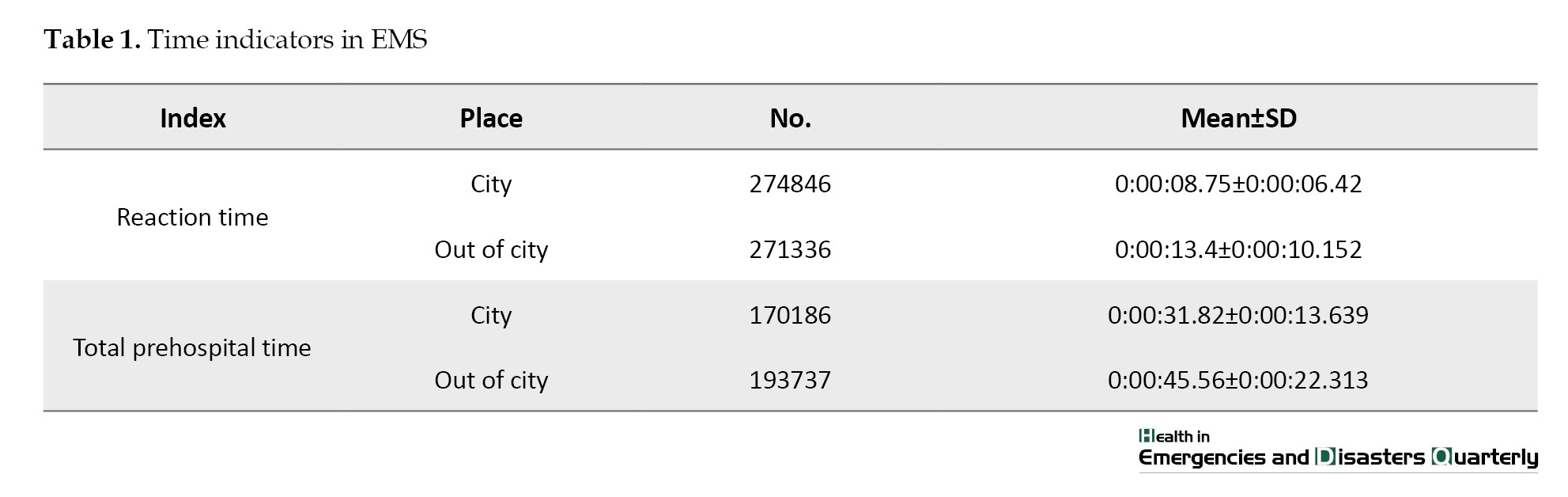
Our study’s findings indicated that reaction time in urban areas exceeds the national standard, while outside the city it falls within the standard range.
Step 2 (correlational analyses)
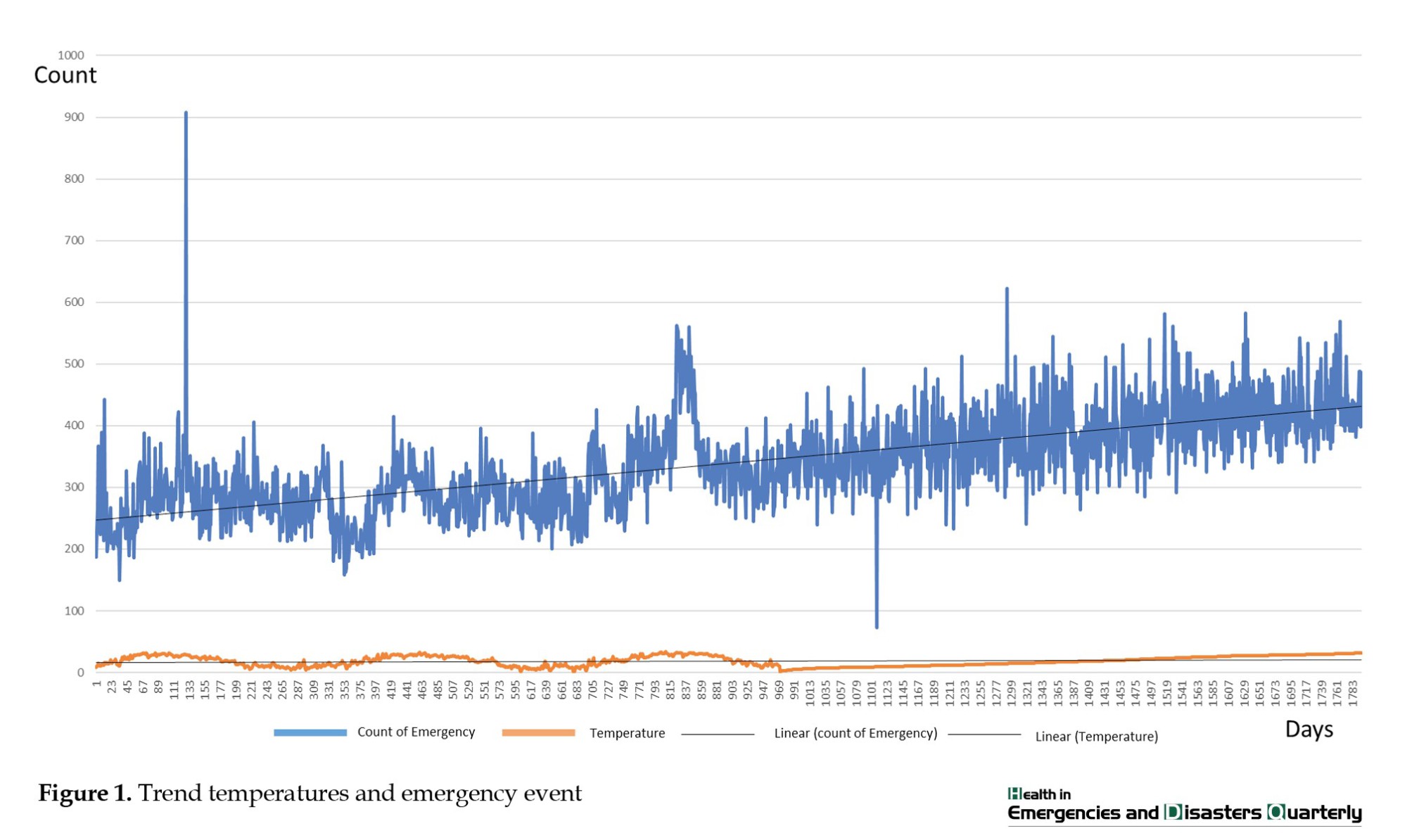
At this point, we analyzed the correlation between the trend of emergencies resulting in ambulance dispatch and the trend of daily temperatures. We computed all logged temperatures as daily means and analyzed the patterns in daily temperatures alongside prehospital medical emergencies. Our study results indicate a direct correlation between temperature and the rise in prehospital medical emergencies, as verified by the Pearson correlation test (Figure 1).
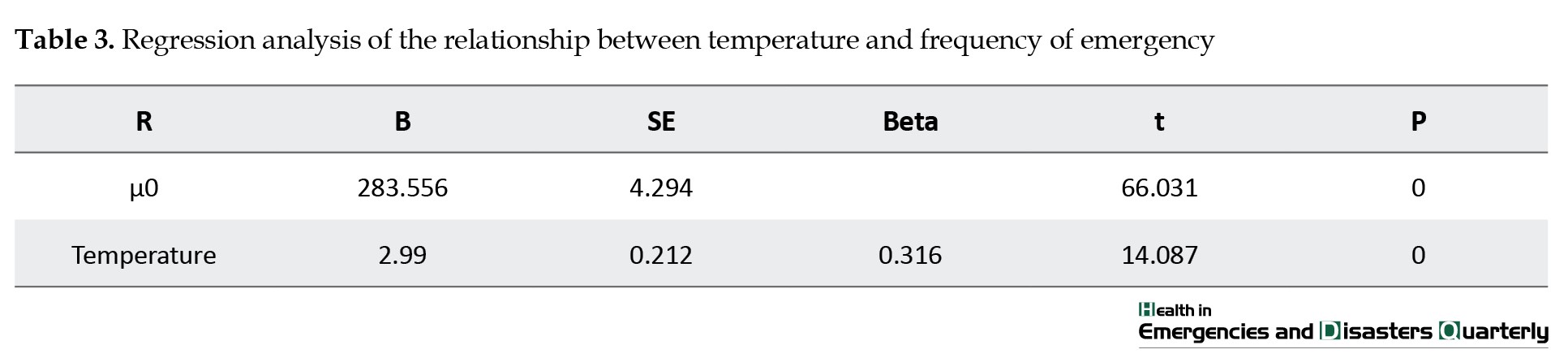
 The relationship between temperature and the frequency of emergencies is 0.316 (Table 2) and is statistically significant.

The R2 value indicates that 10% of the variations in emergencies are influenced by temperature.
The results show that there is a regression relationship between the temperature variable and the frequency of emergencies (Table 3) (P<0.05).
Step 3 (examining the prehospital time)
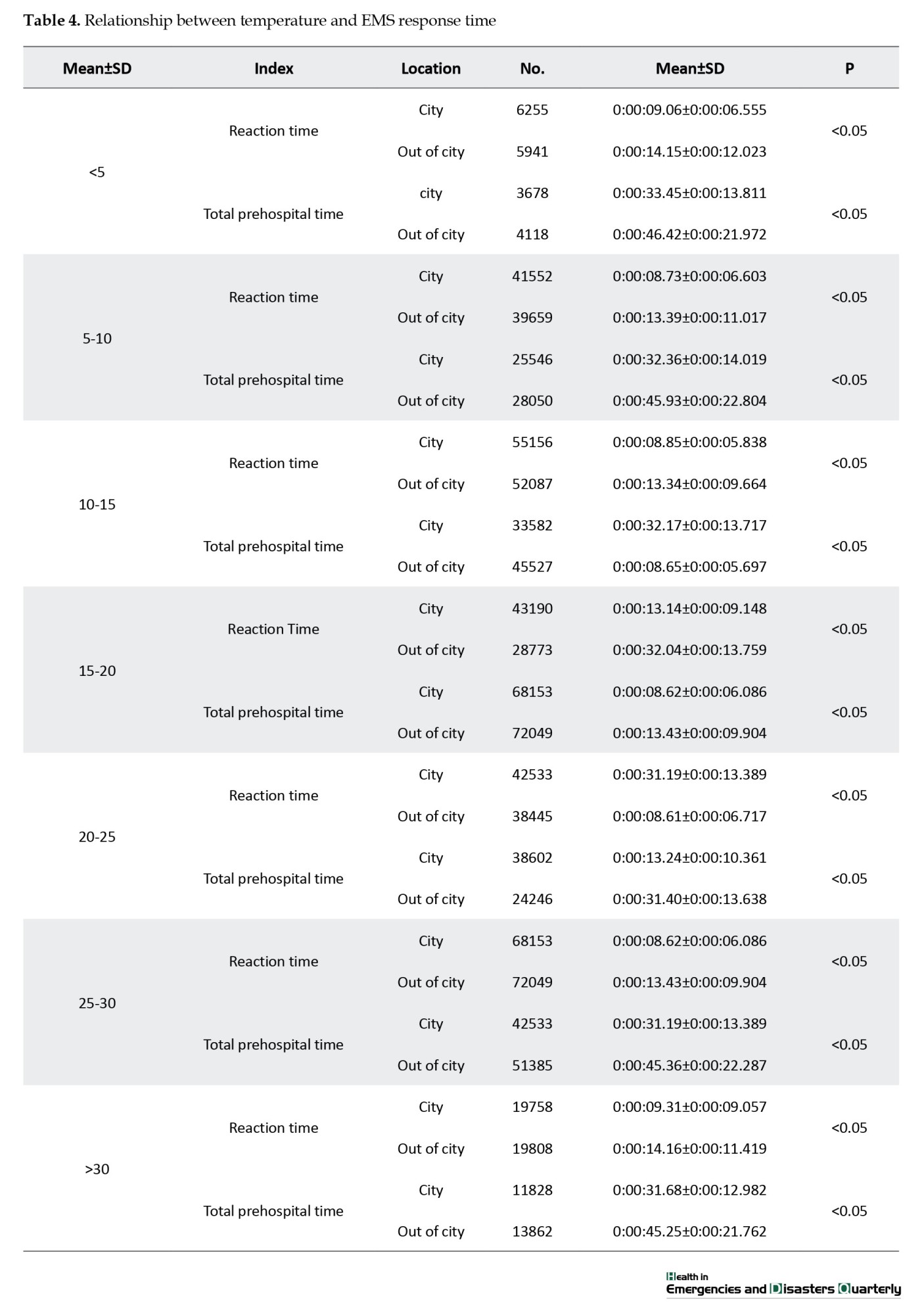
In this stage, we examined the prehospital response time at various temperatures. We conducted this analysis for reaction time and total pre-hospital time both within the city and in the out of city (Table 4).
Reaction time
At this point, we analyzed the reaction time to emergencies both within the city and beyond. Our findings indicated that the Reaction Time at temperatures under 5 °C and over 30 °C is greater than at other temperatures and exceeds the national standard (Figures 2 and 3).
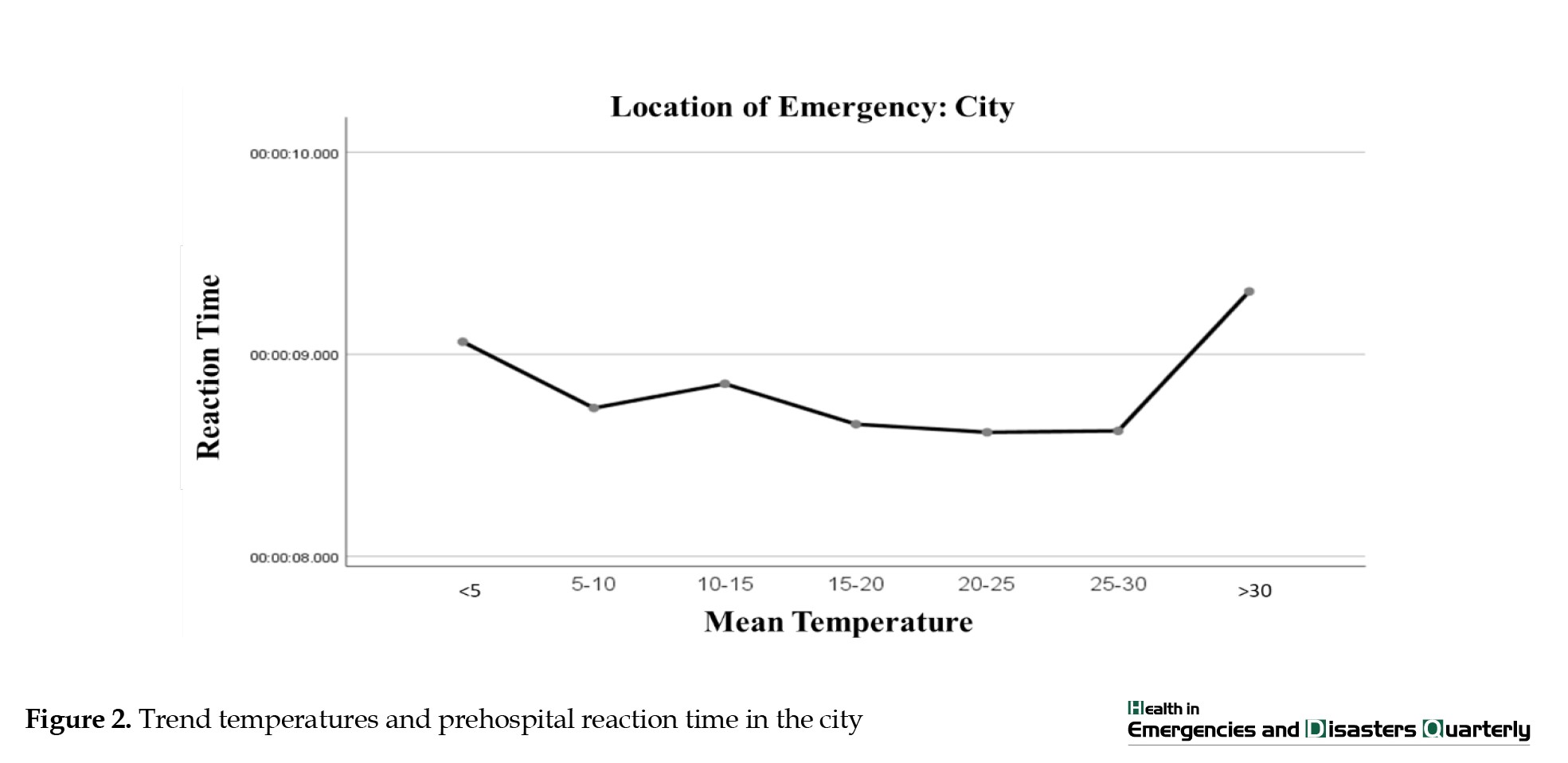
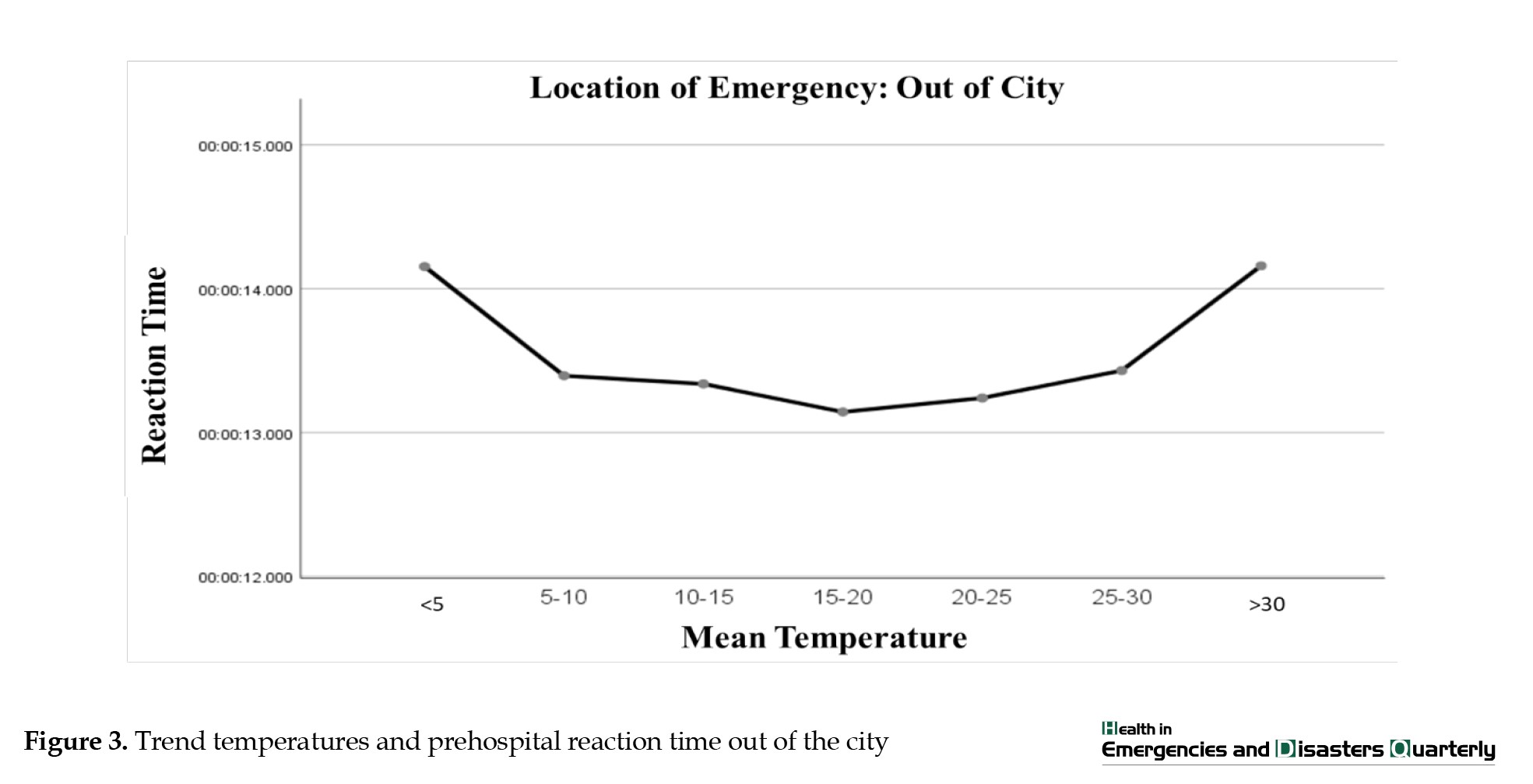 This is statistically meaningful in and out of city (P<0.05).
Total prehospital time
Our findings indicated that the total prehospital time at low temperatures exceeded that at elevated temperatures (Figures 4 and 5).
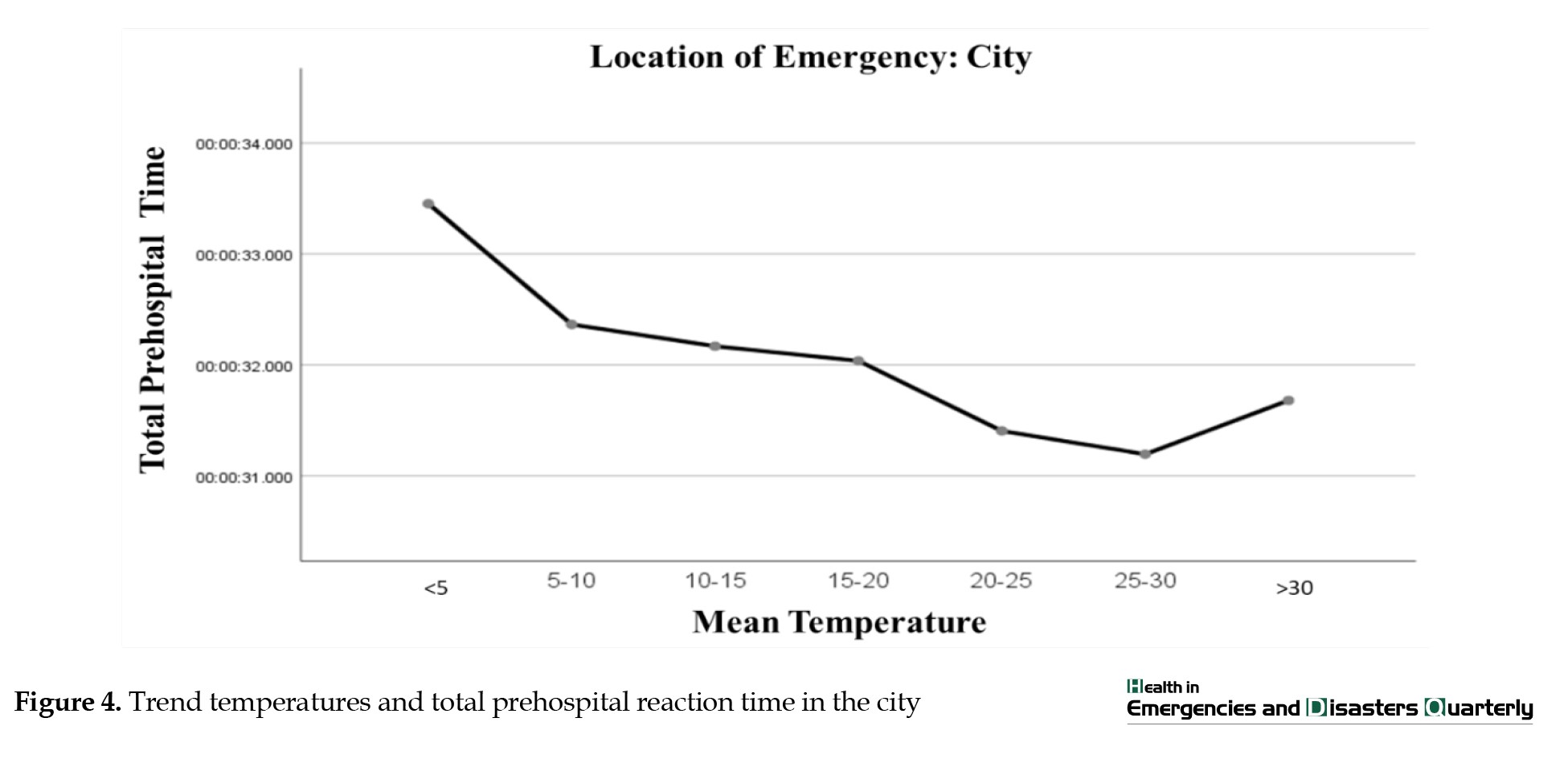
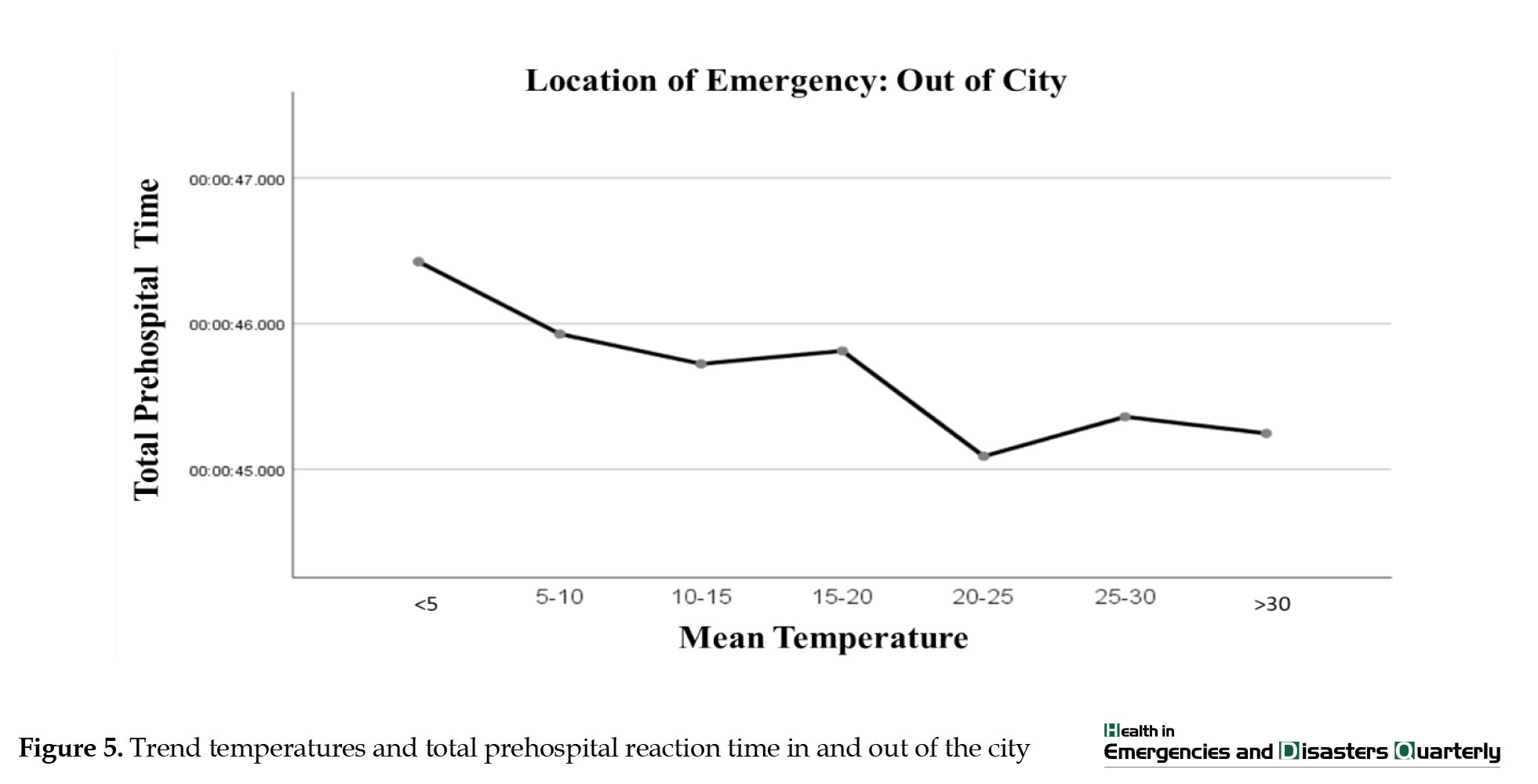 The findings indicated a downward trend in time as temperature rose, which was statistically significant (P<0.001).
Discussion
In this research, we examined how temperature influences prehospital emergency response durations. Our study’s findings indicated that the majority of calls prompting ambulance dispatch were due to external factors associated with morbidity and mortality, such as accidents. The second category of contacts includes ssymptoms, signs, and abnormal clinical and laboratory findings. The study by Sangsefidi et al. supports our results. Their research reveals that injuries and heart conditions rank among the primary reasons for calls that result in ambulance dispatch [25]. We discovered a positive and direct correlation between temperature variations and the number of patients attended to. We observed that the patient count rose throughout the study, even though the temperature variations were minimal. This upward trend is statistically meaningful. Our findings indicated that the greatest number of calls resulting in ambulance dispatch happened at temperatures ranging from 25 to 30 °C, whereas the fewest calls leading to ambulance dispatch took place at temperatures lower than 5 °C. The results of Ramgop et al. study confirm our findings. They found that the EMS response increases with increasing temperature [26]. Kue et al. study results also indicated that the number of emergency medical service calls rose significantly during the heat wave, but there was little change in the types of illnesses reported [27]. In a research study, Ruan et al. examined the link between temperature and prehospital emergency response in Chengdu. They discovered that the most common responses were related to the three primary causes of injury: traffic accidents, poisoning, and falls. They also discovered that when the average daily temperature surpassed 17.9 °C, the amount of emergency medical services responding to injuries rose [28]. It seems that variations in temperature can considerably affect the capacity of prehospital system to address the demands of patients. Through the examination of past data, we discovered a trend and temperature patterns indicating that emergency reaction times rose when temperatures fell below 5 °C and exceeded 30 °C. This finding indicates that patients needed to wait more time (beyond the established time standard) to obtain services. This connection was statistically relevant. On the other hand, as the temperature increases, the total prehospital time decreases.
Research conducted by Thornes et al. that analyzed daily air temperature alongside ambulance call data for Birmingham during a 5-year span (2007-2011) discovered a notable link between extreme weather and heightened ambulance call and response durations. For each 1 °C drop in air temperature, there was a 1.3% decline in emergency department efficiency [29]. Apiratwarakul’s research additionally indicated that temperatures exceeding 35 °C prolong pre-hospital times [30]. Seong et al. examined the pattern of heat-related EMS response durations during weekdays peak hours. They discovered that EMS experienced comparatively longer response times during the morning and evening [31]. According to the findings of Zhan et al. precipitation and temperature serve as risk factors for ambulance performance, and their delayed impacts on ambulance reaction time (ART) are considerable. They discovered a linear connection between temperature and precipitation with ART [32]. Forecasting the flow of service recipients in prehospital emergency departments under varying weather conditions can enhance managers’ situational awareness and assist in addressing the challenges brought by climate change. By forecasting the rise in service demand across various climate periods, we can strategize the efficient distribution of resources and reduce patient waiting times.
Conclusion
This analysis shows that the response time in EMS increases when temperatures rise above 30 degrees or descend below 5 degrees. Conversely, as temperatures increase, the total prehospital time decreases. It is crucial for EMS policymakers to understand the changing patient trends and the growing demand for ambulances under varying weather conditions to provide adequate care. This study offers data-driven evidence for planners to tackle the challenges presented by climate change. By anticipating spikes in service demands during weather fluctuations, we can plan for better resource allocation and minimize patient wait times. We recommend that, in addition to climate forecasting, adaptive strategies be employed as a management tool to strengthen the resilience of emergency responses in extreme weather situations.
Study limitations
This study has a number of limitations. First, the retrospective design resulted in some data being either incomplete or insufficient. Additionally, because the research focused solely on a single EMS system, applying the findings to other contexts may prove difficult. Moreover, our study did not consider factors such as precipitation, air pollution, and traffic volume, which could affect response times. We suggest that future research should incorporate these variables.
Ethical Considerations
Compliance with ethical guidelines
This study was approved by the Ethics Committee of Golestan University of Medical Sciences, Gorgan, Iran (Code: IR.GOUMS.REC.1402.449).
Funding
This research did not receive any grant from funding agencies in the public, commercial, or non-profit sectors.
Authors' contributions
All authors contributed equally to the conception and design of the study, data collection and analysis, interpretation of the results, and drafting of the manuscript. Each author approved the final version of the manuscript for submission.
Conflict of interest
The authors declared no conflict of interest.
Acknowledgments
The researchers express gratitude to the prehospital emergency management and its personnel, along with the Director General of Meteorology and their team, who aided in our data collection.
Reference
Climate change represents one of the most significant public health challenges. Climate change has heightened the danger of encountering extreme temperatures, natural disasters, exposure to climate-sensitive illnesses, and their consequent impacts on public health. Research indicates that climate variability and change present significant threats to individuals living in both developing and developed nations [1, 2]. Climate change has immediate effects that present the highest threat to the wellbeing of communities. These outcomes encompass death and illness [3-7]. It is anticipated that as the extent of these changes expands during this century, additional repercussions will emerge for infrastructure [8].
Certainly, preparedness can significantly contribute to minimizing these losses and averting deaths and illnesses. Achieving this preparedness necessitates collaborative efforts between local authorities and the community [9, 10]. Organizations need to prioritize understanding risks, enhancing disaster risk governance, investing in disaster risk reduction, and strengthening disaster preparedness and response efforts as a national priority [11]. This issue is particularly crucial in Iran, which has faced multiple instances of climate-related flooding in urban and rural areas, along with significant drought conditions affecting substantial regions of the nation [12, 13].
Due to its arid and semi-arid climate, every year Golestan Province in Iran experiences drought and flooding events that linked to climate change [14-18]. Certainly, having access to evidence-based data regarding the existing and possible risks of climate change to the health of at-risk populations, as well as identifying effective adaptation strategies, is essential to equip individuals and communities for the health consequences of climate change [19]. Evaluating the effects of climate change and health vulnerabilities offers a crucial information framework for comprehending and tackling climate change-related risks within society [19]. Consequently, mortality rates and disease occurrences linked to climate change have been the focus of numerous epidemiological investigations, with various studies documenting the adverse impacts of climate change on death rates and related complications [2, 20].
Currently, as a health metric, calls to prehospital emergency dispatch centers have garnered an increased focus in research examining the impact of climate change on health issues. Epidemiological research has found a link between temperature and emergency ambulance calls in various regions globally. Prehospital emergency services are the initial segment of the healthcare system that addresses medical emergencies across all levels, and several studies highlight a connection between prehospital emergency missions and weather factors like temperature [21, 22]. Situations that necessitate ambulance deployment can be connected to environmental factors (such as weather and climate) and demographic traits. Data concerning ambulance dispatches in relation to the environment is essential for guiding emergency medical service planning and resource redistribution by officials [23]. Researchers have focused on the elements that influence EMS response time in transportation, including old road design, traffic congestion, a rising number of vehicles, and particular types of roads (such as city streets, interstates, and highways), leading to further response delays [24]. Nonetheless, there has been minimal research investigating delayed response times in various temperature context and how these effects are distributed unevenly across different environments. Recognizing that contextual, geographic, and social factors in each area can affect the severity of these outcomes, this research investigates how temperature influences emergency medical services response times in Golestan Province.
Materials and Methods
An analytical study was carried out to investigate how temperature influences emergency medical services response times in Golestan Province of Iran from March 21, 2019 to March 20, 2024. Information was obtained from the prehospital care report (PCR). These data included the type of emergency and time of request. This study included patients who received EMS during the four distinct seasons (spring to winter) from 2019 to 2024. Patients who could not be located or had incomplete information were excluded from the study. Illnesses in this study were defined according to diagnoses in the EMS database using the tenth revision of the international classification of diseases (ICD-10) version 2019. Reaction time was measured from when the Dispatch Center (Golestan Command and Control Center) received the call to when the EMS team arrived at the scene. Total prehospital time was defined as the duration between receiving the call to dispatch and the ambulance's arrival at the hospital. The duration of each operational process was recorded in the EMS database. Data collected included demographic information, such as diagnosis, EMS operation times, gender, age, and type of illness. Temperature data were provided by the Golestan Meteorological Department, with daily averages recorded temperature used for analysis.
Statistical analysis
The participants’ characteristics and demographics were the focus of a descriptive analysis. IBM SPSS software, version 27 for Windows was used for statistical analysis. Mean±SD were reported for continuous data, while percentages were used for categorical data. For univariate analysis, the chi-squared test was used to compare groups, and the two-sample t-test was applied to numerical data.
Results
Throughout the study period, a total of 608593 requests were recorded; it does not include any personal or postcode information.
Step 1 (descriptive data)
We organized all primary diagnoses of EMTs. The most common category of illnesses was associated with external causes of morbidity and mortality (V01-Y98), including accidents (34%). The following in rank were signs and symptoms associated with respiratory, circulatory, and digestive disorders (25.2%). Congenital anomalies and disorders before and during birth have the lowest amount of demand. Medical emergencies occur less frequently within city boundaries (49.674%) compared to on the out of city (50.326%). Also, 61.463% of the service recipients are male and 38.53% are female. Our study’s findings indicated that August (9.8%), July (9.7%), and September (9%) had the highest number of emergencies requiring ambulance dispatch.
At this point, we analyzed the emergency time index within the city and out of city (Table 1).
Our study’s findings indicated that reaction time in urban areas exceeds the national standard, while outside the city it falls within the standard range.
Step 2 (correlational analyses)
At this point, we analyzed the correlation between the trend of emergencies resulting in ambulance dispatch and the trend of daily temperatures. We computed all logged temperatures as daily means and analyzed the patterns in daily temperatures alongside prehospital medical emergencies. Our study results indicate a direct correlation between temperature and the rise in prehospital medical emergencies, as verified by the Pearson correlation test (Figure 1).
The R2 value indicates that 10% of the variations in emergencies are influenced by temperature.
The results show that there is a regression relationship between the temperature variable and the frequency of emergencies (Table 3) (P<0.05).
Step 3 (examining the prehospital time)
In this stage, we examined the prehospital response time at various temperatures. We conducted this analysis for reaction time and total pre-hospital time both within the city and in the out of city (Table 4).
Reaction time
At this point, we analyzed the reaction time to emergencies both within the city and beyond. Our findings indicated that the Reaction Time at temperatures under 5 °C and over 30 °C is greater than at other temperatures and exceeds the national standard (Figures 2 and 3).
Total prehospital time
Our findings indicated that the total prehospital time at low temperatures exceeded that at elevated temperatures (Figures 4 and 5).
Discussion
In this research, we examined how temperature influences prehospital emergency response durations. Our study’s findings indicated that the majority of calls prompting ambulance dispatch were due to external factors associated with morbidity and mortality, such as accidents. The second category of contacts includes ssymptoms, signs, and abnormal clinical and laboratory findings. The study by Sangsefidi et al. supports our results. Their research reveals that injuries and heart conditions rank among the primary reasons for calls that result in ambulance dispatch [25]. We discovered a positive and direct correlation between temperature variations and the number of patients attended to. We observed that the patient count rose throughout the study, even though the temperature variations were minimal. This upward trend is statistically meaningful. Our findings indicated that the greatest number of calls resulting in ambulance dispatch happened at temperatures ranging from 25 to 30 °C, whereas the fewest calls leading to ambulance dispatch took place at temperatures lower than 5 °C. The results of Ramgop et al. study confirm our findings. They found that the EMS response increases with increasing temperature [26]. Kue et al. study results also indicated that the number of emergency medical service calls rose significantly during the heat wave, but there was little change in the types of illnesses reported [27]. In a research study, Ruan et al. examined the link between temperature and prehospital emergency response in Chengdu. They discovered that the most common responses were related to the three primary causes of injury: traffic accidents, poisoning, and falls. They also discovered that when the average daily temperature surpassed 17.9 °C, the amount of emergency medical services responding to injuries rose [28]. It seems that variations in temperature can considerably affect the capacity of prehospital system to address the demands of patients. Through the examination of past data, we discovered a trend and temperature patterns indicating that emergency reaction times rose when temperatures fell below 5 °C and exceeded 30 °C. This finding indicates that patients needed to wait more time (beyond the established time standard) to obtain services. This connection was statistically relevant. On the other hand, as the temperature increases, the total prehospital time decreases.
Research conducted by Thornes et al. that analyzed daily air temperature alongside ambulance call data for Birmingham during a 5-year span (2007-2011) discovered a notable link between extreme weather and heightened ambulance call and response durations. For each 1 °C drop in air temperature, there was a 1.3% decline in emergency department efficiency [29]. Apiratwarakul’s research additionally indicated that temperatures exceeding 35 °C prolong pre-hospital times [30]. Seong et al. examined the pattern of heat-related EMS response durations during weekdays peak hours. They discovered that EMS experienced comparatively longer response times during the morning and evening [31]. According to the findings of Zhan et al. precipitation and temperature serve as risk factors for ambulance performance, and their delayed impacts on ambulance reaction time (ART) are considerable. They discovered a linear connection between temperature and precipitation with ART [32]. Forecasting the flow of service recipients in prehospital emergency departments under varying weather conditions can enhance managers’ situational awareness and assist in addressing the challenges brought by climate change. By forecasting the rise in service demand across various climate periods, we can strategize the efficient distribution of resources and reduce patient waiting times.
Conclusion
This analysis shows that the response time in EMS increases when temperatures rise above 30 degrees or descend below 5 degrees. Conversely, as temperatures increase, the total prehospital time decreases. It is crucial for EMS policymakers to understand the changing patient trends and the growing demand for ambulances under varying weather conditions to provide adequate care. This study offers data-driven evidence for planners to tackle the challenges presented by climate change. By anticipating spikes in service demands during weather fluctuations, we can plan for better resource allocation and minimize patient wait times. We recommend that, in addition to climate forecasting, adaptive strategies be employed as a management tool to strengthen the resilience of emergency responses in extreme weather situations.
Study limitations
This study has a number of limitations. First, the retrospective design resulted in some data being either incomplete or insufficient. Additionally, because the research focused solely on a single EMS system, applying the findings to other contexts may prove difficult. Moreover, our study did not consider factors such as precipitation, air pollution, and traffic volume, which could affect response times. We suggest that future research should incorporate these variables.
Ethical Considerations
Compliance with ethical guidelines
This study was approved by the Ethics Committee of Golestan University of Medical Sciences, Gorgan, Iran (Code: IR.GOUMS.REC.1402.449).
Funding
This research did not receive any grant from funding agencies in the public, commercial, or non-profit sectors.
Authors' contributions
All authors contributed equally to the conception and design of the study, data collection and analysis, interpretation of the results, and drafting of the manuscript. Each author approved the final version of the manuscript for submission.
Conflict of interest
The authors declared no conflict of interest.
Acknowledgments
The researchers express gratitude to the prehospital emergency management and its personnel, along with the Director General of Meteorology and their team, who aided in our data collection.
Reference
- Hoegh-Guldberg O, Jacob D, Bindi M, Brown S, Camilloni I, Diedhiou A, et al. Impacts of 1.5 C global warming on natural and human systems. Global warming of 15 C: An IPCC Special Report: IPCC Secretariat; 2018. [Link]
- Guo Y. Hourly associations between heat and ambulance calls. Environmental pollution. 2017; 220(Part B):1424-8. [DOI:10.1016/j.envpol.2016.10.091] [PMID]
- Austin SE, Ford JD, Berrang-Ford L, Araos M, Parker S, Fleury MD. Public health adaptation to climate change in Canadian jurisdictions. International Journal of Environmental Research and Public Health. 2015; 12(1):623-51. [DOI:10.3390/ijerph120100623] [PMID]
- Austin SE, Ford JD, Berrang-Ford L, Biesbroek R, Ross NA. Enabling local public health adaptation to climate change. Social Science & Medicine. 2019; 220:236-44. [DOI:10.1016/j.socscimed.2018.11.002] [PMID]
- Watts N, Adger WN, Agnolucci P, Blackstock J, Byass P, Cai W, et al. Health and climate change: policy responses to protect public health. The lancet. 2015; 386(10006):1861-914. [DOI:10.1016/S0140-6736(15)60854-6] [PMID]
- Khan H, Vasilescu LG, Khan A. Disaster management cycle-a theoretical approach. Journal of Management and Marketing. 2008; 6(1):43-50. [Link]
- Chan NW, Roy R, Lai CH, Tan ML. Social capital as a vital resource in flood disaster recovery in Malaysia. International Journal of Water Resources Development. 2019; 35(4):619-37. [DOI:10.1080/07900627.2018.1457511]
- Mahmood MI, Elagib NA, Horn F, Saad SA. Lessons learned from Khartoum flash flood impacts: An integrated assessment. Science of the Total Environment. 2017; 601-2:1031-45. [DOI:10.1016/j.scitotenv.2017.05.260] [PMID]
- Rattanakanlaya K, Sukonthasarn A, Wangsrikhun S, Chanprasit C. A survey of flood disaster preparedness among hospitals in the central region of Thailand. Australasian Emergency Nursing Journal. 2016; 19(4):191-7. [DOI:10.1016/j.aenj.2016.07.003] [PMID]
- Yadollahie M. The flood in Iran: A consequence of the global warming? The international Journal of Occupational and Environmental Medicine. 2019; 10(2):54. [DOI:10.15171/ijoem.2019.1681] [PMID]
- Aitsi-Selmi A, Murray V. The Sendai framework: Disaster risk reduction through a health lens. Bulletin of the World Health Organization. 2015; 93:362. [DOI:10.2471/BLT.15.157362] [PMID]
- Memarian Khalil Abad H, Yousefi M, Aghakhani Afshar AH. [Identification and separation of flooding source regions and investigating the impact of watershed management operations on the peak discharge (case study: Bar watershed, Neyshabour, Iran) (Persian)]. Journal of Water and Soil Conservation. 2018; 25(1):35-59. [DOI:10.22069/jwsc.2018.13978.2875]
- Heidari S, Karimi M, Azizi G, Shamsipour A. [Explaining the spatial patterns of drought intensities in Iran (Persian)]. Journal of Spatial Analysis Environmental Hazards. 2023; 9(4):1-19. [Link]
- Shamsipour A, Rodgar Safari V. [Investigating the consequences of climate change with a focus on spatial analysis of drought severity in Golestan province using statistical and remote sensing indices (Persian)]. Journal of Climate Change Research. 2020; 1(3):65-76. [DOI:10.30488/ccr.2020.246770.1022]
- Sharifi A, Alaghi A, Honarvar MR, Heidari A. [Challenges of nutrition management in the flood crisis of Golestan province in north of Iran during 2019: A qualitative study (Persian)]. Journal of Gorgan University of Medical Sciences. 2021; 23(3):91-100. [Link]
- Mohajervatan A, Tavakoli N, Khankeh H, Raeisi AR, Atighechian G. Identifying flood response experiences in Iranian health system: A qualitative study. Journal of Flood Risk Management. 2023; 16(4):e12932. [DOI:10.1111/jfr3.12932]
- Mohajervatan A, Tavakoli N, Khankeh H, Raeisi AR, Atighechian G. Health sector’s flood response plan: A comprehensive review. Environmental Health Engineering and Management Journal. 2021; 8(3):169-78. [DOI:10.34172/EHEM.2021.20]
- Mohajervatan A, Karnama A, Sadeghi Z, Hosseini Z, Alizad F, Dehghani M. Impacts of flood on health: Evidence from northern Iran. International Journal of Health System and Disaster Management. 2017; 5(2):41. [Link]
- Berry P, Enright PM, Shumake-Guillemot J, Villalobos Prats E, Campbell-Lendrum D. Assessing health vulnerabilities and adaptation to climate change: A review of international progress. International Journal of Environmental Research and Public Health. 2018; 15(12):2626. [DOI:10.3390/ijerph15122626] [PMID]
- Chen R, Yin P, Wang L, Liu C, Niu Y, Wang W, et al. Association between ambient temperature and mortality risk and burden: Time series study in 272 main Chinese cities. Bmj. 2018; 363. [DOI:10.1136/bmj.k4306] [PMID]
- Sangkharat K, Mahmood MA, Thornes JE, Fisher PA, Pope FD. Impact of extreme temperatures on ambulance dispatches in London, UK. Environmental Research. 2020; 182:109100. [DOI:10.1016/j.envres.2019.109100] [PMID]
- Xu Z, Watzek JT, Phung D, Oberai M, Rutherford S, Bach AJ. Heat, heatwaves, and ambulance service use: A systematic review and meta-analysis of epidemiological evidence. International Journal of Biometeorology. 2023; 67(10):1523-42. [DOI:10.1007/s00484-023-02525-0] [PMID]
- Wang YC, Sung FC, Chen YJ, Cheng CP, Lin YK. Effects of extreme temperatures, fine particles and ozone on hourly ambulance dispatches. Science of the Total Environment. 2021; 765:142706. [DOI:10.1016/j.scitotenv.2020.142706] [PMID]
- Li D, Newman GD, Wilson B, Zhang Y, Brown RD. Modeling the relationships between historical redlining, urban heat, and heat-related emergency department visits: An examination of 11 Texas cities. Environment and Planning B: Urban Analytics and City Science. 2022; 49(3):933-52. [DOI:10.1177/23998083211039854] [PMID]
- Sangsefidi N, Akbari Khalaj T, Shafaei h, Yazdani A, Mahzoun H, Doustkhah Ahmadi G. [Investigating the trend of Prehospital Emergency Missions in Mashhad before and after COVID-19 (Persian)]. Medical Journal of Mashhad university of Medical Sciences. 2023; 65(6):2257-67. [Link]
- Ramgopal S, Dunnick J, Owusu-Ansah S, Siripong N, Salcido DD, Martin-Gill C. Weather and temporal factors associated with use of emergency medical services. Prehospital Emergency Care. 2019; 23(6):802-10. [DOI:10.1080/10903127.2019.1593563] [PMID]
- Kue RC, Dyer KS. The impact of heat waves on transport volumes in an urban emergency medical services system: a retrospective review. Prehospital and Disaster Medicine. 2013; 28(6):610-5. [DOI:10.1017/S1049023X13008960] [PMID]
- Shijuan R, Yang LI, Yue W, Xianyan J, Chunli S. Association between temperature and volume of emergency medical service response due to injury in Chengdu. Journal of Environmental and Occupational Medicine. 2024; 41(10):1151-5. [Link]
- Thornes JE, Fisher PA, Rayment-Bishop T, Smith C. Ambulance call-outs and response times in Birmingham and the impact of extreme weather and climate change. Emergency Medicine Journal. 2014; 31(3):220-8. [DOI:10.1136/emermed-2012-201817] [PMID]
- Apiratwarakul K, Cheung LW, Pearkao C, Ienghong K. The impact of global warming on the rise in heat-related illnesses in emergency medical services. Journal of Multidisciplinary Healthcare. 2024:5211-6. [DOI:10.2147/JMDH.S501721] [PMID]
- Seong K, Jiao J, Mandalapu A. Effects of urban environmental factors on heat-related emergency medical services (EMS) response time. Applied Geography. 2023; 155:102956. [DOI:10.1016/j.apgeog.2023.102956]
- Zhan ZY, Yu YM, Chen TT, Xu LJ, An SL, Ou CQ. Effects of hourly precipitation and temperature on ambulance response time. Environmental Research. 2020; 181:108946. [DOI:10.1016/j.envres.2019.108946] [PMID]
Type of article: Research |
Subject:
Special
Received: 2025/02/25 | Accepted: 2025/08/30 | Published: 2026/04/1
Received: 2025/02/25 | Accepted: 2025/08/30 | Published: 2026/04/1
Send email to the article author
| Rights and permissions | |
 |
This work is licensed under a Creative Commons Attribution-NonCommercial 4.0 International License. |

Copyright © The Author(s);
This is an open access article distributed under the terms of the Creative Commons Attribution-NonCommercial 4.0 (CC-By-NC 4.0), which permits use, distribution, and reproduction in any medium, provided the original work is properly cited and is not used for commercial purposes.
Contact Information
This is an open access article distributed under the terms of the Creative Commons Attribution-NonCommercial 4.0 (CC-By-NC 4.0), which permits use, distribution, and reproduction in any medium, provided the original work is properly cited and is not used for commercial purposes.
Contact Information
