
Volume 11, Issue 4 (Summer 2026)
Health in Emergencies and Disasters Quarterly 2026, 11(4): 291-302 |
Back to browse issues page



Ethics code: Ethical Considerations This study adhered to ethical research guidelines and best practices for scop


Download citation:
BibTeX | RIS | EndNote | Medlars | ProCite | Reference Manager | RefWorks
Send citation to:


BibTeX | RIS | EndNote | Medlars | ProCite | Reference Manager | RefWorks
Send citation to:
Zahedi Asl J, Shabany M, Tavana S, Zohrabi H. Training Healthcare Personnel in Bioterrorism in Iran: A Scoping Review. Health in Emergencies and Disasters Quarterly 2026; 11 (4) :291-302
URL: http://hdq.uswr.ac.ir/article-1-730-en.html
URL: http://hdq.uswr.ac.ir/article-1-730-en.html


1- Student Research Committee, Faculty of Nursing, AJA University of Medical Sciences, Tehran, Iran.
2- Department of Community Health and Research, Faculty of Nursing, AJA University of Medical Sciences, Tehran, Iran. ,maryamshabanyi@yahoo.com
2- Department of Community Health and Research, Faculty of Nursing, AJA University of Medical Sciences, Tehran, Iran. ,
Full-Text [PDF 595 kb]
(793 Downloads)
| Abstract (HTML) (2121 Views)
Full-Text: (99 Views)
Introduction
Modern weapons are widely used in contemporary warfare. Among these, biological weapons have gained increased attention due to their ease of production, high replication capability, simple storage, ability to protect friendly forces, and difficulties in tracing the perpetrator. Moreover, their effectiveness extends beyond humans to animals and agricultural products, making them a significant threat [1, 2]. The use of such weapons to harm humans and animals is referred to as bioterrorism. In other words, bioterrorism involves the misuse of biological agents, including viruses, bacteria, fungi, and other microorganisms, to destroy, harm, or endanger human life and other living organisms [3]. The primary goal of bioterrorism is to utilize these organisms and their byproducts to cause death, illness, and widespread fear. The use of biological agents as weapons dates back to 600 BC when corpses and animal carcasses were used to spread disease among enemies [4].
For example, in 1346 AD, during the siege of Caffa (present-day Ukraine), the Tatars catapulted the bodies of plague victims into the city, leading to a deadly outbreak [5]. A biological warfare simulation conducted in the United States demonstrated that if a biological agent, such as the plague, is released in a densely populated city, it could result in 3,700 infections and 2,000 deaths within the first week [6]. Iran, due to its strategic geopolitical position, is also vulnerable to such threats posed by other countries [7]. Healthcare personnel, including physicians, nurses, and emergency responders, are the first to encounter casualties resulting from such attacks. Therefore, training healthcare personnel in this area is of utmost importance and plays a significant role in mitigating the consequences of biological weapons [8]. Numerous studies have examined training healthcare personnel for bioterrorism preparedness. For instance, Gorji et al. conducted a study among nurses in Sari, Mazandaran Province, Iran. They found that 91.7% of nurses had poor knowledge of bioterrorism, while 93.3% had no opinion on the matter [9]. Similarly, Bahraini Moghadam et al. assessed the awareness and attitudes of volunteers and rescuers of the Iranian Red Crescent Society during a bioterrorism attack in Mahabad, West Azerbaijan Province, Iran, and reported that 78.3% of volunteers had no knowledge of how to respond to bioterrorism incidents, and only 7.1% had adequate awareness [10].
Since the nursing curriculum in Iran does not include specific training in bioterrorism, addressing this educational gap could enhance the nurses’ knowledge and preparedness [11]. Most studies on hospital preparedness in Iran have focused solely on evaluating the functional, structural, and non-structural readiness of healthcare centers for natural disasters, with little attention given to preparedness for biological incidents. Additionally, the lack of implementation of standards and preparedness guidelines in healthcare centers hinders effective planning for biological emergencies [12].
Studies have also shown that interventions, such as education, can increase nurses’ awareness, knowledge, and willingness to respond to biological attacks. However, the level of preparedness among Iranian nurses remains low [13]. Traditional teaching methods have not sufficiently met learners’ educational needs and often fail because learners cannot apply theoretical knowledge in real-life situations and tend to forget training when needed. Therefore, educational experts have introduced a problem-based learning system that has been widely adopted by universities worldwide in recent years [14]. One of the most effective modern teaching methods for bioterrorism is simulation-based training, which has greater efficiency than traditional lecture-based approaches while eliminating the risks associated with real-world scenarios. However, despite its effectiveness, simulation-based training remains costly [15].
Given Iran’s strategic geopolitical location and exposure to regional threats, bioterrorism preparedness is not only a public health concern but also a matter of national security. Ensuring that healthcare personnel are well-prepared is essential for effective emergency responses and minimizing casualties in potential biological attacks [16, 17]. Although several international systematic reviews have addressed bioterrorism preparedness (e.g. Kim and Lee, 2023; Li et al., 2023), no comprehensive scoping review has focused on the Iranian healthcare system [18, 19]. This study is necessary to identify the specific educational gaps, assess current training practices in Iran, and support the development of context-specific strategies to improve national readiness. Therefore, this study aimed to conduct a scoping review of bioterrorism training for healthcare personnel in Iran to identify gaps and inform the development of practical training strategies to improve national preparedness.
Materials and Methods
This study was conducted as a scoping review to examine the status of bioterrorism training for healthcare personnel in Iran. The review followed the five-stage framework proposed by Arksey and O’Malley, which included the following steps:
Identifying the research question
The main research questions were:
• “What types of bioterrorism training have been provided to healthcare personnel in Iran?”
• “What is the level of awareness and preparedness of healthcare personnel regarding bioterrorism in Iran?”
Identifying relevant studies
A comprehensive search was conducted across credible national and international databases, including SID, Magiran, IranDoc, PubMed, ScienceDirect, and Web of Science, as well as Google Scholar. The keywords used for the search included: “Bioterrorism”, “training”, “education”, “health care providers”, “teaching”, “healthcare personnel and biological threats”, “biological warfare agents”. Boolean operators AND, OR, and NOT were applied to develop the search strategy. The detailed search strategies used for the databases and the scientific search engine are available in Appendix 1.
Study selection
Articles published between April 2014 and January 2025 were reviewed. This period was selected to include the most recent research on bioterrorism training for healthcare personnel in Iran. The inclusion criteria included studies focused on bioterrorism training for healthcare personnel in Iran, with no time restrictions. Due to the limited number of Iranian studies, review articles were included as supplementary sources and analyzed separately. Studies focusing on bioterrorism education in non-healthcare fields or those that lacked full-text versions were excluded. The Google Scholar search initially yielded 16,800 records; for feasibility, the first 400 results were screened for eligibility. An initial search yielded 17,750 articles. After removing duplicates and applying inclusion and exclusion criteria, 21 studies were selected for the final analysis (Figure 1). Screening was conducted by two independent reviewers. Titles and abstracts were screened first, followed by a full-text review of potentially eligible studies. Any disagreements were resolved through discussion, and if consensus could not be reached, a third reviewer adjudicated. As this was a scoping review, no formal quality appraisal or risk-of-bias assessment of the included studies was performed, in accordance with preferred Reporting items for systematic reviews and meta-analyses extension for scoping reviews (PRISMA-ScR) guidelines.
.PNG)
Data extraction and analysis
Key information such as the type of training, target groups, educational methods, and reported outcomes were extracted and categorized.
Collating, summarizing, and reporting results
The findings were categorized and analyzed based on main themes to identify knowledge gaps and educational needs. This scoping review provides a comprehensive overview of the status of bioterrorism training for healthcare personnel in Iran and can serve as a basis for future planning.
Results
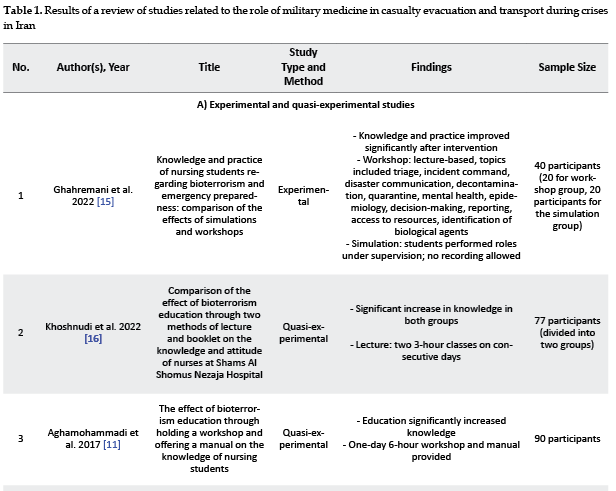
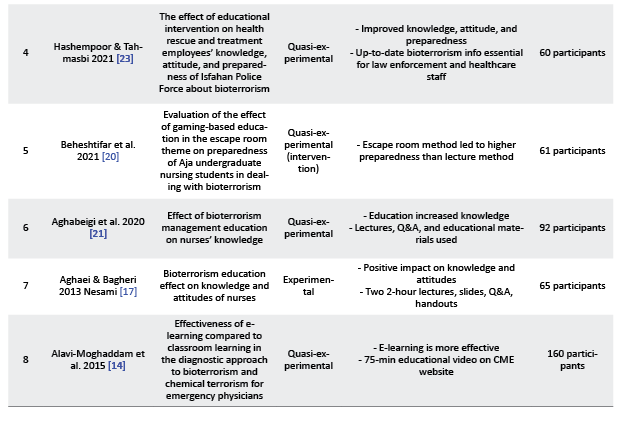
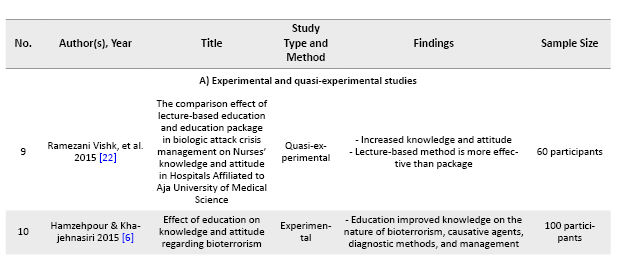
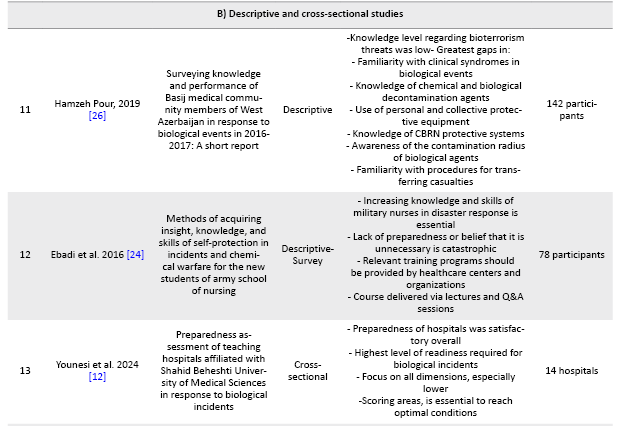
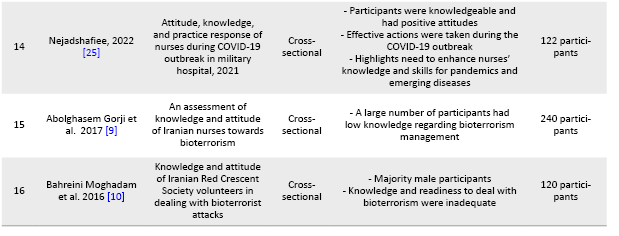
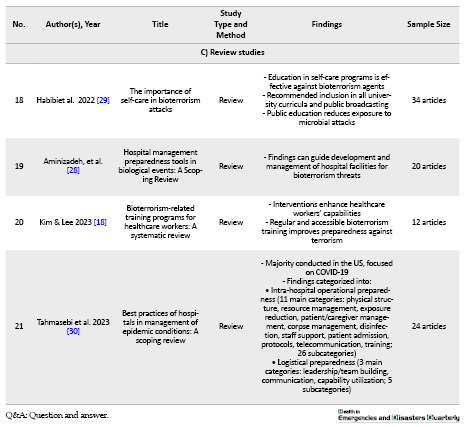
Table 1 summarizes the findings of the review study. Of the 354 full-text articles, 21 studies met the inclusion criteria and were selected. The articles were categorized into three groups: ٍExperimental and quasi-experimental studies (10 studies), descriptive and cross-sectional studies (needs assessment) (seven studies), and review studies (four studies) (Table 1).
Experimental studies
In the content analysis of the interventions in experimental studies, the training methods for healthcare personnel in bioterrorism were categorized as follows:
Active and experiential learning methods (experiential learning): These included studies with simulation-based interventions (simulation-based training) aimed to use simulations for role-playing exercises for students [15], game-based learning (game-based learning), such as the “escape room” method for enhancing preparedness [20], and workshops and hands-on training: Through slides, videos, question and answer (Q&A), and group work [11], as well as conducting workshops accompanied by lectures [15].
Traditional and theoretical learning methods (traditional and theoretical learning): These studies involved methods, such as lecture-based training [6, 16], with or without PowerPoint presentations and Q&A sessions [21], and comparisons of lectures with instructional packages (with lectures shown to be more effective) [22, 23] in bioterrorism education. Additionally, manual and booklet-based learning, the provision of booklets in combination with workshops [11], and comparisons of lectures with book-based learning [16] were other traditional methods used to train healthcare personnel in bioterrorism.
Electronic and distance learning methods (e-learning & online education): This category included virtual learning (e-learning and online education) as a modern, non-face-to-face training method for healthcare personnel. Studies comparing e-learning with in-person classes (showing greater effectiveness of online education) [14] and studies combining online education with videos, slides, and escape room games [20] were included in this category.
Descriptive and needs assessment studies (descriptive & survey-based studies)
These studies assessed the awareness and preparedness levels of various healthcare personnel in response to bioterrorism. These studies showed a low level of awareness and preparedness among healthcare workers [9, 10, 12, 23-26].
Review studies
These studies examined the importance of educational programs and provided recommendations for improving bioterrorism education [28-30].
Discussion
The present study demonstrated that various research methodologies have been employed to assess the knowledge, performance, and attitudes of healthcare personnel, as well as the impact of bioterrorism training. This categorization highlights existing knowledge gaps and identifies areas where further research is needed to improve bioterrorism training for healthcare personnel. Based on these findings, the studies were divided into three groups: Experimental and quasi-experimental studies, descriptive and cross-sectional studies, and review studies, as discussed below:
Experimental and quasi-experimental studies
This study revealed that experiential learning methods, including simulation, escape room games, and workshops, effectively increased knowledge, attitudes, and performance scores among Iranian healthcare personnel.
These findings align with the study by Ghahremani et al., titled “Awareness and performance of nursing students on bioterrorism and emergency preparedness: Comparison of the effects of simulation and workshops” (2022), which indicated that simulation-based training significantly increased knowledge and performance among healthcare staff before and after the educational intervention [15]. Similarly, Beheshtifar et al., in their study titled “The effect of escape room-based training on the preparedness of undergraduate nursing students of AJA University in dealing with bioterrorism” [20], concluded that simulation-based interventions, such as escape rooms, were more effective than traditional methods such as lectures. Additionally, in the study by Heba Ghazy et al., titled “The impact of an educational program on nurses’ knowledge of bioterrorism preparedness” (2022), it was shown that the nurses’ knowledge level was low before the simulation-based (practical workshop) intervention. However, this knowledge improved significantly after the intervention, reaching a desirable level [31].
These findings are consistent with those of Kim and Lee (2023), who emphasized the superiority of simulation-based training in improving practical preparedness among healthcare workers [18].
However, unlike in many global settings where bioterrorism preparedness is a core part of emergency education, the Iranian healthcare curriculum still lacks standardized training in this area.
Traditional and theoretical learning methods were another type of intervention used in the experimental studies. The study by Ramezani et al. (2022), titled “Comparison of the effect of lecture-based training and crisis management educational packages in biological attacks on the knowledge and attitudes of nurses working in Hospitals Affiliated with AJA University of Medical Sciences”, conducted in military hospitals, demonstrated that lecture-based intervention was more effective than an educational package that included booklets and CDs with instructional videos. This difference was attributed to variations in the teaching approach and the study environment [22].
E-learning and online education were also among the interventions used. The study by Alavi et al., titled “Effectiveness of e-learning compared to classroom learning in diagnostic approaches to bioterrorism and chemical terrorism for emergency physicians” (2015), revealed that the e-learning intervention, which included uploading educational videos on the Shahid Beheshti University of Medical Sciences website, had a higher efficacy than traditional classroom-based methods [14].
Similarly, Li et al. (2023) found that online learning methods showed promising results globally, which is consistent with the effectiveness of e-learning observed in several Iranian studies included in this review [19]. These studies suggested that both active experiential methods and well-structured e-learning enhanced knowledge and preparedness, whereas traditional methods showed limited, context-dependent effectiveness, highlighting the need to adapt teaching strategies to specific educational settings.
Cross-sectional descriptive studies
The present study showed that most healthcare workers in Iran have limited awareness about bioterrorism. These findings are similar to those of Siavash Hamzehpour’s study titled “Assessment of the awareness and skills of members of the Medical Basij Organization of West Azerbaijan Province in dealing with biological incidents and biological emergencies”, conducted in 2016, in which none of the participants had the necessary awareness regarding the types of biological agents, bioterrorism, and the harmful biological effects and medical syndromes resulting from them. Additionally, the study by Saeed Younesi et al. (2024) [12], titled “Evaluation of the preparedness of educational Hospitals Affiliated with Shahid Beheshti University of Medical Sciences in dealing with biological incidents”, indicated that the preparedness level of their hospitals was satisfactory, but the environment of their study was different, which contradicts the current findings. The study by Abdelkarim et al. (2023), titled “Knowledge and attitudes towards biological warfare among health-related students”, conducted in Ghanaian hospitals and Jazan University, found that the participants had satisfactory awareness regarding biological warfare, which was different from the situation in Iran, possibly due to the differences in the foundational education systems of the two countries [18]. Collectively, the cross-sectional evidence indicated that Iranian healthcare workers had lower awareness than their international counterparts, who demonstrated greater preparedness.
Review studies
The present study showed that educational programs aimed at improving bioterrorism education for healthcare workers are essential, and both healthcare workers and the public need to be educated on bioterrorism-related harms. According to the findings, Kim and Lee’s study titled “Educational programs related to bioterrorism for healthcare workers” (2023), conducted in South Korea, demonstrated that bioterrorism educational programs could be developed to enhance healthcare personnel’s capacity to respond to bioterrorism threats, and easier access to these educational programs should be provided [18]. In contrast to these findings, in Iran, such bioterrorism educational programs were limited in availability and lacked long-term sustainability, highlighting gaps in accessibility and continuity of training for healthcare personnel.
Conclusion
This review mapped current gaps in bioterrorism education among Iranian healthcare personnel and identified effective training methods, such as simulation-based exercises and scenario-based workshops. It was observed that the knowledge and awareness of healthcare workers in Iran regarding bioterrorism are insufficient, and in the event of a bioterrorism attack, they might not perform effectively. Given the absence of bioterrorism-related education in the curriculum approved by the Ministry of Health, Treatment, and Medical Education, it is recommended that this critical issue be included in formal educational programs. Additionally, the effectiveness of modern educational methods, such as escape rooms and simulation techniques, was found to be higher than that of traditional methods, such as lectures and booklets.
Overall, healthcare workers’ education plays a crucial role in disaster management and in dealing with biological threats. The findings suggest that countries with structured educational programs for healthcare personnel perform better when facing crises.
Studies indicate that insufficient awareness among healthcare workers leads to delays in identifying and controlling biological threats, such as bioterrorism attacks and epidemics. Continuous education and the standardization of educational programs, along with strategic planning, can enhance the resilience of health systems and reduce casualties and damages. Furthermore, the use of modern technologies, such as artificial intelligence and early warning systems, has been introduced as an effective solution in some studies.
Finally, policymakers should prioritize integrating specialized training, increasing interdepartmental collaboration, and developing advanced monitoring systems to improve preparedness against biological threats. It is also recommended to establish a national certification or periodic competency assessment for healthcare personnel in bioterrorism preparedness to ensure consistent readiness across all regions. Future research should explore the structure, content, and delivery quality of existing bioterrorism educational programs, assess the long-term effectiveness and cost-efficiency of simulation-based and e-learning interventions, and design standardized training modules tailored to the Iranian healthcare context.
Limitations
This study focused exclusively on bioterrorism training for healthcare personnel in Iran and included only English- and Persian-language publications, which may have led to the omission of relevant studies in other languages or contexts. Additionally, review articles were included as supplementary sources due to the limited number of primary studies. Future research should expand the scope to include multiple countries, diverse healthcare settings, and multilingual literature searches to enhance the generalizability and applicability of the findings.
Ethical Considerations
Compliance with ethical guidelines
This article is a scoping review with no human or animal sample.
Funding
This research did not receive any specific grant from funding agencies in the public, commercial, or non-profit sectors.
Authors' contributions
Conceptualization, methodology, data analysis and supervision: Maryam Shabany; Investigation: Javad Zahedi Asl, Sanaz Tavana, and Hamidreza Zohrabi; Writing: Maryam Shabany and Javad Zahedi Asl; Final approval: All authors.
Conflict of interest
The authors declared no conflict of interest.
Reference
Modern weapons are widely used in contemporary warfare. Among these, biological weapons have gained increased attention due to their ease of production, high replication capability, simple storage, ability to protect friendly forces, and difficulties in tracing the perpetrator. Moreover, their effectiveness extends beyond humans to animals and agricultural products, making them a significant threat [1, 2]. The use of such weapons to harm humans and animals is referred to as bioterrorism. In other words, bioterrorism involves the misuse of biological agents, including viruses, bacteria, fungi, and other microorganisms, to destroy, harm, or endanger human life and other living organisms [3]. The primary goal of bioterrorism is to utilize these organisms and their byproducts to cause death, illness, and widespread fear. The use of biological agents as weapons dates back to 600 BC when corpses and animal carcasses were used to spread disease among enemies [4].
For example, in 1346 AD, during the siege of Caffa (present-day Ukraine), the Tatars catapulted the bodies of plague victims into the city, leading to a deadly outbreak [5]. A biological warfare simulation conducted in the United States demonstrated that if a biological agent, such as the plague, is released in a densely populated city, it could result in 3,700 infections and 2,000 deaths within the first week [6]. Iran, due to its strategic geopolitical position, is also vulnerable to such threats posed by other countries [7]. Healthcare personnel, including physicians, nurses, and emergency responders, are the first to encounter casualties resulting from such attacks. Therefore, training healthcare personnel in this area is of utmost importance and plays a significant role in mitigating the consequences of biological weapons [8]. Numerous studies have examined training healthcare personnel for bioterrorism preparedness. For instance, Gorji et al. conducted a study among nurses in Sari, Mazandaran Province, Iran. They found that 91.7% of nurses had poor knowledge of bioterrorism, while 93.3% had no opinion on the matter [9]. Similarly, Bahraini Moghadam et al. assessed the awareness and attitudes of volunteers and rescuers of the Iranian Red Crescent Society during a bioterrorism attack in Mahabad, West Azerbaijan Province, Iran, and reported that 78.3% of volunteers had no knowledge of how to respond to bioterrorism incidents, and only 7.1% had adequate awareness [10].
Since the nursing curriculum in Iran does not include specific training in bioterrorism, addressing this educational gap could enhance the nurses’ knowledge and preparedness [11]. Most studies on hospital preparedness in Iran have focused solely on evaluating the functional, structural, and non-structural readiness of healthcare centers for natural disasters, with little attention given to preparedness for biological incidents. Additionally, the lack of implementation of standards and preparedness guidelines in healthcare centers hinders effective planning for biological emergencies [12].
Studies have also shown that interventions, such as education, can increase nurses’ awareness, knowledge, and willingness to respond to biological attacks. However, the level of preparedness among Iranian nurses remains low [13]. Traditional teaching methods have not sufficiently met learners’ educational needs and often fail because learners cannot apply theoretical knowledge in real-life situations and tend to forget training when needed. Therefore, educational experts have introduced a problem-based learning system that has been widely adopted by universities worldwide in recent years [14]. One of the most effective modern teaching methods for bioterrorism is simulation-based training, which has greater efficiency than traditional lecture-based approaches while eliminating the risks associated with real-world scenarios. However, despite its effectiveness, simulation-based training remains costly [15].
Given Iran’s strategic geopolitical location and exposure to regional threats, bioterrorism preparedness is not only a public health concern but also a matter of national security. Ensuring that healthcare personnel are well-prepared is essential for effective emergency responses and minimizing casualties in potential biological attacks [16, 17]. Although several international systematic reviews have addressed bioterrorism preparedness (e.g. Kim and Lee, 2023; Li et al., 2023), no comprehensive scoping review has focused on the Iranian healthcare system [18, 19]. This study is necessary to identify the specific educational gaps, assess current training practices in Iran, and support the development of context-specific strategies to improve national readiness. Therefore, this study aimed to conduct a scoping review of bioterrorism training for healthcare personnel in Iran to identify gaps and inform the development of practical training strategies to improve national preparedness.
Materials and Methods
This study was conducted as a scoping review to examine the status of bioterrorism training for healthcare personnel in Iran. The review followed the five-stage framework proposed by Arksey and O’Malley, which included the following steps:
Identifying the research question
The main research questions were:
• “What types of bioterrorism training have been provided to healthcare personnel in Iran?”
• “What is the level of awareness and preparedness of healthcare personnel regarding bioterrorism in Iran?”
Identifying relevant studies
A comprehensive search was conducted across credible national and international databases, including SID, Magiran, IranDoc, PubMed, ScienceDirect, and Web of Science, as well as Google Scholar. The keywords used for the search included: “Bioterrorism”, “training”, “education”, “health care providers”, “teaching”, “healthcare personnel and biological threats”, “biological warfare agents”. Boolean operators AND, OR, and NOT were applied to develop the search strategy. The detailed search strategies used for the databases and the scientific search engine are available in Appendix 1.
Study selection
Articles published between April 2014 and January 2025 were reviewed. This period was selected to include the most recent research on bioterrorism training for healthcare personnel in Iran. The inclusion criteria included studies focused on bioterrorism training for healthcare personnel in Iran, with no time restrictions. Due to the limited number of Iranian studies, review articles were included as supplementary sources and analyzed separately. Studies focusing on bioterrorism education in non-healthcare fields or those that lacked full-text versions were excluded. The Google Scholar search initially yielded 16,800 records; for feasibility, the first 400 results were screened for eligibility. An initial search yielded 17,750 articles. After removing duplicates and applying inclusion and exclusion criteria, 21 studies were selected for the final analysis (Figure 1). Screening was conducted by two independent reviewers. Titles and abstracts were screened first, followed by a full-text review of potentially eligible studies. Any disagreements were resolved through discussion, and if consensus could not be reached, a third reviewer adjudicated. As this was a scoping review, no formal quality appraisal or risk-of-bias assessment of the included studies was performed, in accordance with preferred Reporting items for systematic reviews and meta-analyses extension for scoping reviews (PRISMA-ScR) guidelines.
Data extraction and analysis
Key information such as the type of training, target groups, educational methods, and reported outcomes were extracted and categorized.
Collating, summarizing, and reporting results
The findings were categorized and analyzed based on main themes to identify knowledge gaps and educational needs. This scoping review provides a comprehensive overview of the status of bioterrorism training for healthcare personnel in Iran and can serve as a basis for future planning.
Results
Table 1 summarizes the findings of the review study. Of the 354 full-text articles, 21 studies met the inclusion criteria and were selected. The articles were categorized into three groups: ٍExperimental and quasi-experimental studies (10 studies), descriptive and cross-sectional studies (needs assessment) (seven studies), and review studies (four studies) (Table 1).
Experimental studies
In the content analysis of the interventions in experimental studies, the training methods for healthcare personnel in bioterrorism were categorized as follows:
Active and experiential learning methods (experiential learning): These included studies with simulation-based interventions (simulation-based training) aimed to use simulations for role-playing exercises for students [15], game-based learning (game-based learning), such as the “escape room” method for enhancing preparedness [20], and workshops and hands-on training: Through slides, videos, question and answer (Q&A), and group work [11], as well as conducting workshops accompanied by lectures [15].
Traditional and theoretical learning methods (traditional and theoretical learning): These studies involved methods, such as lecture-based training [6, 16], with or without PowerPoint presentations and Q&A sessions [21], and comparisons of lectures with instructional packages (with lectures shown to be more effective) [22, 23] in bioterrorism education. Additionally, manual and booklet-based learning, the provision of booklets in combination with workshops [11], and comparisons of lectures with book-based learning [16] were other traditional methods used to train healthcare personnel in bioterrorism.
Electronic and distance learning methods (e-learning & online education): This category included virtual learning (e-learning and online education) as a modern, non-face-to-face training method for healthcare personnel. Studies comparing e-learning with in-person classes (showing greater effectiveness of online education) [14] and studies combining online education with videos, slides, and escape room games [20] were included in this category.
Descriptive and needs assessment studies (descriptive & survey-based studies)
These studies assessed the awareness and preparedness levels of various healthcare personnel in response to bioterrorism. These studies showed a low level of awareness and preparedness among healthcare workers [9, 10, 12, 23-26].
Review studies
These studies examined the importance of educational programs and provided recommendations for improving bioterrorism education [28-30].
Discussion
The present study demonstrated that various research methodologies have been employed to assess the knowledge, performance, and attitudes of healthcare personnel, as well as the impact of bioterrorism training. This categorization highlights existing knowledge gaps and identifies areas where further research is needed to improve bioterrorism training for healthcare personnel. Based on these findings, the studies were divided into three groups: Experimental and quasi-experimental studies, descriptive and cross-sectional studies, and review studies, as discussed below:
Experimental and quasi-experimental studies
This study revealed that experiential learning methods, including simulation, escape room games, and workshops, effectively increased knowledge, attitudes, and performance scores among Iranian healthcare personnel.
These findings align with the study by Ghahremani et al., titled “Awareness and performance of nursing students on bioterrorism and emergency preparedness: Comparison of the effects of simulation and workshops” (2022), which indicated that simulation-based training significantly increased knowledge and performance among healthcare staff before and after the educational intervention [15]. Similarly, Beheshtifar et al., in their study titled “The effect of escape room-based training on the preparedness of undergraduate nursing students of AJA University in dealing with bioterrorism” [20], concluded that simulation-based interventions, such as escape rooms, were more effective than traditional methods such as lectures. Additionally, in the study by Heba Ghazy et al., titled “The impact of an educational program on nurses’ knowledge of bioterrorism preparedness” (2022), it was shown that the nurses’ knowledge level was low before the simulation-based (practical workshop) intervention. However, this knowledge improved significantly after the intervention, reaching a desirable level [31].
These findings are consistent with those of Kim and Lee (2023), who emphasized the superiority of simulation-based training in improving practical preparedness among healthcare workers [18].
However, unlike in many global settings where bioterrorism preparedness is a core part of emergency education, the Iranian healthcare curriculum still lacks standardized training in this area.
Traditional and theoretical learning methods were another type of intervention used in the experimental studies. The study by Ramezani et al. (2022), titled “Comparison of the effect of lecture-based training and crisis management educational packages in biological attacks on the knowledge and attitudes of nurses working in Hospitals Affiliated with AJA University of Medical Sciences”, conducted in military hospitals, demonstrated that lecture-based intervention was more effective than an educational package that included booklets and CDs with instructional videos. This difference was attributed to variations in the teaching approach and the study environment [22].
E-learning and online education were also among the interventions used. The study by Alavi et al., titled “Effectiveness of e-learning compared to classroom learning in diagnostic approaches to bioterrorism and chemical terrorism for emergency physicians” (2015), revealed that the e-learning intervention, which included uploading educational videos on the Shahid Beheshti University of Medical Sciences website, had a higher efficacy than traditional classroom-based methods [14].
Similarly, Li et al. (2023) found that online learning methods showed promising results globally, which is consistent with the effectiveness of e-learning observed in several Iranian studies included in this review [19]. These studies suggested that both active experiential methods and well-structured e-learning enhanced knowledge and preparedness, whereas traditional methods showed limited, context-dependent effectiveness, highlighting the need to adapt teaching strategies to specific educational settings.
Cross-sectional descriptive studies
The present study showed that most healthcare workers in Iran have limited awareness about bioterrorism. These findings are similar to those of Siavash Hamzehpour’s study titled “Assessment of the awareness and skills of members of the Medical Basij Organization of West Azerbaijan Province in dealing with biological incidents and biological emergencies”, conducted in 2016, in which none of the participants had the necessary awareness regarding the types of biological agents, bioterrorism, and the harmful biological effects and medical syndromes resulting from them. Additionally, the study by Saeed Younesi et al. (2024) [12], titled “Evaluation of the preparedness of educational Hospitals Affiliated with Shahid Beheshti University of Medical Sciences in dealing with biological incidents”, indicated that the preparedness level of their hospitals was satisfactory, but the environment of their study was different, which contradicts the current findings. The study by Abdelkarim et al. (2023), titled “Knowledge and attitudes towards biological warfare among health-related students”, conducted in Ghanaian hospitals and Jazan University, found that the participants had satisfactory awareness regarding biological warfare, which was different from the situation in Iran, possibly due to the differences in the foundational education systems of the two countries [18]. Collectively, the cross-sectional evidence indicated that Iranian healthcare workers had lower awareness than their international counterparts, who demonstrated greater preparedness.
Review studies
The present study showed that educational programs aimed at improving bioterrorism education for healthcare workers are essential, and both healthcare workers and the public need to be educated on bioterrorism-related harms. According to the findings, Kim and Lee’s study titled “Educational programs related to bioterrorism for healthcare workers” (2023), conducted in South Korea, demonstrated that bioterrorism educational programs could be developed to enhance healthcare personnel’s capacity to respond to bioterrorism threats, and easier access to these educational programs should be provided [18]. In contrast to these findings, in Iran, such bioterrorism educational programs were limited in availability and lacked long-term sustainability, highlighting gaps in accessibility and continuity of training for healthcare personnel.
Conclusion
This review mapped current gaps in bioterrorism education among Iranian healthcare personnel and identified effective training methods, such as simulation-based exercises and scenario-based workshops. It was observed that the knowledge and awareness of healthcare workers in Iran regarding bioterrorism are insufficient, and in the event of a bioterrorism attack, they might not perform effectively. Given the absence of bioterrorism-related education in the curriculum approved by the Ministry of Health, Treatment, and Medical Education, it is recommended that this critical issue be included in formal educational programs. Additionally, the effectiveness of modern educational methods, such as escape rooms and simulation techniques, was found to be higher than that of traditional methods, such as lectures and booklets.
Overall, healthcare workers’ education plays a crucial role in disaster management and in dealing with biological threats. The findings suggest that countries with structured educational programs for healthcare personnel perform better when facing crises.
Studies indicate that insufficient awareness among healthcare workers leads to delays in identifying and controlling biological threats, such as bioterrorism attacks and epidemics. Continuous education and the standardization of educational programs, along with strategic planning, can enhance the resilience of health systems and reduce casualties and damages. Furthermore, the use of modern technologies, such as artificial intelligence and early warning systems, has been introduced as an effective solution in some studies.
Finally, policymakers should prioritize integrating specialized training, increasing interdepartmental collaboration, and developing advanced monitoring systems to improve preparedness against biological threats. It is also recommended to establish a national certification or periodic competency assessment for healthcare personnel in bioterrorism preparedness to ensure consistent readiness across all regions. Future research should explore the structure, content, and delivery quality of existing bioterrorism educational programs, assess the long-term effectiveness and cost-efficiency of simulation-based and e-learning interventions, and design standardized training modules tailored to the Iranian healthcare context.
Limitations
This study focused exclusively on bioterrorism training for healthcare personnel in Iran and included only English- and Persian-language publications, which may have led to the omission of relevant studies in other languages or contexts. Additionally, review articles were included as supplementary sources due to the limited number of primary studies. Future research should expand the scope to include multiple countries, diverse healthcare settings, and multilingual literature searches to enhance the generalizability and applicability of the findings.
Ethical Considerations
Compliance with ethical guidelines
This article is a scoping review with no human or animal sample.
Funding
This research did not receive any specific grant from funding agencies in the public, commercial, or non-profit sectors.
Authors' contributions
Conceptualization, methodology, data analysis and supervision: Maryam Shabany; Investigation: Javad Zahedi Asl, Sanaz Tavana, and Hamidreza Zohrabi; Writing: Maryam Shabany and Javad Zahedi Asl; Final approval: All authors.
Conflict of interest
The authors declared no conflict of interest.
Reference
- Rathjen NA, Shahbodaghi SD. Bioterrorism. American Family Physician. 2021; 104(4):376-85. [Link]
- Pal M, Tsegaye M, Girzaw F, Bedada H, Godishala V, Kandi V. An overview on biological weapons and bioterrorism. American Journal of Biomedical Research. 2017; 5(2):24-34. [DOI:10.12691/ajbr-5-2-2]
- Christian MD. Biowarfare and bioterrorism. Critical Care Clinics. 2013; 29(3):717-56. [DOI:10.1016/j.ccc.2013.03.015] [PMID] [PMCID]
- Anderson PD. Bioterrorism: Toxins as weapons. Journal of Pharmacy Practice. 2012; 25(2):121-9. [DOI:10.1177/0897190012442351] [PMID]
- Sharififar S., Jahangiri K. [Scenario based prevention and response planning for battle cruiser, biological threats (Persian)]. Journal of Nurse and Physician Within War. 2017; 5(14):44-52. [Link]
- Hamzehpour S, Khajehnasiri N. Effect of education on knowledge and attitude regarding bioterrorism. Iranian Journal of Emergency Medicine. 2015; 2(2):76-81. [DOI:10.22037/ijem.v2i2.8946]
- Dana A, Mohammadimehr M. A study on capabilities required in military medicine to develop modular training Courses: A Qualitative Study. Journal of Advances in Medical Education & Professionalism. 2017; 5(3):134. [PMID]
- Shiva P, Sheida P, Amirhossein M, editors. [Effect of bioterrorism training through lecture and educational pamphlet on knowledge of medical staff in hospitals of Iranshahr, Iran in 2010 (Persian)]. Journal of Health System Research. 2012; 8(7):1255-62. [Link]
- Abolghasem Gorji H, Niknam N, Aghaei N, Yaghoubi T. An assessment of knowledge and attitude of Iranian nurses towards bioterrorism. Iranian Red Crescent Medical Journal. 2017; 2017; 19(11):e61036. [DOI:10.5812/ircmj.61036]
- Moghadam SA, Toorchi M, Heris YS. Knowledge and attitude of Iranian red crescent society volunteers in dealing with bioterrorist attacks. Emergency. 2016; 4(1):16. [PMID]
- Aghamohammadi M, Barzegar M, Arasteh F, Vardanjani Mm, editors. [The effect of bioterrorism education through holding a workshop and offering a manual on the knowledge of nursing students (Persian)]. Iranian Journal of Emergency Care. 2017; 1(3):66-73. [Link]
- Younesi S, Ghomian Z, Hatami H, Sharififar S. Preparedness assessment of teaching hospitals affiliated with Shahid Beheshti University of Medical Sciences in response to biological incidents. Health in Emergencies and Disasters Quarterly. 2024; 9(2):145-58. [DOI:10.32598/hdq.9.2.560.1]
- Pour SH, Khajehnasiri N. [Effect of education on knowledge and attitude regarding bioterrorism (Persian)]. Iranian Journal of Emergency Medicine. 2015; 2(2):76-81. [Link]
- Alavi MM, Molavi GH, Shahrami A, Hatamabadi H, Shojaei M, Heidari K. [Effectiveness of E-learning compared to classroom learning in the diagnostic approach to bioterrorism and chemical terrorism for emergency physicians (Persian)]. Journal of Medical Education. 2015; 14(2):52-7. [Link]
- Ghahremani M, Rooddehghan Z, Varaei S, Haghani S. Knowledge and practice of nursing students regarding bioterrorism and emergency preparedness: comparison of the effects of simulations and workshop. BMC Nursing. 2022; 21(1):152. [DOI:10.1186/s12912-022-00917-y] [PMID] [PMCID]
- Khoshnudi M, Ghadamgahi F, Najjarzade G, Mud FH, Aghaei N, Arab Nm, et al. Comparison of the effect of bioterrorism education through two methods of lecture and booklet on the knowledge and attitude of nurses of Shams Al-Shomus Nezaja Hospital. Journal of Education and Health Promotion. 2022; 11(1):192. [DOI:10.4103/jehp.jehp_404_21] [PMID] [PMCID]
- Aghaei N, Nesami MB. Bioterrorism education effect on knowledge and attitudes of nurses. Journal of Emergencies, Trauma, and Shock. 2013; 6(2):78-82. [DOI:10.4103/0974-2700.110747] [PMID] [PMCID]
- Kim Y, Lee H. Bioterrorism-related training programs for healthcare workers: A systematic review. SAGE Open. 2023; 13(4):21582440231211373. [DOI:10.1177/21582440231211373]
- Li T, Zhang Y, Yao L, Bai S, Li N, Ren S. Knowledge, attitudes, and practices associated with bioterrorism preparedness in healthcare workers: A systematic review. Front Public Health. 2023; 11:1272738. [DOI:10.3389/fpubh.2023.1272738] [PMID] [PMCID]
- Beheshtifar M, Pishgooie SA, Sharififar ST, Khoshvaghti A. Evaluation of the effect of gaming based education themed escape room on preparedness of aja undergraduate nursing students in dealing with bioterrorism. Military Caring Sciences. 2021; 8(3):218-29. [DOI:10.52547/mcs.8.3.218]
- Aghabeigi M, Taghinejad H, Mozafari M, Khorshidi A. Effect of bioterrorism management education on nurses’ knowledge. Pakistan Journal of Medical & Health Sciences. 2020; 14:1550-4. [Link]
- Ramezani Vishki M, Seyedmazhari M, Pishgooie SA. The comparison effect of lecture-based education and education package in biologic attack crisis management on nurses’ knowledge and attitude in hospitals affiliated to Aja University of Medical Science. Military Caring Sciences. 2022; 8(4):341-50. [Link]
- Hashempoor M, Tahmasbi S. [The effect of educational intervention on health rescue and treatment employees' knowledge, attitude, and preparedness of Isfahan Police Force about bioterrorism (Persian)]. Military Caring Sciences. 2021; 8(1):33-44. [DOI: 10.52547/mcs.8.1.33]
- Ebadi M, Sharififar S, Zareiyan A. [Methods of acquiring insight, knowledge, and skills of self-protection in incidents and chemical warfare for the new students of Army School of Nursing (Persian)]. Quarterly Scientific Journal of Rescue and Relief. 2016; 8(1):73-81. [Link]
- Nejadshafiee M. Attitude, knowledge, and practice response of nurses during COVID-19 outbreak in military hospital, 2021. Journal of Disaster and Emergency Research. 2022; 5(1):97-108. [DOI:10.18502/jder.9512]
- Abdollahi-Karizno M, Pursalehi F, Mirzaei M, Salmany F, Zare-Bidaki M. Evaluation of knowledge and preparedness of medical, dentistry, nursing and laboratory science technology students against a potential bioterrorism attack in Birjand University of Medical Sciences, 2017. Journal of Surgery and Trauma. 2018; 6(3):101-7. [DOI:10.32592/JSurgery.2018.6.3.107]
- Aminizadeh M, Farrokhi M, Ebadi A, Masoumi GR, Kolivand P, Khankeh HR. Hospital management preparedness tools in biological events: A scoping review. Journal of Education and Health Promotion. 2019; 8(1):234. [DOI:10.4103/jehp.jehp_473_19] [PMID] [PMCID]
- Habibi F, Lotfian L, Niknam Sarabi H, Nobakht M. [The importance of self-care in bioterrorism attacks (Persian)]. Journal of Marine Medicine. 2022; 4(2):88-100. [DOI:10.30491/4.2.88]
- Tahmasebi A, Masoudi Asl I, Aryankhesal A, Vatankhah S, Masoumi G. Best practices of hospitals in management of epidemic conditions: A scoping review. Galen Medical Journal. 2023; 12:e2824. [DOI:10.31661/gmj.v12i.2824] [PMID] [PMCID]
- Ghazy H, E Abuzahra S, M Fathy D. Effect of an educational program on nurses’ awareness regarding bioterrorism preparedness. International Egyptian Journal of Nursing Sciences and Research. 2022; 2(2):619-35. [DOI:10.21608/ejnsr.2022.186885.1284]
- Abdelkarim S, AlMarei SO, Elyas A, Amri RAA, Khawaji EAM, Khormi GJM, et al. Knowledge and attitude toward biological warfare among health-related students: A cross-sectional questionnaire-based survey. Journal of Family Medicine and Primary Care. 2023; 12(2):276-81. [DOI:10.4103/jfmpc.jfmpc_1123_22] [PMID] [PMCID]
Type of article: Review |
Subject:
Special
Received: 2025/04/15 | Accepted: 2025/09/27 | Published: 2026/06/21
Received: 2025/04/15 | Accepted: 2025/09/27 | Published: 2026/06/21
Send email to the article author
| Rights and permissions | |
 |
This work is licensed under a Creative Commons Attribution-NonCommercial 4.0 International License. |

Copyright © The Author(s);
This is an open access article distributed under the terms of the Creative Commons Attribution-NonCommercial 4.0 (CC-By-NC 4.0), which permits use, distribution, and reproduction in any medium, provided the original work is properly cited and is not used for commercial purposes.
Contact Information
This is an open access article distributed under the terms of the Creative Commons Attribution-NonCommercial 4.0 (CC-By-NC 4.0), which permits use, distribution, and reproduction in any medium, provided the original work is properly cited and is not used for commercial purposes.
Contact Information
