
Volume 12, Issue 1 (Autumn- In Press 2026)
Health in Emergencies and Disasters Quarterly 2026, 12(1): 79-92 |
Back to browse issues page



Ethics code: IR.NASRME.REC.1402.071


Download citation:
BibTeX | RIS | EndNote | Medlars | ProCite | Reference Manager | RefWorks
Send citation to:


BibTeX | RIS | EndNote | Medlars | ProCite | Reference Manager | RefWorks
Send citation to:
Sohrabizadeh S, Alimoradzadeh R, Jahangiri K. Interventions for the Internationalization of Health in Disasters and Emergencies Academic Program in Iran: A Qualitative Study. Health in Emergencies and Disasters Quarterly 2026; 12 (1) :79-92
URL: http://hdq.uswr.ac.ir/article-1-761-en.html
URL: http://hdq.uswr.ac.ir/article-1-761-en.html


1- Department of Health in Disasters and Emergencies, School of Public Health and Safety, Shahid Beheshti University of Medical Sciences, Tehran, Iran. & National Agency for Strategic Research in Medical Sciences Education, Tehran, Iran. , sohrabizadeh@sbmu.ac.ir
2- National Agency for Strategic Research in Medical Sciences Education, Tehran, Iran.
3- Department of Health in Disasters and Emergencies, School of Public Health and Safety, Shahid Beheshti University of Medical Sciences, Tehran, Iran. & Air Quality and Climate Change Research Center, Research Institute for Health Sciences and Environment, Shahid Beheshti University of Medical Sciences, Tehran, Iran.
Full-Text [PDF 535 kb]
(662 Downloads)
| Abstract (HTML) (1607 Views)
Full-Text: (2 Views)
Introduction
Higher education is considered a key factor in sustainable development and can play a strategic role in the advancement and promotion of countries [1]. Currently, due to the importance of globalization, the expansion of communication and information technology has led to the elimination of geographical boundaries among academic societies, researchers, and scholars [2]. Hence, the universities and academic centers compete for improving their progress and performance at both regional and international levels [3].
Universities are committed to implementing important reforms and modifications to address the economic and geopolitical requirements of internationalization [4]. As a result, the internationalization of academic programs is growing, especially in developing countries [5]. The internationalization of academic programs/fields is defined as the process of integrating international, intercultural, and global dimensions into the educational and research goals and functions of a university [6]. This strategy plays an important role in empowering governments to engage effectively with globalization and to achieve progress in economic, political, cultural, social, and scientific fields [7, 8].
Several factors contribute to the internationalization of the academic field, including qualified human resources, socio-cultural and political interactions, knowledge production, and the necessity of addressing both national and international needs [3, 9]. In other words, universities must engage in this process to gain international recognition [4]. As a result, various studies have documented the experiences of academic institutions and universities regarding the internationalization of their education and research programs [10]. For instance, the University of Melbourne in Australia initiated a project called “Traveling to Other Cultures” to encourage student participation in international exchange programs [11]. Additionally, Malaysia and Singapore have embraced the concepts of privatization and market orientation to foster an international environment for higher education [12]. In New Zealand, increasing demands for accepting international students have led to greater quotas being allocated to universities [13].
It should be noted that about 50% of international students study in four English-speaking countries: United States of America, United Kingdom, Australia, and Canada [14]. Other countries, such as France, Germany, China, and Russia, are also the hosts of about 30% of international students [15]. In Iran, the internationalization of universities and academic centers has been considered a mission for universities in accordance with the National Policy Statement over the past decade [16, 17]. For example, a program for developing International Medical Education was planned by the Ministry of Health [18]. The internationalization of medical and health sciences in Iran, leveraging the strong potential of its universities, has significantly boosted foreign student enrollment. Nevertheless, the process requires further refinement to fully achieve its objectives [19].
As one of the world’s most disaster-prone nations, Iran prioritized improving disaster response following the 2003 Bam earthquake. Recognizing the need for skilled professionals and research-based insights, the country launched a postgraduate program in health in disasters and emergencies in 2011 [20].
The academic program in health in disasters and emergencies in Iran leverages regional and international opportunities in research and education, thereby enhancing its potential for global collaboration. By offering training based on Iranian scholars’ expertise and engaging in joint research and field surveys with regional and international peers, these university departments can further advance internationalization. This study seeks to identify strategies globalizing this academic program and proposes actionable steps for integrating these strategies into future policies at the local and national levels.
Materials and Methods
Study design
The current qualitative study employed conventional content analysis to extract codes, subcategories, and categories and identify internationalization interventions for the health in disasters and emergencies program. Accordingly, it provided a detailed and comprehensive description and interpretation of the research topic. This study was conducted between April and June 2024.
Participants
Participants were selected using a purposeful sampling method, in which the researcher selects the most knowledgeable individuals who have sufficient ability to answer the research questions [21]. The inclusion criteria were international experience in the academic and public education, research, and management fields of health in disasters and emergencies, as well as expertise in various dimensions of health in disasters and emergencies, disaster public health and epidemiology, disaster sociology, health policy, and crisis management. Furthermore, international participants were selected based on their international experiences in the academic, education, and research fields of health in disasters and emergencies in their respective countries. The number of participants was determined based on the principle of saturation, which means that no new data emerged from subsequent interviews. Ultimately, a total of 18 participants were interviewed for data collection.
Data collection
Data were collected using semi-structured in-depth interviews with the participants. At first, three in-depth unstructured interviews were conducted to determine the basic concept of our research topic. Each interview was analyzed immediately, and the retrieved information became a guide for further data collection (iteration process). Accordingly, 15 semi-structured interviews were performed using the interview guide. In developing the interview guide, the prerequisites for conducting a semi-structured interview, knowledge of previous studies, preparation of the initial guide, pilot testing, and finalization of the semi-structured questions were considered [22]. The interviews began with a main, straightforward question, followed by probing questions to obtain details about the research topic. For instance, participants were asked, “based on your experiences, which measures can be effective for the internationalization of the health in disasters and emergencies departments at universities in Iran?” or “What is your perception of the barriers to internationalizing the health in disasters and emergencies education program in Iran? The interviews continued until data saturation was reached, and all interviews lasted between 30 and 50 minutes.
Data analysis
Data collection and analysis were conducted simultaneously. Data were analyzed using an inductive approach proposed by Graneheim and Lundman [23]. Each interview was initially transcribed verbatim using Microsoft Word. The transcripts were then carefully examined multiple times to identify statements that revealed the participants’ experiences, which were tagged as meaning units within the text. These meaning units were subsequently condensed and abstracted into codes. In the next step, these codes were grouped into subcategories based on shared characteristics, relationships, or distinctions. Finally, overarching categories were established by further sorting the subcategories. This iterative five-step process was applied to every interview until the main categories were finalized. The first author was responsible for completing the first three steps, while the final two steps involved collaboration among all authors. Although participants did not review the original interview transcripts or analysis directly, the researcher incorporated their notes and feedback into the process after each interview. When differences of opinion regarding codes or categories arose between two researchers, the other authors were consulted to reach a consensus.
Trustworthiness
Data trustworthiness was established by the four criteria of credibility, transferability, dependability, and confirmability [24]. To ensure credibility, triangulation, peer checking, and member checking were performed. For peer checking, the interview codes and categorization were reviewed by an expert in qualitative research and education. For member checking, the primary researchers asked participants about possible misunderstandings during the interviews. Dependability was confirmed by providing a detailed explanation of the study process to ensure that the study could be repeated. To guarantee confirmability and dependability, an audit trail was established by maintaining copies of all Persian-language transcripts, field notes, and relevant supporting documents. Transferability was ensured through detailed contextual information about the subject, participants, data collection, and data analysis as a research map [25]. Additionally, transferability was enhanced by providing detailed descriptions of the participants’ experiences using verbatim interview quotes.
To minimize researcher reflexivity, questions were posed at all stages of the study, including the research question, data collection, data analysis, and drawing of conclusion [26, 27]. The research team discussed how personal experiences and perspectives influenced the interviews and the interpretation of the results. Furthermore, the first and second authors practiced reflexivity, including informal self-reflective processes, to consider how their insights might influence the development of an unbiased interview guide. They also engaged in reflexive discussions with a peer to identify and confront assumptions during the data collection and analysis processes. Any discrepancies were resolved by a peer who was not directly involved in the research.
Results
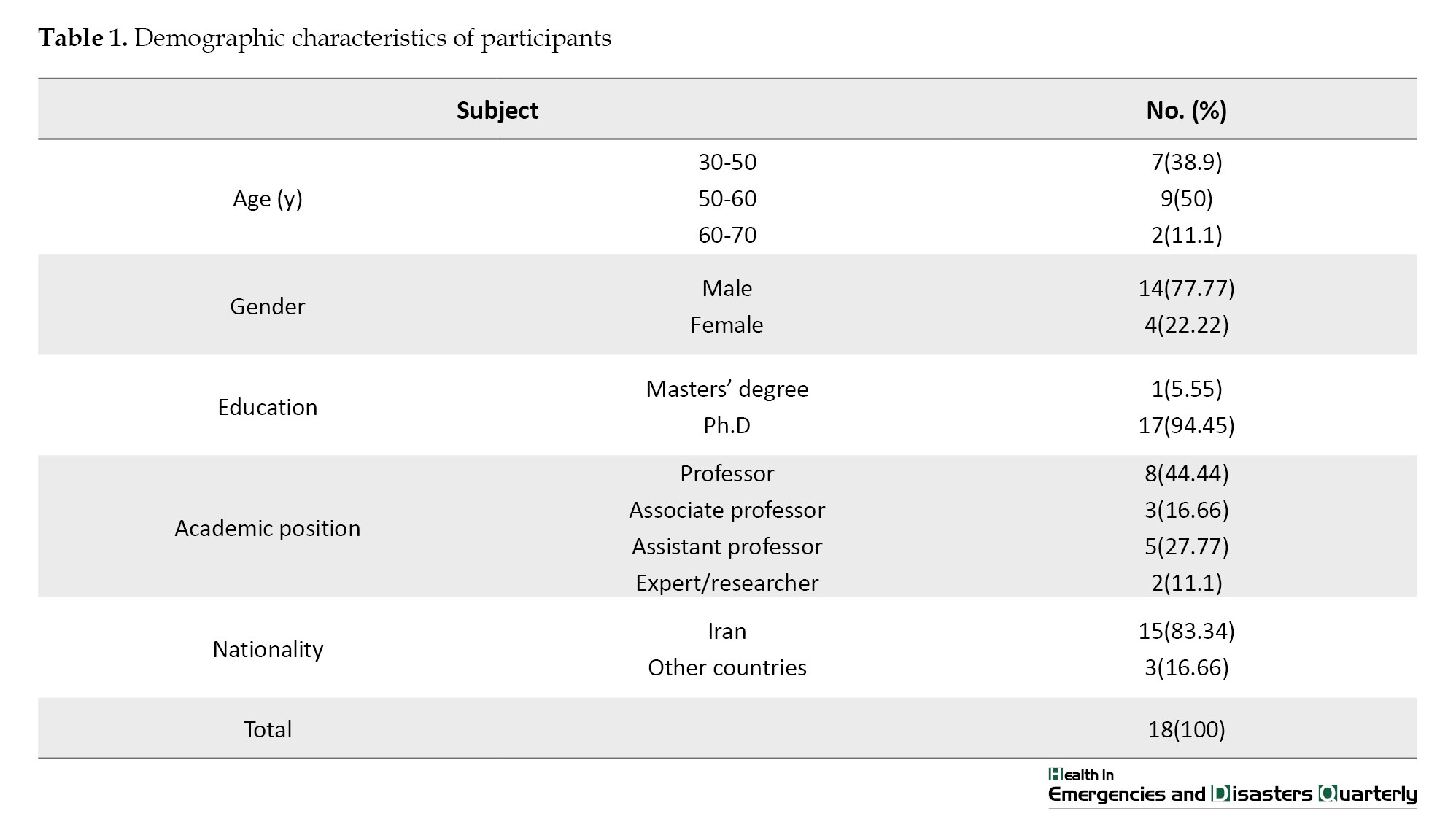
The mean age and work experience of the participants were 50.7±7.1 and 22.2±7.5, respectively. The largest proportion of interviewees belonged to the 50–60 age group (50%). Additionally, 14 participants were men, and the remaining 4 were women with high academic qualifications. Further demographic characteristics of the participants are presented in Table 1.
The main interventions or factors important for the internationalization of the health in disasters and emergencies program were classified into 6 categories and 15 subcategories.
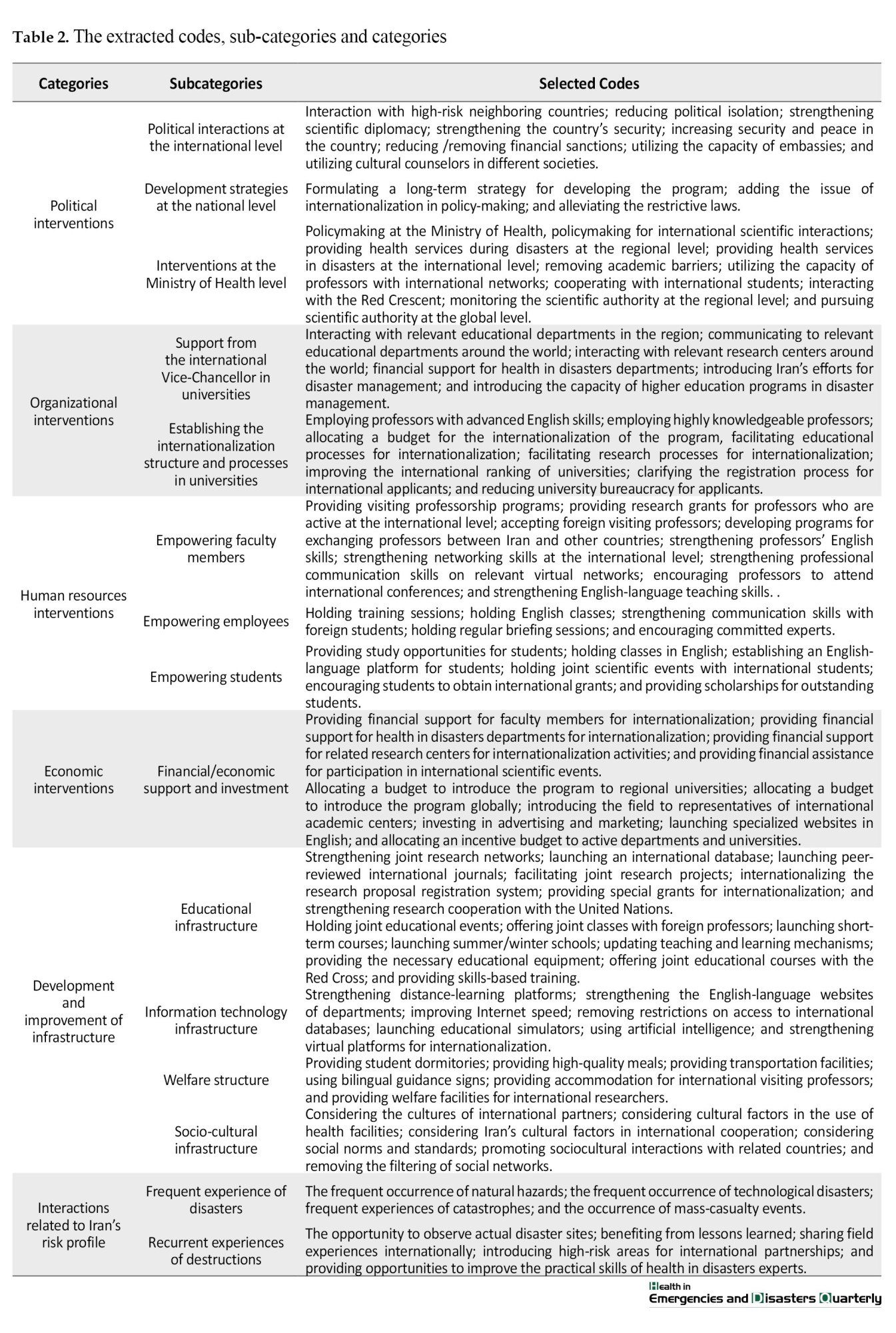
The categories included political interventions (political interactions at the international level, development strategies at the national level, and interventions at the Ministry of Health level); organizational interventions (support from the international Vice-Chancellor in universities and establishing the internationalization structure and processes in universities); human resources interventions (empowering faculty members, employees, and students); economic interventions (financial and economic support and investment); infrastructure development and improvement (educational infrastructure, information technology infrastructure, welfare infrastructure, and socio-cultural infrastructure); and interactions related to Iran’s risk profile (frequent experiences of disasters and recurrent experiences of destruction) (Table 2).
Political interventions
One of the most important strategies that can significantly contribute to the internationalization of health in disasters programs is political interventions, which may also be applicable to other health science disciplines. The political interventions category includes three subcategories: political interactions at the international level, development strategies at the national level, and interventions at the Ministry of Health level.
Political interactions at the international level
According to the participants’ experiences, strengthening scientific diplomacy and reducing political isolation play an important role in the internationalization of health in disasters and emergencies program by increasing political interactions at regional and international levels. In particular, neighboring countries that are highly disaster-prone can benefit from appropriate scientific interactions through political negotiations.
“Active diplomacy in the field of disasters is very important. There are various challenges to international cooperation with countries around the world, such as political-security issues, sharing resources, researchers’ visits, etc” (P. 7).
Development strategies at the national level
Based on the data, developing and formulating long-term strategies for the health in disasters and emergencies program are crucial. Therefore, including the internationalization into policy briefs and political documents, as well as addressing legal barriers, can help improve the internationalization of the health in disasters and emergencies program at universities. One participant stated:
“The discussion of internationalization of this program should not be limited to universities in Tehran. Areas that are most exposed to environmental and climate threats should be considered focal points, and teaching and learning should be flexible” (P. 2).
Interventions at the ministry of health level
International scientific interactions conducted through the Ministry of Health can support the internationalization of this academic program. Furthermore, providing health services during disasters at the regional and international levels, as well as utilizing the capacity of professors by reducing academic barriers, can be useful measures for internationalizing the health in disasters and emergencies program.
“In order to establish scientific authority in this program, the disaster health program must be offered at the postgraduate level, and we must demonstrate our capabilities to the world and our neighbors. This requires an up-to-date educational program, effective media, qualified faculty members, and high-quality educational environments...” (P. 6).
Organizational interventions
Organizational interventions at the university level can facilitate the internationalization of health in disasters and emergencies programs. This category includes two subcategories: Support from university international vice chancellors and the establishment of internationalization structures and processes at universities.
Support from university international vice chancellors
Any international office at a university that offers health in disasters and emergencies departments or specialties can facilitate the internationalization of these academic programs through supportive strategies. Communication with relevant international organizations, such as the Red Cross, the World Health Organization (WHO), and United Nations Agencies (OCHA, UNFPA), to establish formal cooperation with specialists and health in disasters and emergencies departments can support internationalization initiatives.
“Initial interactions with well-known universities in the world should be followed. We should have good information, communication, and advertising to achieve recognition so that academic departments and stakeholders become familiar with us” (P. 14).
Establishing internationalization structures and processes at universities
Based on the participants’ experiences, strengthening related structures and processes at universities can also play a significant role in the internationalization of the health in disasters and emergencies program. For example, employing knowledgeable professors who can teach in English, allocating resources for the internationalization of this academic program, and facilitating the research and academic process for internationalization should to be considered and included in the strategic plans of the university.
The internationalization process has been prioritized at universities, but perhaps it has not happened in the right process and structure. The program must have a problem-solving approach, and educational programs must be skill-based and compatible with modern educational technologies” (P. 5).
Human resources interventions
Human resources are considered one of the most important factors for the internationalization of the health in disasters and emergencies program. The subcategories include empowering faculty members, empowering employees, and empowering students.
Empowering faculty members
Faculty members, who are responsible for education and research in health in disasters and emergencies departments, need to acquire the necessary capabilities to improve the internationalization of this academic program. Accordingly, providing health in disasters and emergencies professors with the resources and facilities needed to update their knowledge and skills and expand their international interactions and networks with international universities and academic centers is essential. Strengthening English-language skills for teaching in English, allocating research grants to professors who are active in the internationalization of the program, and encouraging and supporting professors to participate in international scientific events are among the measures that can empower faculty members.
“We should invite experts from other countries to become familiar with the country and interact with our experts, and in the same way, our experts should visit their countries and attend different courses, and become familiar with the new developments in science. A written and specific plan for cooperation should be defined” (P. 17).
Empowering employees
Based on the data, employees who work in the international affairs offices in colleges and universities need special abilities to interact and communicate with international students and professors. For instance, training and briefing sessions can strengthen such communication skills, especially in the health in disasters and emergencies departments. Furthermore, improving the English skills of the staff and encouraging hard-working employees can be effective for internationalization.
“The duties of the staff should be obvious. The responsible processes and units need to be determined and their work should be coordinated. Trained personnel should be deployed so that the student is guided” (P. 10).
Empowering students
Students are one of the key groups who can potentially initiate and continue the internationalization of the health in disasters and emergencies program. This academic program has been specifically designed for post-graduate students (MSc and PhD), enabling them to play vital roles in strengthening the internationalization of health in disasters and emergencies departments. Conducting classes in English, strengthening students’ skills to participate in international scientific events, encouraging students to network and collaborate on joint projects with international peers, and providing study opportunities for capable and motivated students were identified as interventions to empower students.
“ Various books and journals, access to scientific databases, the issue of filtering and restrictions on the use of cyberspace, etc. should be resolved for internationalization. Professor and student exchange programs should also be considered” (P. 2).
Economic interventions
Economic interventions and support are crucial factors for facilitating and accelerating the internationalization of health in disasters and emergencies programs. Subcategories of financial/economic support and investment were extracted from the data.
Financial/economic support and investment
Financial support for the faculty members, specialists, and students, and health in disaster departments is important to carry out activities related to the internationalization of the program. Furthermore, support for research centers and institutes that are involved and active in disaster research at the international level is essential for fostering scientific interactions globally.
“The economic situation of the country can be very supportive, if the economic situation is not well, it becomes an obstacle. Financial support and equipment are necessary…” (P. 8).
Allocating funds and special budgets to improve the program’s infrastructure and update its internationalization processes can be beneficial. In addition, adequate investment in marketing and introducing the program to academic centers in the region and around the world can play significant roles in the internationalization of the health in disasters and emergencies program. Furthermore, appropriate funding should be allocated to encourage active departments and universities to establish and sustain internationalization programs and initiatives in health in disasters and emergencies departments.
“Some students are looking for free education. If we have grants from international organizations and industry, we can accept students through those arrangements and involve them in activities to help offset the costs” (P. 15).
Development and improvement of infrastructure
The internationalization of the health in disasters and emergencies program requires the establishment and development of key infrastructures to promote all education and research affairs at the regional and global levels. This category includes four subcategories: educational infrastructure, information technology infrastructure, welfare structure, and socio-cultural infrastructure.
Educational infrastructure
Participants highlighted the importance of developing research infrastructure to strengthen research networks and joint research projects with health in disasters and emergencies researchers at the regional and global levels. Access to international scientific databases that can be used by researchers around the world, as well as access to relevant journals and books, is considered a means of strengthening research infrastructure.
“One of the solutions that leads to improving the level of research is the use of international grants. Research teams should not be limited to national grants. If we use grants from WHO and other international institutions, such as the World Bank, we will be forced to comply with the conditions, strategies, and methods of doing research accepted by the international community” (P. 1).
The development of educational infrastructure is also crucial for strengthening scientific and educational interactions with professors and students at regional and international levels. Designing short courses that appeal to a broad international audience and establishing summer and winter schools in collaboration with other universities and academic centers can be effective measures for internationalizing this program. Furthermore, providing suitable educational equipment for international academic programs and updating teaching-learning mechanisms are other significant interventions highlighted by the participants.
“Diversifying higher education can increase both the quality and attractiveness of the subject. We need to align it with the latest qualifications in the world and examine what is available in the curriculum of this academic program” (P. 3).
Information technology infrastructure
Based on the data, the development of information technology infrastructure can significantly contribute to promoting the internationalization of the program. Shifting from in-person training to distance learning, strengthening the English platforms and websites for introducing the health in disasters and emergencies departments, improving internet speed, establishing educational simulators, and utilizing artificial intelligence for teaching and training at the international level were mentioned as effective interventions for the internationalization of this academic program.
“Upgrading educational facilities and simulators that can make students more likely to learn and provide appropriate educational environments can be used...” (P. 8).
Welfare structure
Welfare infrastructure plays an important role in generating positive feedback from international students, professors, and researchers who travel to Iran to continue their studies or participate in joint educational and research programs. Providing welfare facilities, including dormitories, meals, and transportation, for students, as well as accommodation and welfare facilities for visiting professors and researchers, can significantly strengthen the internationalization of this program over the long term.
“The facilities of the university are important for the satisfaction of foreign students. Among them, the issue of housing is the most important. If this issue is resolved, they will be able to cover their own living expenses.” (P. 5).
Socio-cultural infrastructure
Cultural and social considerations were among other issues mentioned by the participants. International students and researchers need to become familiar with Iranian culture and consider the socio-cultural context during their educational and research programs in Iran. Cultural events and orientation sessions should be designed and conducted in universities to improve international interactions.
“Cultural differences are important. Many people are applying to European countries and are in line, but not to other countries. Conflicting laws, expensive housing, traffic, and air pollution reduce the application” (P. 13).
Interactions related to Iran as a highly disaster-prone country
Iran is one of the most disaster-prone countries in the world, and disasters, such as floods and earthquakes have claimed the lives of many Iranians to date. In addition, disasters have significantly impacted the Iranian populations through the destruction of key infrastructures, health facilities, and social consequences. On the other hand, the frequent damage and destruction following disasters have provided numerous opportunities for improving disaster management systems and programs. This has also led to the implementation of training and research programs in universities and academic centers. Two subcategories—frequent disaster experiences and recurrent experiences of destruction—represent opportunities to internationalize the health in disasters and emergencies program by sharing lessons learned from previous disasters with international peers and students.
Frequent experiences of disasters
Some participants stated that the frequent occurrence of disasters in Iran has provided us with important experiences and lessons for effective disaster management, which can be shared and discussed at international scientific events, in classrooms, and during research projects.
“Iran has a high risk in terms of disaster occurrence, and this issue motivates experts and researchers from other countries to learn about the lessons and experiences of this country” (P. 9).
Recurrent experiences of destruction
Iran can serve as a training and research setting for health in disasters and emergencies professionals at the regional and international levels. Actual disaster sites can enhance specialists’ practical skills and provide opportunities to benefit from experiences of destruction and damage. Additionally, disaster-affected regions can offer opportunities for scientific and research partnerships and significantly contribute to the internationalization of health in disasters and emergencies programs.
“Iranian managers and experts have had numerous experiences in the field of disaster management and response that could be shared in a real-life classroom or training course for international students and researchers” (P. 14).
Discussion
Based on the findings, internationalizing the academic program of health in disasters and emergencies at universities can be achieved through political, organizational, human resource, and economic interventions; the development and improvement of infrastructure; and interactions related to Iran’s status as a highly disaster-prone country. In accordance with our findings, numerous studies have shown that the internationalization of higher education is a complex process influenced by various factors and challenges [28-31]. Political interactions, organizational strategies, human resource management, economic interventions, and infrastructure improvements play crucial roles in the internationalization of academic centers [32]. However, a lack of clear policies, inefficient organizational structures, financial and infrastructure issues, and cultural differences have been reported as barriers to the internationalization of universities [33]. Despite these challenges, internationalization remains a strategic priority for many universities and governments, which have invested significant resources in international education and research programs [34, 35].
Political interventions were identified as one of the most important issues for the internationalization of health in disaster and emergencies program, especially the country’s political interactions at regional and international levels. A study on designing a model for the internationalization of higher education in Iran revealed that the country’s political strategies received the highest score in the context of internationalizing academic programs [36]. However, the political approach can influence internationalization strategies, the complexity of cross-border interactions, and the universities that can potentially participate at international levels [37]. Similarly, the findings of another study suggested that academics need to encourage governments to internationalize universities and inform them about the benefits of establishing internationalization policies and decisions [38]. Another study also identified the country’s political and diplomatic considerations as an important element in the internationalization of universities [3].
Based on the findings, organizational interventions are recognized as a crucial measure for the internationalization of health in disasters and emergencies programs at universities. Accordingly, relevant studies recommend that effective internationalization requires a comprehensive approach involving modifications to the organizational culture [39], innovative management structures [40], engagement with international networks [41], and a holistic understanding of the process [42]. Also, evaluating and monitoring the management of internationalization are considered important issues. Universities and academic centers should engage proactively in the multi-phase innovation process to support internationalization [43]. Building a community and network of international scholars and researchers contributes to global scientific research and education. Achieving comprehensive internationalization within a higher education institution and establishing joint research initiatives enable researchers to participate in internationally recognized programs [44].
Human resource empowerment was identified as a significant intervention for the internationalization of health in disasters and emergencies programs. Similarly, empowering individuals working at universities can be effective for their internationalization mission. For instance, improving professors’ English proficiency for teaching in English and providing specialized training in the use of advanced technology-based infrastructure are considered useful measures [45]. Faculty members are an important group who need to improve their individual competencies, teaching, and research activities [46]. Medical universities should also strengthen their information technology capabilities, improve the English-language skills of staff and students, and implement appropriate marketing initiatives to increase the number of foreign applicants [47].
According to our findings, the internationalization of the health in disasters and emergencies requires the establishment and development of critical infrastructure, including educational, research, and sociocultural infrastructure. Similar studies have also stated that the internationalization of academic programs is driven by economic, social, and cultural factors. Furthermore, it involves students, faculty members, programs, and institutions in communicating and establishing networks across borders [4, 48]. On the other hand, studies have reported positive outcomes of the internationalization of research and education programs, including improved intercultural communication skills, strengthened political relations, the recruitment of foreign experts, increased international cooperation and scientific research output, economic growth, and financial improvement [18, 49].
Therefore, financial and economic support for professors and students, health in disasters and emergencies departments, and related research centers, as well as funding allocations to strengthen the necessary infrastructure, should be considered in future policymaking and planning. Furthermore, improving educational, research, information technology, welfare, and sociocultural infrastructure can have significant impacts on the success of the internationalization process. Likewise, leading universities that prioritize the internationalization of their research and educational initiatives strive to enhance their globally adaptable infrastructure to improve the quality of their services [50, 51]. Based on our findings, prioritizing structural factors plays a key role in the internationalization of universities and academic institutions [52]. Structural barriers, such as the development of an inappropriate intercultural curriculum, can hinder international cooperation [53]. Another issue is the lack of a comprehensive operational plan for improving infrastructure, especially the socio-cultural infrastructure, which can create significant challenges for the internationalization of academic programs [46, 54, 55].
Iran is one of the most disaster-prone regions in the world and has experienced significant destructions and damage to date [56]. Accordingly, such frequent experiences and the lessons learned from previous disasters can be shared with other related departments, universities, and academic centers at regional and international levels. On the other hand, hazard-prone regions in Iran can be serve as research settings for joint international research projects conducted by health in disasters and emergencies departments.
Limitations
There were some limitations at the time of conducting the current study. Because data collection involved the participation of international key informants and there was a time difference between Iran and other countries, these informants were selected as the final participants for the interviews. Accordingly, specific open-ended questions related to the concepts and aspects of internationalizing this program were sent to them. Another limitation was the small number of experts who had expertise in health in disasters and experience in internationalizing academic or research programs. Other limitations include potential cultural biases in the perspectives of international experts due to differences in cultural perspectives among societies. The generalizability of our findings to other contexts was also a limitation of this study.
Conclusion
The main interventions for the internationalization of health programs in disasters and emergencies should be considered based on various factors in Iran, including political, organizational, economic, human resources, infrastructure development, and disaster experience factors. The internationalization of health in disasters and emergencies is a long-term, intersectoral process that relies on a range of political, economic, financial, and socio-cultural activities. It is strongly recommended that educational and research facilities be established in disaster-prone regions of Iran. This would foster international collaboration and joint research and training programs, which require financial support, skilled professionals, and advanced infrastructure to host international partners.
Departments and experts in health in disasters and emergencies can be encouraged and motivated by facilitating exchange programs for relevant scholars and providing financial support for participation in international scientific events. Resource allocation and planning should focus on empowering professors, students, and researchers who are actively working in the field of health in disasters and emergencies. The processes and structures related to the internationalization of academic and research programs require modification or reform. These changes should align with Iran’s political, economic, organizational, and infrastructure-related conditions while considering successful academic programs in disaster health management at the regional and international levels to inform future policymaking. Further research is needed to identify the barriers to the internationalization of health in disaster and emergencies programs and to explore solutions to these challenges. Additionally, a quantitative study is necessary to collect and analyze data that will help determine the current level of internationalization in health departments dealing with disaster and emergencies, thereby enabling effective interventions.
Ethical Considerations
Compliance with ethical guidelines
This study was approved by the National Agency for Strategic Research in Medical Education (NASR) (Code: IR.NASRME.REC.1402.071). Furthermore, the study was conducted in compliance with ethical standards for research. All participants provided informed consent before participating in the interviews.
Funding
This project was funded by the National Agency for Strategic Research in Medical Sciences Education, Tehran, Iran (Grant No.: 4000344).
Authors' contributions
Study design: Sanaz Sohrabizadeh, Roya Alimoradzadeh, and Katayoun Jahangiri; Data analysis: Sanaz Sohrabizadeh and Roya Alimoradzadeh; Conducting interviews: Sanaz Sohrabizadeh and Roya Alimoradzadeh; Data collection: Roya Alimoradzadeh; Drafting the manuscript: Sanaz Sohrabizadeh, Roya Alimoradzadeh and Katayoun Jahangiri; Final approval: All authors.
Conflict of interest
The authors declared no conflict of interest.
Acknowledgments
The authors would like to thank all colleagues who collaborated in this work.
References
Higher education is considered a key factor in sustainable development and can play a strategic role in the advancement and promotion of countries [1]. Currently, due to the importance of globalization, the expansion of communication and information technology has led to the elimination of geographical boundaries among academic societies, researchers, and scholars [2]. Hence, the universities and academic centers compete for improving their progress and performance at both regional and international levels [3].
Universities are committed to implementing important reforms and modifications to address the economic and geopolitical requirements of internationalization [4]. As a result, the internationalization of academic programs is growing, especially in developing countries [5]. The internationalization of academic programs/fields is defined as the process of integrating international, intercultural, and global dimensions into the educational and research goals and functions of a university [6]. This strategy plays an important role in empowering governments to engage effectively with globalization and to achieve progress in economic, political, cultural, social, and scientific fields [7, 8].
Several factors contribute to the internationalization of the academic field, including qualified human resources, socio-cultural and political interactions, knowledge production, and the necessity of addressing both national and international needs [3, 9]. In other words, universities must engage in this process to gain international recognition [4]. As a result, various studies have documented the experiences of academic institutions and universities regarding the internationalization of their education and research programs [10]. For instance, the University of Melbourne in Australia initiated a project called “Traveling to Other Cultures” to encourage student participation in international exchange programs [11]. Additionally, Malaysia and Singapore have embraced the concepts of privatization and market orientation to foster an international environment for higher education [12]. In New Zealand, increasing demands for accepting international students have led to greater quotas being allocated to universities [13].
It should be noted that about 50% of international students study in four English-speaking countries: United States of America, United Kingdom, Australia, and Canada [14]. Other countries, such as France, Germany, China, and Russia, are also the hosts of about 30% of international students [15]. In Iran, the internationalization of universities and academic centers has been considered a mission for universities in accordance with the National Policy Statement over the past decade [16, 17]. For example, a program for developing International Medical Education was planned by the Ministry of Health [18]. The internationalization of medical and health sciences in Iran, leveraging the strong potential of its universities, has significantly boosted foreign student enrollment. Nevertheless, the process requires further refinement to fully achieve its objectives [19].
As one of the world’s most disaster-prone nations, Iran prioritized improving disaster response following the 2003 Bam earthquake. Recognizing the need for skilled professionals and research-based insights, the country launched a postgraduate program in health in disasters and emergencies in 2011 [20].
The academic program in health in disasters and emergencies in Iran leverages regional and international opportunities in research and education, thereby enhancing its potential for global collaboration. By offering training based on Iranian scholars’ expertise and engaging in joint research and field surveys with regional and international peers, these university departments can further advance internationalization. This study seeks to identify strategies globalizing this academic program and proposes actionable steps for integrating these strategies into future policies at the local and national levels.
Materials and Methods
Study design
The current qualitative study employed conventional content analysis to extract codes, subcategories, and categories and identify internationalization interventions for the health in disasters and emergencies program. Accordingly, it provided a detailed and comprehensive description and interpretation of the research topic. This study was conducted between April and June 2024.
Participants
Participants were selected using a purposeful sampling method, in which the researcher selects the most knowledgeable individuals who have sufficient ability to answer the research questions [21]. The inclusion criteria were international experience in the academic and public education, research, and management fields of health in disasters and emergencies, as well as expertise in various dimensions of health in disasters and emergencies, disaster public health and epidemiology, disaster sociology, health policy, and crisis management. Furthermore, international participants were selected based on their international experiences in the academic, education, and research fields of health in disasters and emergencies in their respective countries. The number of participants was determined based on the principle of saturation, which means that no new data emerged from subsequent interviews. Ultimately, a total of 18 participants were interviewed for data collection.
Data collection
Data were collected using semi-structured in-depth interviews with the participants. At first, three in-depth unstructured interviews were conducted to determine the basic concept of our research topic. Each interview was analyzed immediately, and the retrieved information became a guide for further data collection (iteration process). Accordingly, 15 semi-structured interviews were performed using the interview guide. In developing the interview guide, the prerequisites for conducting a semi-structured interview, knowledge of previous studies, preparation of the initial guide, pilot testing, and finalization of the semi-structured questions were considered [22]. The interviews began with a main, straightforward question, followed by probing questions to obtain details about the research topic. For instance, participants were asked, “based on your experiences, which measures can be effective for the internationalization of the health in disasters and emergencies departments at universities in Iran?” or “What is your perception of the barriers to internationalizing the health in disasters and emergencies education program in Iran? The interviews continued until data saturation was reached, and all interviews lasted between 30 and 50 minutes.
Data analysis
Data collection and analysis were conducted simultaneously. Data were analyzed using an inductive approach proposed by Graneheim and Lundman [23]. Each interview was initially transcribed verbatim using Microsoft Word. The transcripts were then carefully examined multiple times to identify statements that revealed the participants’ experiences, which were tagged as meaning units within the text. These meaning units were subsequently condensed and abstracted into codes. In the next step, these codes were grouped into subcategories based on shared characteristics, relationships, or distinctions. Finally, overarching categories were established by further sorting the subcategories. This iterative five-step process was applied to every interview until the main categories were finalized. The first author was responsible for completing the first three steps, while the final two steps involved collaboration among all authors. Although participants did not review the original interview transcripts or analysis directly, the researcher incorporated their notes and feedback into the process after each interview. When differences of opinion regarding codes or categories arose between two researchers, the other authors were consulted to reach a consensus.
Trustworthiness
Data trustworthiness was established by the four criteria of credibility, transferability, dependability, and confirmability [24]. To ensure credibility, triangulation, peer checking, and member checking were performed. For peer checking, the interview codes and categorization were reviewed by an expert in qualitative research and education. For member checking, the primary researchers asked participants about possible misunderstandings during the interviews. Dependability was confirmed by providing a detailed explanation of the study process to ensure that the study could be repeated. To guarantee confirmability and dependability, an audit trail was established by maintaining copies of all Persian-language transcripts, field notes, and relevant supporting documents. Transferability was ensured through detailed contextual information about the subject, participants, data collection, and data analysis as a research map [25]. Additionally, transferability was enhanced by providing detailed descriptions of the participants’ experiences using verbatim interview quotes.
To minimize researcher reflexivity, questions were posed at all stages of the study, including the research question, data collection, data analysis, and drawing of conclusion [26, 27]. The research team discussed how personal experiences and perspectives influenced the interviews and the interpretation of the results. Furthermore, the first and second authors practiced reflexivity, including informal self-reflective processes, to consider how their insights might influence the development of an unbiased interview guide. They also engaged in reflexive discussions with a peer to identify and confront assumptions during the data collection and analysis processes. Any discrepancies were resolved by a peer who was not directly involved in the research.
Results
The mean age and work experience of the participants were 50.7±7.1 and 22.2±7.5, respectively. The largest proportion of interviewees belonged to the 50–60 age group (50%). Additionally, 14 participants were men, and the remaining 4 were women with high academic qualifications. Further demographic characteristics of the participants are presented in Table 1.
The main interventions or factors important for the internationalization of the health in disasters and emergencies program were classified into 6 categories and 15 subcategories.
The categories included political interventions (political interactions at the international level, development strategies at the national level, and interventions at the Ministry of Health level); organizational interventions (support from the international Vice-Chancellor in universities and establishing the internationalization structure and processes in universities); human resources interventions (empowering faculty members, employees, and students); economic interventions (financial and economic support and investment); infrastructure development and improvement (educational infrastructure, information technology infrastructure, welfare infrastructure, and socio-cultural infrastructure); and interactions related to Iran’s risk profile (frequent experiences of disasters and recurrent experiences of destruction) (Table 2).
Political interventions
One of the most important strategies that can significantly contribute to the internationalization of health in disasters programs is political interventions, which may also be applicable to other health science disciplines. The political interventions category includes three subcategories: political interactions at the international level, development strategies at the national level, and interventions at the Ministry of Health level.
Political interactions at the international level
According to the participants’ experiences, strengthening scientific diplomacy and reducing political isolation play an important role in the internationalization of health in disasters and emergencies program by increasing political interactions at regional and international levels. In particular, neighboring countries that are highly disaster-prone can benefit from appropriate scientific interactions through political negotiations.
“Active diplomacy in the field of disasters is very important. There are various challenges to international cooperation with countries around the world, such as political-security issues, sharing resources, researchers’ visits, etc” (P. 7).
Development strategies at the national level
Based on the data, developing and formulating long-term strategies for the health in disasters and emergencies program are crucial. Therefore, including the internationalization into policy briefs and political documents, as well as addressing legal barriers, can help improve the internationalization of the health in disasters and emergencies program at universities. One participant stated:
“The discussion of internationalization of this program should not be limited to universities in Tehran. Areas that are most exposed to environmental and climate threats should be considered focal points, and teaching and learning should be flexible” (P. 2).
Interventions at the ministry of health level
International scientific interactions conducted through the Ministry of Health can support the internationalization of this academic program. Furthermore, providing health services during disasters at the regional and international levels, as well as utilizing the capacity of professors by reducing academic barriers, can be useful measures for internationalizing the health in disasters and emergencies program.
“In order to establish scientific authority in this program, the disaster health program must be offered at the postgraduate level, and we must demonstrate our capabilities to the world and our neighbors. This requires an up-to-date educational program, effective media, qualified faculty members, and high-quality educational environments...” (P. 6).
Organizational interventions
Organizational interventions at the university level can facilitate the internationalization of health in disasters and emergencies programs. This category includes two subcategories: Support from university international vice chancellors and the establishment of internationalization structures and processes at universities.
Support from university international vice chancellors
Any international office at a university that offers health in disasters and emergencies departments or specialties can facilitate the internationalization of these academic programs through supportive strategies. Communication with relevant international organizations, such as the Red Cross, the World Health Organization (WHO), and United Nations Agencies (OCHA, UNFPA), to establish formal cooperation with specialists and health in disasters and emergencies departments can support internationalization initiatives.
“Initial interactions with well-known universities in the world should be followed. We should have good information, communication, and advertising to achieve recognition so that academic departments and stakeholders become familiar with us” (P. 14).
Establishing internationalization structures and processes at universities
Based on the participants’ experiences, strengthening related structures and processes at universities can also play a significant role in the internationalization of the health in disasters and emergencies program. For example, employing knowledgeable professors who can teach in English, allocating resources for the internationalization of this academic program, and facilitating the research and academic process for internationalization should to be considered and included in the strategic plans of the university.
The internationalization process has been prioritized at universities, but perhaps it has not happened in the right process and structure. The program must have a problem-solving approach, and educational programs must be skill-based and compatible with modern educational technologies” (P. 5).
Human resources interventions
Human resources are considered one of the most important factors for the internationalization of the health in disasters and emergencies program. The subcategories include empowering faculty members, empowering employees, and empowering students.
Empowering faculty members
Faculty members, who are responsible for education and research in health in disasters and emergencies departments, need to acquire the necessary capabilities to improve the internationalization of this academic program. Accordingly, providing health in disasters and emergencies professors with the resources and facilities needed to update their knowledge and skills and expand their international interactions and networks with international universities and academic centers is essential. Strengthening English-language skills for teaching in English, allocating research grants to professors who are active in the internationalization of the program, and encouraging and supporting professors to participate in international scientific events are among the measures that can empower faculty members.
“We should invite experts from other countries to become familiar with the country and interact with our experts, and in the same way, our experts should visit their countries and attend different courses, and become familiar with the new developments in science. A written and specific plan for cooperation should be defined” (P. 17).
Empowering employees
Based on the data, employees who work in the international affairs offices in colleges and universities need special abilities to interact and communicate with international students and professors. For instance, training and briefing sessions can strengthen such communication skills, especially in the health in disasters and emergencies departments. Furthermore, improving the English skills of the staff and encouraging hard-working employees can be effective for internationalization.
“The duties of the staff should be obvious. The responsible processes and units need to be determined and their work should be coordinated. Trained personnel should be deployed so that the student is guided” (P. 10).
Empowering students
Students are one of the key groups who can potentially initiate and continue the internationalization of the health in disasters and emergencies program. This academic program has been specifically designed for post-graduate students (MSc and PhD), enabling them to play vital roles in strengthening the internationalization of health in disasters and emergencies departments. Conducting classes in English, strengthening students’ skills to participate in international scientific events, encouraging students to network and collaborate on joint projects with international peers, and providing study opportunities for capable and motivated students were identified as interventions to empower students.
“ Various books and journals, access to scientific databases, the issue of filtering and restrictions on the use of cyberspace, etc. should be resolved for internationalization. Professor and student exchange programs should also be considered” (P. 2).
Economic interventions
Economic interventions and support are crucial factors for facilitating and accelerating the internationalization of health in disasters and emergencies programs. Subcategories of financial/economic support and investment were extracted from the data.
Financial/economic support and investment
Financial support for the faculty members, specialists, and students, and health in disaster departments is important to carry out activities related to the internationalization of the program. Furthermore, support for research centers and institutes that are involved and active in disaster research at the international level is essential for fostering scientific interactions globally.
“The economic situation of the country can be very supportive, if the economic situation is not well, it becomes an obstacle. Financial support and equipment are necessary…” (P. 8).
Allocating funds and special budgets to improve the program’s infrastructure and update its internationalization processes can be beneficial. In addition, adequate investment in marketing and introducing the program to academic centers in the region and around the world can play significant roles in the internationalization of the health in disasters and emergencies program. Furthermore, appropriate funding should be allocated to encourage active departments and universities to establish and sustain internationalization programs and initiatives in health in disasters and emergencies departments.
“Some students are looking for free education. If we have grants from international organizations and industry, we can accept students through those arrangements and involve them in activities to help offset the costs” (P. 15).
Development and improvement of infrastructure
The internationalization of the health in disasters and emergencies program requires the establishment and development of key infrastructures to promote all education and research affairs at the regional and global levels. This category includes four subcategories: educational infrastructure, information technology infrastructure, welfare structure, and socio-cultural infrastructure.
Educational infrastructure
Participants highlighted the importance of developing research infrastructure to strengthen research networks and joint research projects with health in disasters and emergencies researchers at the regional and global levels. Access to international scientific databases that can be used by researchers around the world, as well as access to relevant journals and books, is considered a means of strengthening research infrastructure.
“One of the solutions that leads to improving the level of research is the use of international grants. Research teams should not be limited to national grants. If we use grants from WHO and other international institutions, such as the World Bank, we will be forced to comply with the conditions, strategies, and methods of doing research accepted by the international community” (P. 1).
The development of educational infrastructure is also crucial for strengthening scientific and educational interactions with professors and students at regional and international levels. Designing short courses that appeal to a broad international audience and establishing summer and winter schools in collaboration with other universities and academic centers can be effective measures for internationalizing this program. Furthermore, providing suitable educational equipment for international academic programs and updating teaching-learning mechanisms are other significant interventions highlighted by the participants.
“Diversifying higher education can increase both the quality and attractiveness of the subject. We need to align it with the latest qualifications in the world and examine what is available in the curriculum of this academic program” (P. 3).
Information technology infrastructure
Based on the data, the development of information technology infrastructure can significantly contribute to promoting the internationalization of the program. Shifting from in-person training to distance learning, strengthening the English platforms and websites for introducing the health in disasters and emergencies departments, improving internet speed, establishing educational simulators, and utilizing artificial intelligence for teaching and training at the international level were mentioned as effective interventions for the internationalization of this academic program.
“Upgrading educational facilities and simulators that can make students more likely to learn and provide appropriate educational environments can be used...” (P. 8).
Welfare structure
Welfare infrastructure plays an important role in generating positive feedback from international students, professors, and researchers who travel to Iran to continue their studies or participate in joint educational and research programs. Providing welfare facilities, including dormitories, meals, and transportation, for students, as well as accommodation and welfare facilities for visiting professors and researchers, can significantly strengthen the internationalization of this program over the long term.
“The facilities of the university are important for the satisfaction of foreign students. Among them, the issue of housing is the most important. If this issue is resolved, they will be able to cover their own living expenses.” (P. 5).
Socio-cultural infrastructure
Cultural and social considerations were among other issues mentioned by the participants. International students and researchers need to become familiar with Iranian culture and consider the socio-cultural context during their educational and research programs in Iran. Cultural events and orientation sessions should be designed and conducted in universities to improve international interactions.
“Cultural differences are important. Many people are applying to European countries and are in line, but not to other countries. Conflicting laws, expensive housing, traffic, and air pollution reduce the application” (P. 13).
Interactions related to Iran as a highly disaster-prone country
Iran is one of the most disaster-prone countries in the world, and disasters, such as floods and earthquakes have claimed the lives of many Iranians to date. In addition, disasters have significantly impacted the Iranian populations through the destruction of key infrastructures, health facilities, and social consequences. On the other hand, the frequent damage and destruction following disasters have provided numerous opportunities for improving disaster management systems and programs. This has also led to the implementation of training and research programs in universities and academic centers. Two subcategories—frequent disaster experiences and recurrent experiences of destruction—represent opportunities to internationalize the health in disasters and emergencies program by sharing lessons learned from previous disasters with international peers and students.
Frequent experiences of disasters
Some participants stated that the frequent occurrence of disasters in Iran has provided us with important experiences and lessons for effective disaster management, which can be shared and discussed at international scientific events, in classrooms, and during research projects.
“Iran has a high risk in terms of disaster occurrence, and this issue motivates experts and researchers from other countries to learn about the lessons and experiences of this country” (P. 9).
Recurrent experiences of destruction
Iran can serve as a training and research setting for health in disasters and emergencies professionals at the regional and international levels. Actual disaster sites can enhance specialists’ practical skills and provide opportunities to benefit from experiences of destruction and damage. Additionally, disaster-affected regions can offer opportunities for scientific and research partnerships and significantly contribute to the internationalization of health in disasters and emergencies programs.
“Iranian managers and experts have had numerous experiences in the field of disaster management and response that could be shared in a real-life classroom or training course for international students and researchers” (P. 14).
Discussion
Based on the findings, internationalizing the academic program of health in disasters and emergencies at universities can be achieved through political, organizational, human resource, and economic interventions; the development and improvement of infrastructure; and interactions related to Iran’s status as a highly disaster-prone country. In accordance with our findings, numerous studies have shown that the internationalization of higher education is a complex process influenced by various factors and challenges [28-31]. Political interactions, organizational strategies, human resource management, economic interventions, and infrastructure improvements play crucial roles in the internationalization of academic centers [32]. However, a lack of clear policies, inefficient organizational structures, financial and infrastructure issues, and cultural differences have been reported as barriers to the internationalization of universities [33]. Despite these challenges, internationalization remains a strategic priority for many universities and governments, which have invested significant resources in international education and research programs [34, 35].
Political interventions were identified as one of the most important issues for the internationalization of health in disaster and emergencies program, especially the country’s political interactions at regional and international levels. A study on designing a model for the internationalization of higher education in Iran revealed that the country’s political strategies received the highest score in the context of internationalizing academic programs [36]. However, the political approach can influence internationalization strategies, the complexity of cross-border interactions, and the universities that can potentially participate at international levels [37]. Similarly, the findings of another study suggested that academics need to encourage governments to internationalize universities and inform them about the benefits of establishing internationalization policies and decisions [38]. Another study also identified the country’s political and diplomatic considerations as an important element in the internationalization of universities [3].
Based on the findings, organizational interventions are recognized as a crucial measure for the internationalization of health in disasters and emergencies programs at universities. Accordingly, relevant studies recommend that effective internationalization requires a comprehensive approach involving modifications to the organizational culture [39], innovative management structures [40], engagement with international networks [41], and a holistic understanding of the process [42]. Also, evaluating and monitoring the management of internationalization are considered important issues. Universities and academic centers should engage proactively in the multi-phase innovation process to support internationalization [43]. Building a community and network of international scholars and researchers contributes to global scientific research and education. Achieving comprehensive internationalization within a higher education institution and establishing joint research initiatives enable researchers to participate in internationally recognized programs [44].
Human resource empowerment was identified as a significant intervention for the internationalization of health in disasters and emergencies programs. Similarly, empowering individuals working at universities can be effective for their internationalization mission. For instance, improving professors’ English proficiency for teaching in English and providing specialized training in the use of advanced technology-based infrastructure are considered useful measures [45]. Faculty members are an important group who need to improve their individual competencies, teaching, and research activities [46]. Medical universities should also strengthen their information technology capabilities, improve the English-language skills of staff and students, and implement appropriate marketing initiatives to increase the number of foreign applicants [47].
According to our findings, the internationalization of the health in disasters and emergencies requires the establishment and development of critical infrastructure, including educational, research, and sociocultural infrastructure. Similar studies have also stated that the internationalization of academic programs is driven by economic, social, and cultural factors. Furthermore, it involves students, faculty members, programs, and institutions in communicating and establishing networks across borders [4, 48]. On the other hand, studies have reported positive outcomes of the internationalization of research and education programs, including improved intercultural communication skills, strengthened political relations, the recruitment of foreign experts, increased international cooperation and scientific research output, economic growth, and financial improvement [18, 49].
Therefore, financial and economic support for professors and students, health in disasters and emergencies departments, and related research centers, as well as funding allocations to strengthen the necessary infrastructure, should be considered in future policymaking and planning. Furthermore, improving educational, research, information technology, welfare, and sociocultural infrastructure can have significant impacts on the success of the internationalization process. Likewise, leading universities that prioritize the internationalization of their research and educational initiatives strive to enhance their globally adaptable infrastructure to improve the quality of their services [50, 51]. Based on our findings, prioritizing structural factors plays a key role in the internationalization of universities and academic institutions [52]. Structural barriers, such as the development of an inappropriate intercultural curriculum, can hinder international cooperation [53]. Another issue is the lack of a comprehensive operational plan for improving infrastructure, especially the socio-cultural infrastructure, which can create significant challenges for the internationalization of academic programs [46, 54, 55].
Iran is one of the most disaster-prone regions in the world and has experienced significant destructions and damage to date [56]. Accordingly, such frequent experiences and the lessons learned from previous disasters can be shared with other related departments, universities, and academic centers at regional and international levels. On the other hand, hazard-prone regions in Iran can be serve as research settings for joint international research projects conducted by health in disasters and emergencies departments.
Limitations
There were some limitations at the time of conducting the current study. Because data collection involved the participation of international key informants and there was a time difference between Iran and other countries, these informants were selected as the final participants for the interviews. Accordingly, specific open-ended questions related to the concepts and aspects of internationalizing this program were sent to them. Another limitation was the small number of experts who had expertise in health in disasters and experience in internationalizing academic or research programs. Other limitations include potential cultural biases in the perspectives of international experts due to differences in cultural perspectives among societies. The generalizability of our findings to other contexts was also a limitation of this study.
Conclusion
The main interventions for the internationalization of health programs in disasters and emergencies should be considered based on various factors in Iran, including political, organizational, economic, human resources, infrastructure development, and disaster experience factors. The internationalization of health in disasters and emergencies is a long-term, intersectoral process that relies on a range of political, economic, financial, and socio-cultural activities. It is strongly recommended that educational and research facilities be established in disaster-prone regions of Iran. This would foster international collaboration and joint research and training programs, which require financial support, skilled professionals, and advanced infrastructure to host international partners.
Departments and experts in health in disasters and emergencies can be encouraged and motivated by facilitating exchange programs for relevant scholars and providing financial support for participation in international scientific events. Resource allocation and planning should focus on empowering professors, students, and researchers who are actively working in the field of health in disasters and emergencies. The processes and structures related to the internationalization of academic and research programs require modification or reform. These changes should align with Iran’s political, economic, organizational, and infrastructure-related conditions while considering successful academic programs in disaster health management at the regional and international levels to inform future policymaking. Further research is needed to identify the barriers to the internationalization of health in disaster and emergencies programs and to explore solutions to these challenges. Additionally, a quantitative study is necessary to collect and analyze data that will help determine the current level of internationalization in health departments dealing with disaster and emergencies, thereby enabling effective interventions.
Ethical Considerations
Compliance with ethical guidelines
This study was approved by the National Agency for Strategic Research in Medical Education (NASR) (Code: IR.NASRME.REC.1402.071). Furthermore, the study was conducted in compliance with ethical standards for research. All participants provided informed consent before participating in the interviews.
Funding
This project was funded by the National Agency for Strategic Research in Medical Sciences Education, Tehran, Iran (Grant No.: 4000344).
Authors' contributions
Study design: Sanaz Sohrabizadeh, Roya Alimoradzadeh, and Katayoun Jahangiri; Data analysis: Sanaz Sohrabizadeh and Roya Alimoradzadeh; Conducting interviews: Sanaz Sohrabizadeh and Roya Alimoradzadeh; Data collection: Roya Alimoradzadeh; Drafting the manuscript: Sanaz Sohrabizadeh, Roya Alimoradzadeh and Katayoun Jahangiri; Final approval: All authors.
Conflict of interest
The authors declared no conflict of interest.
Acknowledgments
The authors would like to thank all colleagues who collaborated in this work.
References
- Altbach PG, Reisberg L, Rumbley LE. Tracking a global academic revolution. Change: The Magazine of Higher Learning. 2010; 42(2):30-9. [DOI:10.1080/00091381003590845]
- Ramaswamy M, Marciniuk DD, Csonka V, Colò L, Saso L. Reimagining internationalization in higher education through the United Nations sustainable development goals for the betterment of society. Journal of Studies in International Education. 2021; 25(4):388-406. [DOI:10.1177/10283153211031046]
- Knight J, De Wit H. Internationalization of higher education: Past and future. International Higher Education. 2018; (95):2-4. [DOI:10.6017/ihe.2018.95.10715]
- Robson S, Wihlborg M. Internationalisation of higher education: Impacts, challenges and future possibilities. European Educational Research Journal. 2019; 18(2):127-34.[DOI:10.1177/1474904119834779]
- Zolfaghari A, Sabran MS, Zolfaghari A. Internationalization of higher education: Challenges, strategies, policies and programs. US-China Education Review. 2009; 6(5):1-9. [Link]
- Karami RF, Shahsavari M, Yazdi FV, Amir HB, Haghdoost AA, Bashzar S, et al. [An Adaptive study of the Achievements of Iranian Universities of Medical Sciences in Internationalization of Medical Education (Persian)]. Journal of Mazandaran University of Medical Sciences. 2023; 33(221):173-8. [Link]
- Almeida J, Robson S, Morosini M, Baranzeli C. Understanding internationalization at home: Perspectives from the global North and South. European Educational Research Journal. 2019; 18(2):200-17. [DOI:10.1177/1474904118807537]
- Knight J. Education hubs: Focus on student mobility, human resource development and knowledge production. In: Mok KH, Yu KM, editors. Internationalization of Higher Education in East Asia: Trends of student mobility and impact on education governance. New York: Routledge; 2013. [Link]
- Ghaniuon A, Afsharnejad A, Amini Sabegh Z, Sadeh E. [Provide a model for the internationalization of education management in the Ministry of Health and Medical Education (Persian)]. Journal Iranian Political Sociology. 2023; 5(11):798-818. [Link]
- Li C, Mahadi B. A Bibliometric Literature Review on Trends in the Internationalization of Higher Education. International Journal of Learning, Teaching and Educational Research. 2024; 23(9):518-42. [DOI:10.26803/ijlter.23.9.26]
- Guest D, Livett M, Stone N. Fostering international student exchanges for science students. Journal of Studies in International Education. 2006; 10(4):378-95. [DOI:10.1177/1028315306287632]
- Aldieri L, Kotsemir M, Vinci CP. The impact of research collaboration on academic performance: An empirical analysis for some European countries. Socio-Economic Planning Sciences. 2018; 62:13-30. [DOI:10.1016/j.seps.2017.05.003]
- Smith LM, Rae AN. Coping with demand: Managing international student numbers at New Zealand universities. Journal of Studies in International Education. 2006; 10(1):27-45. [DOI:10.1177/1028315305283050]
- Crăciun D. National policies for higher education internationalization: A global comparative perspective. In: Curaj A, Deca L, Pricopie R, editors. European higher education area: The impact of past and future policies. Cham: Springer International Publishing; 2018. [DOI:10.1007/978-3-319-77407-7_7]
- Myhovych I. International mobility as a means of ensuring inclusive global higher education space. Advanced Education. 2019; 80-6. [DOI:10.20535/2410-8286.137813]
- Rezaei H, Yousefi A, Larijani B, Rezaei N, Adibi P. Road map of Iran’s internationalization of medical sciences education: Experience of Isfahan University of medical sciences. Iranian Journal of Medical Education. 2017; 17:125-33. [Link]
- Saniejlal M. [Internationalization of Research Institutes in Iran: A Study of Trends and Prospects. (Persian)] Socio-Cultural Strategy. 2021; 10(1):99-126. [Link]
- Valimoghadam S, Kamali N, MojtabaZadeh M. Role of Government in Internationalization of Higher Education in Universities of Medical Sciences of the Country: A Qualitative Resear. Journal of Medical Education Development. 2019; 12(33):66-88. [Link]
- Zamani-Manesh H, Khorasani A, Bakhtiari T. [Designing a native model for the internationalization of Iran’s medical sciences universities: A qualitative study (Persian)]. Research in Medical Education. 2017; 9(2):56-44. [DOI:10.29252/rme.9.2.56]
- Ardalan A, Mesdaghinia A, Masoumi G, Holakouie Naieni K, Ahmadnezhad E. Higher education initiatives for disaster and emergency health in Iran. Iranian Journal of Public Health. 2013; 42(6):635-8. [PMID]
- Vaismoradi M, Turunen H, Bondas T. Content analysis and thematic analysis: Implications for conducting a qualitative descriptive study. Nursing & Health Sciences. 2013; 15(3):398-405. [DOI:10.1111/nhs.12048] [PMID]
- Kallio H, Pietilä AM, Johnson M, Kangasniemi M. Systematic methodological review: Developing a framework for a qualitative semi‐structured interview guide. Journal of Advanced Nursing. 2016; 72(12):2954-65. [DOI:10.1111/jan.13031] [PMID]
- Graneheim UH, Lundman B. Qualitative content analysis in nursing research: Concepts, procedures and measures to achieve trustworthiness. Nurse Education Today. 2004; 24(2):105-12. [DOI:10.1016/j.nedt.2003.10.001] [PMID]
- Johnson JL, Adkins D, Chauvin S. A review of the quality indicators of rigor in qualitative research. American Journal of Pharmaceutical Education. 2020; 84(1):7120. [DOI:10.5688/ajpe7120] [PMID]
- Nyirenda L, Kumar MB, Theobald S, Sarker M, Simwinga M, Kumwenda M, et al. Using research networks to generate trustworthy qualitative public health research findings from multiple contexts. BMC Medical Research Methodology. 2020; 20(1):13. [DOI:10.1186/s12874-019-0895-5] [PMID]
- Jamieson MK, Govaart GH, Pownall M. Reflexivity in quantitative research: A rationale and beginner’s guide. Social and Personality Psychology Compass. 2023. 17(4):e12735. [DOI:10.1111/spc3.12735]
- Olmos-Vega FM, Stalmeijer RE, Varpio L, Kahlke R. A practical guide to reflexivity in qualitative research: AMEE Guide No. 149. Medical Teacher. 2022; 7:1-11. [DOI:10.1080/0142159X.2022.2057287] [PMID]
- Alizadeh I, Pourghane P. Iranian faculty members’ metaphors of the internationalization of medical sciences education. Higher Education. 2022; 84(3):629-46. [DOI:10.1007/s10734-021-00792-7]
- Golafshani A, Siamian H. Internationalizing the Transformation and Innovation Approach in Health Higher Education. Future of Medical Education Journal. 2021; 11(2):47-52. [DOI:10.22038/fmej.2021.47001.1319]
- Tight M. Internationalisation of higher education beyond the West: Challenges and opportunities-the research evidence. Educational Research and Evaluation. 2022; 27(3-4):239-59. [DOI:10.1080/13803611.2022.2041853]
- Jones E, Leask B, Brandenburg U, De Wit H. Global social responsibility and the internationalisation of higher education for society. Journal of Studies in International Education. 2021; 25(4):330-47. [DOI:10.1177/10283153211031679]
- Moshtari M, Delbakhsh S, Ghorbani M. Challenges and policies for promoting internationalization-The case of Iranian public universities. Higher Education Quarterly. 2023; 77(4):585-601. [DOI:10.1111/hequ.12422]
- Bashzar S, Feyzabadi V, Ahmadi A, Karami Robat F, Shahsavari M, Haghdoost AA. Requirements, Criteria, Challenges, and Solutions for the Internationalization of Medical Education in Iran: A Qualitative Study. Strides in Development of Medical Education. 2023; 20(1):118-25. [DOI:10.22062/sdme.2023.198164.1177]
- Zaman K, Mohsin A. Internationalization of universities: Emerging trends, challenges and opportunities. Journal of Economic Info. 2014; 1(1):1-9. [DOI:10.31580/jei.v1i1.100]
- De Wit H. Internationalization in higher education, a critical review. SFU Educational Review. 2019; 12(3):9-17. [DOI:10.21810/sfuer.v12i3.1036]
- Hosseini M, Nasseri N, Zendedel A. [Designing an International Model of Higher Education among the National North-Eastern Universities of Iran (Persian)]. Iranian Journal of Medical Education. 2019; 19(82):494-505. [Link]
- Britez R, Peters MA. Internationalization and the cosmopolitical university. Policy Futures in Education. 2010; 8(2):201-16. [DOI:10.2304/pfie.2010.8.2.201]
- Khorasani A, Zamani Manesh H. [Effective strategies in internationalization of Universities and institutes of higher education in Iran (Persian)]. Education Strategies in Medical Sciences. 2012; 5(3):183-9. [Link]
- Xuan Q. The influence of organizational culture on internationalization of Mahidol University. PEOPLE: International Journal of Social Sciences. 2015; 1(1):72–81. [DOI:10.20319/pijss.2015.s21.7281]
- Zhou M, Vaccaro LC, Qi W. The Impact of Internationalization on Organizational Innovation. Paper presented at: 3rd International Conference on Information Management, Innovation Management and Industrial Engineering. 26-28 November 2010; Kunming, China. [Link]
- Abazov R. Engaging in the internationalization of education and SDGs: Case study on the global hub of UNAI on sustainability. E3S Web of Conferences. 2021; 307:06001. [DOI:10.1051/e3sconf/202130706001]
- Qiang Z. Internationalization of higher education: Towards a conceptual framework. Policy Futures in Education. 2003; 1(2):248-70. [DOI:10.2304/pfie.2003.1.2.5]
- Hasanefendic S, Birkholz JM, Horta H, Van Der Sijde P. Individuals in action: Bringing about innovation in higher education. European Journal of Higher Education. 2017; 7(2):101-19. [DOI:10.1080/21568235.2017.1296367]
- Bagayawa ML, Calagoyo E, Pacardo SP, Palmiano D, Recaña GM. Innovative pathways to global engagement: A systematic review of strategies and trends in internationalization in higher education. International Journal of Research. 2024; 13(6):95-108. [DOI:10.5861/ijrse.2024.24027]
- Rezaei H, Mosavi A, Yousefi A, Larijani B, Rezaei N, Dehnavieh R, et al. Strengths of Iran for internationalization of medical sciences education. Journal of Education and Health Promotion. 2020; 9(1):92. [DOI:10.4103/jehp.jehp_488_19]
- Zamani Manesh H, Jamali-Tazeh Kand M, Nazari R. [Effective factors on Internationalization of Medical Education from Faculty Members’ Viewpoints in Shahid Beheshti University of Medical Sciences Members (Persian)]. Research in Medical Education. 2018; 10(2):38-45. [DOI:10.29252/rme.10.2.38]
- Nakhoda K, Hosseini MH, Mohammad-khani K, Ghorchian NGH. [Challenges and Barriers to Internationalization from the Perspective of Faculty Members and Staff of the International Department of Iran, Tehran and Shahid Beheshti Universities of Medical Sciences (Persian)]. Journal of Medical Education and Development. 2021; 16(2):94-108. [DOI:10.18502/jmed.v16i2.7143]
- Jibeen T, Khan MA. Internationalization of higher education: Potential benefits and costs. International Journal of Evaluation and Research in Education. 2015; 4(4):196-199. [DOI:10.11591/ijere.v4i4.4511]
- Sajedi R, Ghorbani R. Factors affecting the internationalization of medical education from the viewpoints of lecturers of Semnan University of Medical Sciences. Koomesh. 2023; 25(1):119-30. [Link]
- Sidhu R, Ho KC, Yeoh BSA. Singapore: Building a Knowledge and Education Hub. In: Knight J, editor. International Education Hubs. Dordrecht: Springer; 2014. [DOI:10.1007/978-94-007-7025-6_8]
- Wen W, Hu D. The emergence of a regional education hub: Rationales of international students’ choice of China as the study destination. Journal of Studies in International Education. 2019; 23(3):303-25. [DOI:10.1177/1028315318797154]
- MehravarGiglou S, Ghiasi NS, Abbaspoor A. Identifying the factors hindering international scientific cooperation in the country's higher education system and providing a solution: a qualitative study. Research in Medical Education. 2020. 12(3):68-78. [Link]
- Khorsandi Taskoh A, Firozjaeian T. [Conditions for internationalization of universities by focusing on intercultural curriculum planning (Persian)]. Journal of Higher Education Curriculum Studies. 2019; 9(18):7-44. [Link]
- Parvin E, Ghiasi Nadoshan S, Khorsandi Taskooh A, Zaker Salehi GR. [Identifying barriers of international students’ admission in Iranian Public Universities (Persian)]. Research in Medical Education. 2021; 13(1):24-34. [DOI:10.52547/rme.13.1.24]
- Neves CE, Barbosa ML. Internationalization of higher education in Brazil: Advances, obstacles, and challenges. Sociologias. 2020; 22(54):144-75. [DOI:10.1590/15174522-99656]
- Rastgoo H, Abbasi E, Bijani M. Analysis of agricultural insurance vulnerability in the face of natural disasters: Insights from Iran. Environmental and Sustainability Indicators. 2024; 23:100429. [DOI:10.1016/j.indic.2024.100429]
Type of article: Research |
Subject:
Qualitative
Received: 2025/07/19 | Accepted: 2025/10/26 | Published: 2026/09/28
Received: 2025/07/19 | Accepted: 2025/10/26 | Published: 2026/09/28
Send email to the article author
| Rights and permissions | |
 |
This work is licensed under a Creative Commons Attribution-NonCommercial 4.0 International License. |

Copyright © The Author(s);
This is an open access article distributed under the terms of the Creative Commons Attribution-NonCommercial 4.0 (CC-By-NC 4.0), which permits use, distribution, and reproduction in any medium, provided the original work is properly cited and is not used for commercial purposes.
Contact Information
This is an open access article distributed under the terms of the Creative Commons Attribution-NonCommercial 4.0 (CC-By-NC 4.0), which permits use, distribution, and reproduction in any medium, provided the original work is properly cited and is not used for commercial purposes.
Contact Information
