
Volume 12, Issue 1 (Autumn 2026)
Health in Emergencies and Disasters Quarterly 2026, 12(1): 39-50 |
Back to browse issues page




Download citation:
BibTeX | RIS | EndNote | Medlars | ProCite | Reference Manager | RefWorks
Send citation to:


BibTeX | RIS | EndNote | Medlars | ProCite | Reference Manager | RefWorks
Send citation to:
Febri Ramdani W, Kurniasih Y, Nur Faizah C. From Uncertainty to Competence: Decision-making Strategies of Volunteer Ambulance Responders in Low-resource Indonesia. Health in Emergencies and Disasters Quarterly 2026; 12 (1) :39-50
URL: http://hdq.uswr.ac.ir/article-1-767-en.html
URL: http://hdq.uswr.ac.ir/article-1-767-en.html


1- Department of Nursing, Faculty of Health Sciences, Univeritas Aisyiyah Yogyakarta, Yogyakarta, Indonesia. , wawanramdani@unisayogya.ac.id
2- Faculty of Medicine, Univeritas Aisyiyah Yogyakarta, Yogyakarta, Indonesia.
3- Center of Excellence for Women, Family, and Disaster Studies, Universitas Aisyiyah Yogyakarta, Yogyakarta, Yogyakarta, Indonesia.
2- Faculty of Medicine, Univeritas Aisyiyah Yogyakarta, Yogyakarta, Indonesia.
3- Center of Excellence for Women, Family, and Disaster Studies, Universitas Aisyiyah Yogyakarta, Yogyakarta, Yogyakarta, Indonesia.
Keywords: Volunteer ambulance personnel, Prehospital care, Critical decision-making, Low-resource settings, Qualitative research
Full-Text [PDF 483 kb]
(911 Downloads)
| Abstract (HTML) (1886 Views)
Full-Text: (7 Views)
Introduction
Prehospital emergency care plays a critical role in effective healthcare systems, serving as the first line of response for acute medical conditions and trauma [1]. In many low- and middle-income countries (LMICs), including Indonesia, this care is often heavily reliant on volunteer ambulance personnel. Despite their essential role, these volunteers face unique and complex challenges, particularly when making critical decisions under uncertain and resource-limited conditions [2]. In Indonesia’s healthcare landscape, volunteer-based emergency medical services (EMS) operate within a mixed public-private system where government ambulances are often insufficient to meet population needs, particularly in urban areas, like Yogyakarta. These volunteer organizations, typically community-based or affiliated with religious institutions, fill critical gaps in emergency response coverage, operating with minimal formal oversight and limited standardized protocols [3].
Indonesia’s emergency care system operates within a complex healthcare landscape characterized by significant resource disparities and coverage gaps. Although the national healthcare system has expanded under the Jaminan Kesehatan Nasional (JKN) universal health coverage program, it still faces substantial challenges in delivering EMS. Government-operated ambulance services are primarily hospital-based and often insufficient to meet population needs, particularly in densely populated urban areas, like Yogyakarta Special Region. This gap has led to the emergence of numerous volunteer-based EMS organizations, typically affiliated with community groups, religious institutions, or local disaster response teams.
These volunteer organizations operate with varying degrees of formalization and standardization. Most volunteers receive basic life support (BLS) training through programs offered by organizations, such as the Indonesian Red Cross (Palang Merah Indonesia), local health departments, or their respective volunteer organizations. The typical training curriculum includes basic airway management, cardiopulmonary resuscitation (CPR), basic wound care, patient lifting and transport techniques, and communication with healthcare facilities. However, volunteers are not trained for advanced procedures, such as intubation, medication administration, or advanced cardiac life support (ACLS). They are primarily prepared for scenarios involving trauma cases, cardiac emergencies, stroke patients, respiratory distress, and medical emergencies requiring rapid transport to healthcare facilities.
The educational background of most volunteer ambulance personnel in Indonesia reflects the broader population demographics, where senior high school (Sekolah Menengah Atas/SMA) completion represents a significant educational achievement. In the Indonesian education system, senior high school education spans three years (grades 10-12) and provides general academic knowledge including basic sciences, mathematics, Indonesian language, and social studies. Graduates possess fundamental literacy, numeracy, and critical thinking skills that serve as a foundation for further learning, including emergency medical training. This educational level enables volunteers to comprehend medical protocols, communicate effectively with healthcare professionals, and adapt to new situations—competencies that are essential in emergency response contexts.
Emergency decision-making in prehospital settings can be understood through naturalistic decision-making theory, which emphasizes how experienced practitioners make rapid choices in dynamic, high-risk environments where traditional analytical approaches are impractical. In volunteer emergency services, clinical intuition—developed through field experience and basic training—becomes essential when formal protocols are absent or inadequate for complex situations [2, 4]. In volunteer emergency services, clinical intuition—developed through field experience and basic training—becomes essential when formal protocols are absent or inadequate for complex situations [5]. This experiential knowledge enables volunteers to recognize patterns, anticipate complications, and adapt interventions based on available resources and environmental constraints [6, 7].
However, there is a significant research gap between well-resourced EMS systems and volunteer-driven services in LMICs. While existing literature on emergency decision-making is substantial, most studies focus on professional paramedics in structured systems with standardized equipment, comprehensive training, and established protocols [6, 8, 9]. This body of research fails to address the unique challenges faced by volunteer responders in resource-limited settings, including limited caller information, sudden patient deterioration without advanced medical support, restricted access in challenging environments, and social pressures from families and communities. These factors create a distinct decision-making environment that requires new theoretical understanding and practical insights.
This study addressed that gap by examining how volunteer ambulance personnel in Yogyakarta, Indonesia, make critical decisions during prehospital emergencies. Specifically, it explored the challenges they encounter, the adaptive strategies they employ, and how these decision-making experiences influence their confidence and volunteer identity.
Materials and Methods
Research design
This study employed a qualitative phenomenological approach to explore the lived experiences of volunteer ambulance personnel who make critical decisions during prehospital emergency care in Yogyakarta, Indonesia. Phenomenology was chosen for its capacity to capture the essence of complex, real-world experiences through rich, in-depth narratives, offering insight into how individuals navigate and interpret their roles under pressure.
Setting and timeframe
The research was performed in the Special Region of Yogyakarta, selected for its active network of volunteer emergency services. Data collection occurred over a three-month period, from March to July 2025, with interviews conducted in locations mutually agreed upon with participants to ensure privacy and comfort.
Participants and sampling
Participants were purposively selected from active volunteer ambulance personnel affiliated with non-governmental or community-based organizations. Eligibility criteria included a minimum of two years of volunteer service, direct experience handling emergency cases, and a willingness to participate. Individuals working solely in professional or government-run ambulance systems were excluded. The specific inclusion criteria were: 1) a minimum of two years of continuous volunteer service in emergency ambulance response, 2) direct, hands-on experience handling at least 30 emergency cases; 3) possession of BLS or equivalent emergency response certification; 4) active membership in a recognized volunteer EMS organization; and 5) willingness to participate and provide informed consent. The exclusion criteria included: 1) individuals who worked solely in professional or government-run ambulance systems; 2) volunteers with less than two years of active service; 3) administrative-only volunteers without field response experience; and 4) volunteers who were unavailable for the full interview duration.
This study focused exclusively on male volunteers as they comprised the entire population of active volunteer ambulance personnel in the participating organizations during the study period. The absence of female volunteers reflects organizational and cultural patterns in Indonesian volunteer emergency services, where emergency response roles are traditionally male-dominated due to cultural norms regarding physical demands and night-shift work. This gender limitation may affect the generalizability of the findings to more gender-diverse EMS contexts and may overlook decision-making patterns that could emerge in mixed-gender teams or female-only volunteer groups. Recruitment continued until data saturation was achieved, with approximately 20 participants included.
Definition of educational background: In the Indonesian education system, “Senior High School” (Sekolah Menengah Atas/SMA) represents the completion of 12 years of formal education and is equivalent to high school graduation in many international contexts. This educational level indicates that participants have achieved basic competencies in scientific literacy, mathematical reasoning, Indonesian language proficiency, and general knowledge across multiple academic domains. SMA graduates demonstrate the cognitive abilities necessary to process complex information, follow multistep protocols, and adapt to new learning situations—skills that are fundamental to emergency medical training and field decision-making. In Indonesia’s demographic context, completing SMA represents a significant educational achievement and provides a solid foundation for technical and vocational training, including emergency medical response skills.
Data collection methods
Data were gathered primarily through in-depth semi-structured interviews, supported by participant observation and document analysis. The interview guide was developed through a systematic four-stage process: 1) an extensive literature review of emergency decision-making frameworks and qualitative interview techniques, 2) consultation with three emergency medicine experts and two experienced qualitative researchers, 3) pilot testing with two volunteer coordinators to assess question clarity and cultural appropriateness, and 4) refinement based on pilot feedback to ensure questions effectively captured the Indonesian volunteer context and participants’ decision-making experiences.
The complete interview guide is presented in supplementary document 1. Key questions in the interview guide included: “Can you describe a recent emergency situation where you had to make a critical decision quickly? What factors influenced your decision?”, “How do you handle situations when you receive incomplete or unclear information from emergency callers?”, “What strategies do you use when medical equipment is limited or unavailable during an emergency?”, “How do you manage pressure from families and bystanders during critical situations?”, “How has your experience as a volunteer ambulance responder shaped your confidence in making emergency decisions?”, and “What role do your teammates play in your decision-making process during emergencies?”
The researcher used a pre-developed interview guide and served as the primary instrument for data collection. Each interview lasted 60–90 minutes, was audio-recorded with the participant’s consent, and was transcribed verbatim. All interviews were conducted in Bahasa Indonesia, the participants’ native language. The transcripts were analyzed in the original language to preserve contextual meaning and nuance. Representative quotes presented in this manuscript were translated into English by the research team, and back-translation verification was performed by a bilingual emergency care professional to ensure accuracy and preserve the participants’ intended meaning. Observations were conducted during volunteer shifts, with detailed field notes documenting behaviors and contextual interactions. Relevant documents—such as incident reports and organizational SOPs—were reviewed to enhance contextual understanding and support triangulation.
Data saturation was determined using Lincoln and Guba’s criteria: 1) no new themes or sub-themes emerged from three consecutive interviews, 2) existing themes were consistently reflected across participants with sufficient depth and variation, and 3) the research team reached consensus that the data adequately addressed the research questions. Data saturation was achieved after 18 interviews, with two additional interviews conducted to confirm saturation and ensure comprehensive theme development.
Data analysis
Thematic analysis was conducted manually through an iterative, inductive process. Transcripts were read repeatedly to ensure deep familiarity with the data, followed by the coding of significant statements relevant to the research objectives. Codes were then grouped into broader themes that reflected recurring patterns across participants’ narratives. These themes were refined and named to capture core concepts representing the shared decision-making experiences of the volunteers.
Trustworthiness and rigor
The study adhered to established standards for qualitative rigor. Credibility was ensured through member checking, peer debriefing with experienced researchers, prolonged engagement in the field, and methodological triangulation. Transferability was supported through rich, contextual descriptions, while dependability was maintained via a detailed audit trail. Confirmability was addressed through consistent researcher reflexivity and secure data management, enabling potential external review.
Ethical considerations
All procedures followed ethical guidelines to protect participants’ rights and well-being. Written informed consent was obtained after a thorough explanation of the study’s purpose, procedures, potential risks and benefits, and participants’ right to withdraw at any time. Anonymity and confidentiality were safeguarded through de-identification of data and the use of pseudonyms.
Results
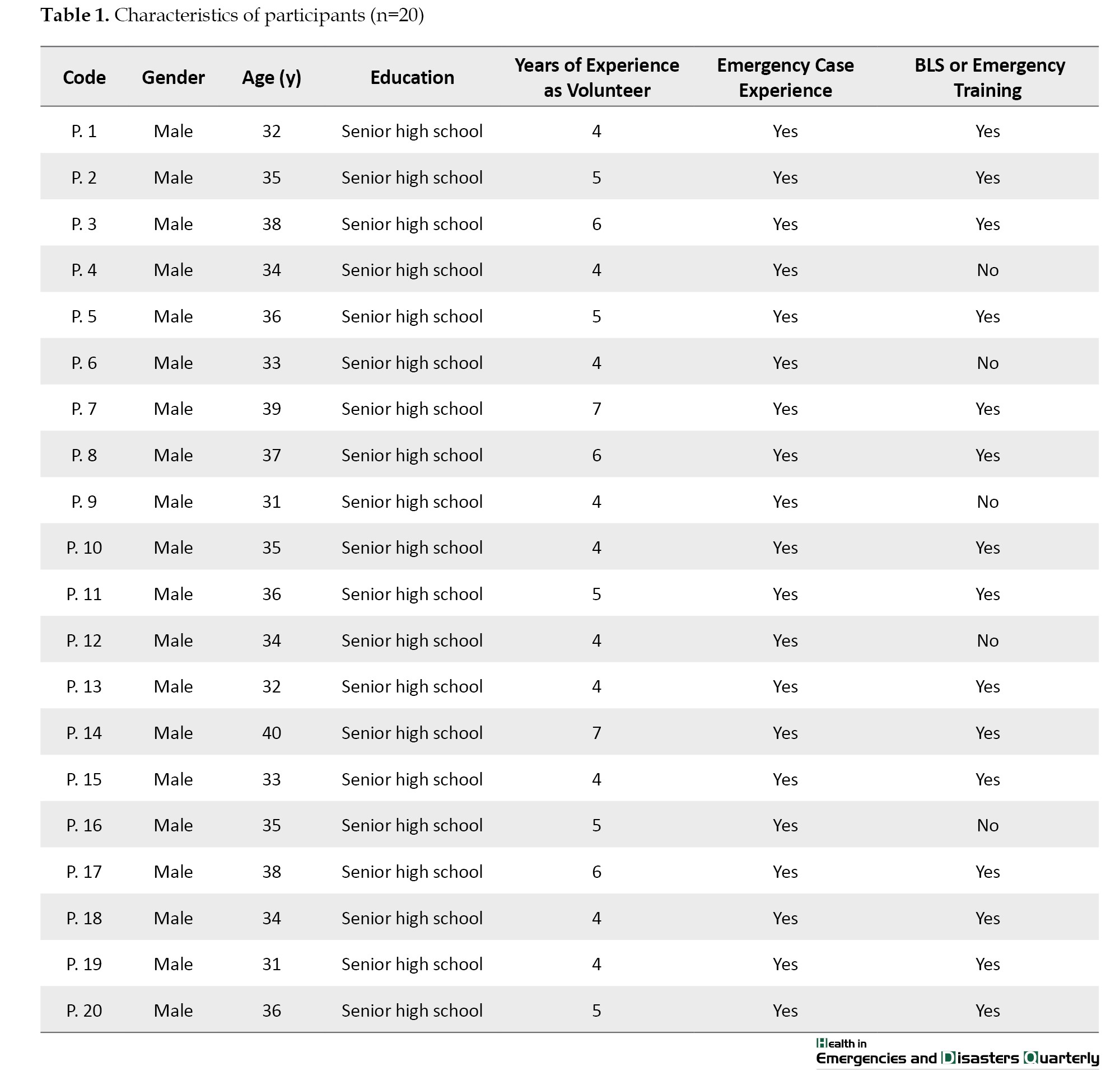
This study examined how volunteer ambulance personnel make critical decisions during prehospital emergency care in resource-constrained environments. In-depth interviews were conducted with 20 male volunteers, all of whom were over 30 years of age and had an average of four years of experience in emergency response. Most had completed secondary education and had managed a variety of emergency situations. Participant characteristics are summarized in Table 1.
Thematic analysis revealed four overarching themes, each comprising several sub-themes supported by narrative evidence. These themes are interconnected and represent a dynamic, cyclical process of decision-making that evolves from the initial emergency response through post-action reflection. The relationships between themes demonstrate how foundational challenges (theme 1) directly inform adaptive strategies (theme 2), which occur within complex social dynamics (theme 3), ultimately contributing to professional identity development and experiential learning (theme 4). This interconnected framework illustrates that volunteer decision-making is not a linear process but rather a continuous cycle of challenge, adaptation, social negotiation, and reflection that builds competence over time.
The connection between main themes and sub-themes reflects the multi-layered nature of emergency decision-making in volunteer contexts. Theme 1 establishes the structural and contextual challenges that define the decision-making environment, with its three sub-themes representing different sources of uncertainty (information, patient condition, and environment). Theme 2 builds on these challenges by describing how volunteers develop specific adaptive strategies, with each sub-theme addressing a different aspect of resource optimization (team coordination, experience utilization, and equipment improvisation). Theme 3 introduces the social dimension that permeates all decision-making activities, showing how external pressures and internal emotional responses create additional complexity. Finally, Theme 4 captures the transformative effects of repeated decision-making experiences, demonstrating how challenges and adaptations ultimately contribute to confidence building and identity formation.
To present these findings systematically, Table 2 integrates the identified themes, subthemes, and key indicators.
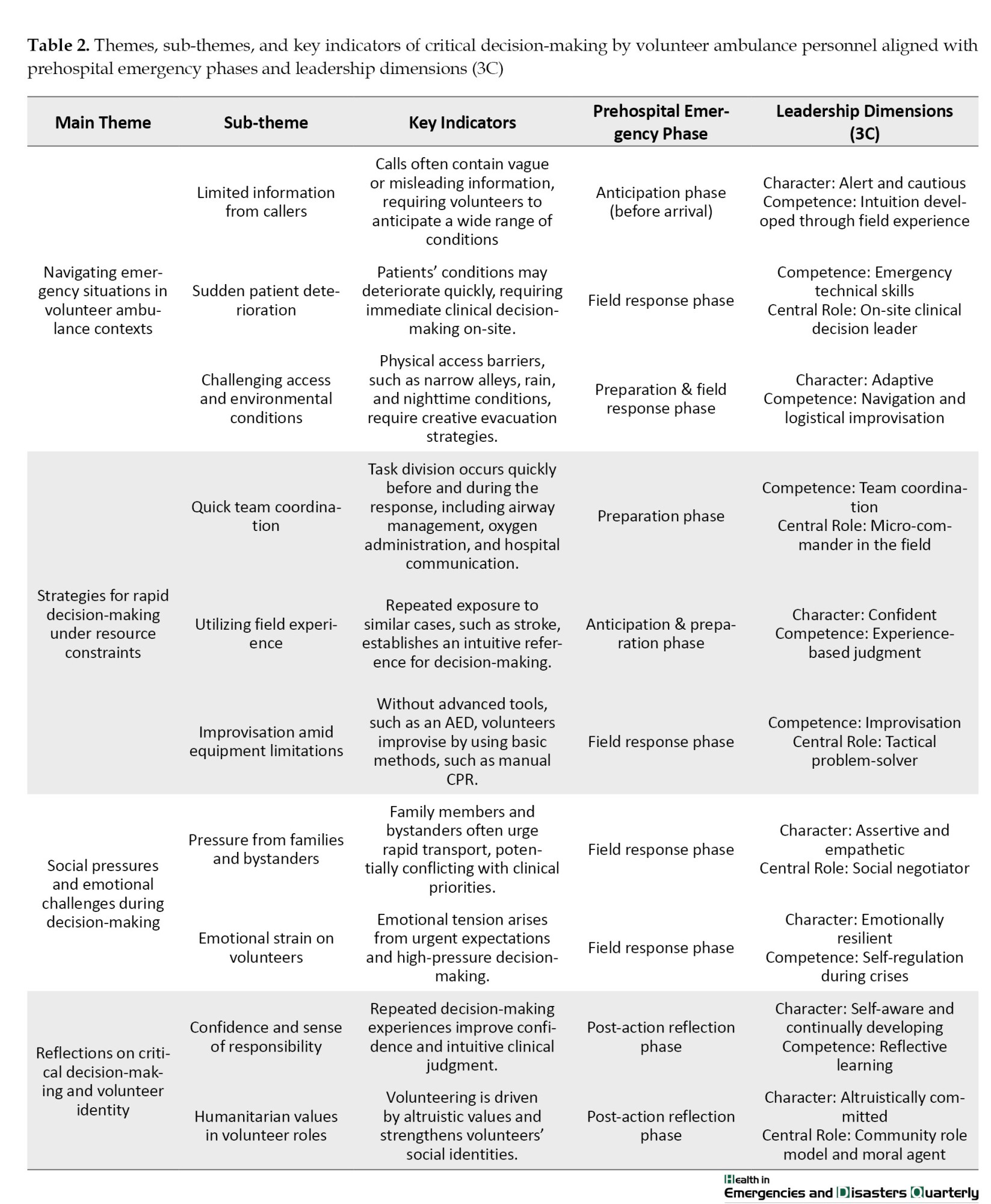
These elements are structured across the phases of prehospital care and aligned with the “3C” leadership dimensions: Character, competence, and central role.
The study revealed four overarching themes, with associated subthemes, related to volunteer ambulance personnel’s experiences making critical decisions during prehospital emergency care.
Theme 1: Navigating emergency situations in volunteer ambulance contexts
Subtheme: Limited information from callers
Participants frequently described arriving at emergency scenes with insufficient information regarding the patient’s true condition. One participant noted, “...we usually only receive information that the patient fainted, but upon arrival, we find that the patient is not breathing” (P. 8), while another added, “Sometimes residents report that the patient only has a stomachache, but when we check, the blood pressure is already very low” (P. 12). These uncertainties forced volunteers to prepare for a wide range of potential emergencies, as reflected in statements, such as, “...often the caller only requests that the ambulance arrive quickly without explaining the patient’s condition” (P. 5) and “...sometimes they report shortness of breath as minor, but the patient is already cyanotic” (P. 3).
Subtheme: Sudden patient deterioration
Volunteers frequently encountered patients whose conditions worsened suddenly, requiring immediate and critical actions. One participant shared, “...There was a patient who could not breathe because the patient’s tongue had fallen backward, so we performed the cross-finger technique to open the airway” (P. 4). Another added, “A stroke patient we picked up suddenly lost consciousness, so we checked the GCS on-site” (P. 15), illustrating the critical decisions needed when patient conditions changed unexpectedly during transport or pickup.
Subtheme: Challenging access and environmental conditions
Access barriers, such as narrow alleys and adverse weather conditions, significantly influenced volunteers’ decision-making processes. As one participant explained, “...many narrow alleys in the city prevent the ambulance from entering, so we have to carry the patient on a stretcher to the main road” (P. 19), while another stated, “There was heavy rain and slippery roads, but we still had to evacuate the patient” (P. 11). These contextual barriers required volunteers to remain adaptable and conduct rapid situational assessments under pressure.
Theme 2: Strategies for rapid decision-making under resource constraints
Subtheme: Quick team coordination
Participants emphasized the importance of rapid role allocation and clear team communication. One participant stated, “...we quickly divide tasks, with one person checking the airway, one holding the oxygen, and another communicating with the hospital” (P. 3). Another shared, “If the report indicates a critical case, we conduct a quick briefing at the post before departure” (P. 18), underscoring their use of structured yet rapid preparatory discussions.
Subtheme: Utilizing field experience
Experiential knowledge played a vital role in supporting effective decision-making during emergencies. One participant explained, “Because we often handle stroke cases, we already know how to lift the patient safely” (P. 9). Another added, “BLS training has been very helpful during critical conditions” (P. 5), highlighting how training and past experiences informed their critical interventions.
Subtheme: Improvisation amid equipment limitations
Volunteers reported frequently making critical decisions despite equipment limitations, which required on-the-spot improvisation. One participant shared, “Our ambulance equipment is limited; we only have oxygen and a stretcher” (P. 12). Another added, “We don’t have a defibrillator, so we can only perform manual CPR” (P. 3), underscoring the challenges of delivering emergency care with minimal resources.
Theme 3: Social pressures and emotional challenges during decision-making
Subtheme: Pressure from families and bystanders
Participants experienced pressure from families and bystanders urging immediate transport, even when patient stabilization was still needed. One participant stated, “...families often demand that we leave quickly even though the patient hasn’t been given oxygen yet” (P. 10). Another explained, “The crowd often insists we quickly carry the patient even when the patient is not yet stable” (P. 15).
Subtheme: Emotional strain on volunteers
This social pressure often led to emotional strain during critical decision-making moments. One participant shared, “...sometimes we feel stuck when the crowd is pushing us” (P. 6), while another stated, “We feel we need to act quickly but worry that the patient’s condition may worsen” (P. 13), reflecting the emotional challenges faced while balancing community expectations with patient safety.
Theme 4: Reflections on critical decision-making and volunteer identity
Subtheme: Confidence and sense of responsibility
Making critical decisions during emergencies contributed to volunteers’ confidence and professional growth. One participant expressed, “...the more often we make decisions, the more confident we become in the field” (P. 13). Another shared, “We have become more sensitive in assessing the patient’s condition” (P. 1), illustrating the development of clinical intuition.
Subtheme: Humanitarian values in volunteer roles
Participants conveyed that their volunteer work aligned deeply with their humanitarian values, despite working under resource constraints. One participant shared, “...as volunteers, we feel a responsibility to help people” (P. 5). Another noted, “We feel proud to help selflessly during emergencies” (P. 14), highlighting the intrinsic motivation and sense of purpose found in their roles.
Discussion
The findings of this study contribute significantly to both naturalistic decision-making theory and the emergency care literature by demonstrating how volunteers develop situated expertise within resource-constrained environments. From a theoretical perspective, these results extend Gary Klein’s recognition-primed decision (RPD) model by revealing how decision-makers adapt when traditional environmental cues and familiar patterns are disrupted by equipment limitations and social pressures [10]. While the volunteers’ reliance on clinical intuition and pattern recognition aligns with core RPD principles, their improvisational strategies and social negotiation skills represent novel adaptations not fully captured in existing decision-making frameworks developed primarily in well-resourced settings.
The study introduced two important theoretical constructs to the emergency care literature. First, “planned improvisation” describes how volunteers proactively develop flexible response protocols that can be adapted based on available resources rather than assuming fixed equipment configurations. This concept challenges traditional emergency response models that emphasize standardized protocols and suggests that adaptive flexibility may be more valuable than rigid adherence to procedures in resource-limited contexts. Second, “socio-clinical competence” represents the ability to maintain clinical decision-making quality while simultaneously managing complex social dynamics, including family expectations, community oversight, and bystander pressure. This dual competency framework acknowledges that effective emergency care in community settings requires both clinical skills and social intelligence [11], [12].
The findings highlight that uncertainty in caller-reported information compels volunteers to anticipate a wide spectrum of potential patient conditions. This challenge reflects broader systemic issues in low-resource EMS environments, including limited emergency communication infrastructure, variable caller education levels, and cultural factors that may influence how medical emergencies are described and perceived [2, 13-15].
The volunteers’ heavy reliance on clinical intuition, developed through field experience rather than formal training, demonstrates an alternative pathway to expertise development that diverges from traditional medical education models. This finding extends naturalistic decision-making theory by showing how competence can develop in environments where formal training opportunities are limited but practical exposure is intensive and varied [13-16].
The concept of “planned improvisation” emerged as a key finding, representing how volunteers proactively develop flexible protocols that prioritize actions based on patient condition and available resources. The concept of ‘planned improvisation’ emerged as a key finding, representing how volunteers proactively develop flexible protocols that prioritize actions based on patient condition and available resources. Equipment limitations emerged as a significant factor; however, rather than simply constraining the quality of care, these limitations appeared to foster creative problem-solving abilities and resource-optimization skills that may actually enhance overall emergency response capabilities in similar resource-limited contexts [17].
Teamwork effectiveness under pressure demonstrated the critical importance of role clarity and communication efficiency, with volunteers developing informal but highly effective coordination mechanisms. These findings support earlier studies emphasizing that coordinated teamwork and efficient communication reduce clinical errors and expedite emergency interventions [18].
The study revealed a unique form of “triple accountability” where volunteers must simultaneously respond to patient clinical needs, family expectations, and broader community oversight. This social dimension creates additional decision-making complexity that extends beyond the dyadic patient-provider relationship typically studied in emergency care research [7].
However, rather than simply creating barriers, these social pressures served as catalysts for developing socio-clinical competence—a unique skill set that enables volunteers to maintain clinical focus while effectively managing community dynamics. This finding suggests that community-based emergency responders may develop competencies that complement rather than compete with traditional clinical skills [19].
Participants’ reports of increased confidence and strengthened professional identity through repeated decision-making experiences align with situated learning theory, which emphasizes how expertise develops through legitimate peripheral participation in communities of practice. The volunteers’ humanitarian motivation appeared to provide resilience against the emotional challenges of emergency work while creating a sustainable foundation for long-term volunteer retention [20-22].
The transferability of these findings to other LMIC contexts appears promising based on several shared characteristics. Countries with similar healthcare infrastructure challenges (limited government EMS coverage), volunteer-based emergency services, and strong family/community involvement in medical decision-making—such as the Philippines, Vietnam, Bangladesh, and parts of rural India—may experience comparable decision-making patterns [23]. However, important contextual variations must be considered, including cultural differences in authority relationships, gender roles in emergency response, religious influences on medical decision-making, and communication patterns between healthcare providers and community members.
The study’s findings have important implications for emergency care policy development in LMICs. The demonstrated competence of volunteer responders suggests that community-based EMS can serve as a viable and sustainable model for expanding emergency care coverage when supported with appropriate training and integration mechanisms. This aligns with the World Health Organization (WHO) recommendations for strengthening health systems through community engagement and task-shifting approaches, while also supporting arguments for recognizing and formalizing volunteer contributions to healthcare delivery systems [24].
Future policy considerations should include developing standardized training curricula that build on volunteers’ existing experiential knowledge, creating formal recognition and certification systems for volunteer emergency responders, establishing clear integration pathways between volunteer and professional EMS services, and designing sustainable funding mechanisms that support volunteer organizations without undermining their community-based character.
These findings carry practical implications for strengthening volunteer-based prehospital systems in resource-limited regions. Leveraging field experience and team coordination, volunteers can optimize decision-making even in the absence of advanced tools—aligning with recommendations on maximizing existing resources for emergency response [25, 26].
Nevertheless, this study has limitations. The focus on male volunteers limits generalizability to gender-diverse EMS contexts and may not capture decision-making patterns that could emerge in mixed-gender teams or female-led volunteer groups. The study was context-specific, focusing solely on Yogyakarta, and did not objectively measure the clinical outcomes of critical decisions made by volunteers. Additionally, the study did not examine the perspectives of patients, families, or receiving hospital staff, which could provide important triangulation of volunteer decision-making effectiveness [7, 14].
Conclusion
This study concludes that volunteer ambulance personnel in resource-limited prehospital settings rely heavily on clinical intuition, teamwork, and improvisation to make critical decisions under pressure. Despite facing uncertainty, equipment shortages, and social demands, volunteers demonstrate adaptability and resilience shaped by field experience and humanitarian values. These findings underscore the importance of supporting volunteer responders through targeted training and system integration, particularly in LMICs where formal emergency infrastructure is limited. Future research should explore the long-term impact of volunteer decision-making on patient outcomes and identify scalable strategies to strengthen community-based emergency care.
Ethical Considerations
Compliance with ethical guidelines
This study was approved by the Ethics Committee of Universitas 'Aisyiyah Yogyakarta, Yogyakarta, Indonesia (Code: 214 /KEP-UNISA/V/2025).
Funding
This research was financially supported by the Institute for Research and Community Service (LPPM), Universitas 'Aisyiyah Yogyakarta, Yogyakarta, Indonesiais (Grant No.: 47/KR-UNISA/Au/II/2025).
Authors' contributions
Conceptualization, methodology, and supervision: Wawan Febri Ramdani; Investigation and data collection: Wawan Febri Ramdani and Chintya Nur Faizah; Formal analysis: Wawan Febri Ramdani and Yuni Kurniasih; Writing the original draft, funding acquisition and project administration: Wawan Febri Ramdani; Review & editing: All authors.
Conflict of interest
The authors declared no conflicts of interest.
Acknowledgments
The authors extend their sincere gratitude to the volunteer ambulance personnel who participated in this study and to Universitas 'Aisyiyah Yogyakarta for institutional and logistical support throughout the research process.
Prehospital emergency care plays a critical role in effective healthcare systems, serving as the first line of response for acute medical conditions and trauma [1]. In many low- and middle-income countries (LMICs), including Indonesia, this care is often heavily reliant on volunteer ambulance personnel. Despite their essential role, these volunteers face unique and complex challenges, particularly when making critical decisions under uncertain and resource-limited conditions [2]. In Indonesia’s healthcare landscape, volunteer-based emergency medical services (EMS) operate within a mixed public-private system where government ambulances are often insufficient to meet population needs, particularly in urban areas, like Yogyakarta. These volunteer organizations, typically community-based or affiliated with religious institutions, fill critical gaps in emergency response coverage, operating with minimal formal oversight and limited standardized protocols [3].
Indonesia’s emergency care system operates within a complex healthcare landscape characterized by significant resource disparities and coverage gaps. Although the national healthcare system has expanded under the Jaminan Kesehatan Nasional (JKN) universal health coverage program, it still faces substantial challenges in delivering EMS. Government-operated ambulance services are primarily hospital-based and often insufficient to meet population needs, particularly in densely populated urban areas, like Yogyakarta Special Region. This gap has led to the emergence of numerous volunteer-based EMS organizations, typically affiliated with community groups, religious institutions, or local disaster response teams.
These volunteer organizations operate with varying degrees of formalization and standardization. Most volunteers receive basic life support (BLS) training through programs offered by organizations, such as the Indonesian Red Cross (Palang Merah Indonesia), local health departments, or their respective volunteer organizations. The typical training curriculum includes basic airway management, cardiopulmonary resuscitation (CPR), basic wound care, patient lifting and transport techniques, and communication with healthcare facilities. However, volunteers are not trained for advanced procedures, such as intubation, medication administration, or advanced cardiac life support (ACLS). They are primarily prepared for scenarios involving trauma cases, cardiac emergencies, stroke patients, respiratory distress, and medical emergencies requiring rapid transport to healthcare facilities.
The educational background of most volunteer ambulance personnel in Indonesia reflects the broader population demographics, where senior high school (Sekolah Menengah Atas/SMA) completion represents a significant educational achievement. In the Indonesian education system, senior high school education spans three years (grades 10-12) and provides general academic knowledge including basic sciences, mathematics, Indonesian language, and social studies. Graduates possess fundamental literacy, numeracy, and critical thinking skills that serve as a foundation for further learning, including emergency medical training. This educational level enables volunteers to comprehend medical protocols, communicate effectively with healthcare professionals, and adapt to new situations—competencies that are essential in emergency response contexts.
Emergency decision-making in prehospital settings can be understood through naturalistic decision-making theory, which emphasizes how experienced practitioners make rapid choices in dynamic, high-risk environments where traditional analytical approaches are impractical. In volunteer emergency services, clinical intuition—developed through field experience and basic training—becomes essential when formal protocols are absent or inadequate for complex situations [2, 4]. In volunteer emergency services, clinical intuition—developed through field experience and basic training—becomes essential when formal protocols are absent or inadequate for complex situations [5]. This experiential knowledge enables volunteers to recognize patterns, anticipate complications, and adapt interventions based on available resources and environmental constraints [6, 7].
However, there is a significant research gap between well-resourced EMS systems and volunteer-driven services in LMICs. While existing literature on emergency decision-making is substantial, most studies focus on professional paramedics in structured systems with standardized equipment, comprehensive training, and established protocols [6, 8, 9]. This body of research fails to address the unique challenges faced by volunteer responders in resource-limited settings, including limited caller information, sudden patient deterioration without advanced medical support, restricted access in challenging environments, and social pressures from families and communities. These factors create a distinct decision-making environment that requires new theoretical understanding and practical insights.
This study addressed that gap by examining how volunteer ambulance personnel in Yogyakarta, Indonesia, make critical decisions during prehospital emergencies. Specifically, it explored the challenges they encounter, the adaptive strategies they employ, and how these decision-making experiences influence their confidence and volunteer identity.
Materials and Methods
Research design
This study employed a qualitative phenomenological approach to explore the lived experiences of volunteer ambulance personnel who make critical decisions during prehospital emergency care in Yogyakarta, Indonesia. Phenomenology was chosen for its capacity to capture the essence of complex, real-world experiences through rich, in-depth narratives, offering insight into how individuals navigate and interpret their roles under pressure.
Setting and timeframe
The research was performed in the Special Region of Yogyakarta, selected for its active network of volunteer emergency services. Data collection occurred over a three-month period, from March to July 2025, with interviews conducted in locations mutually agreed upon with participants to ensure privacy and comfort.
Participants and sampling
Participants were purposively selected from active volunteer ambulance personnel affiliated with non-governmental or community-based organizations. Eligibility criteria included a minimum of two years of volunteer service, direct experience handling emergency cases, and a willingness to participate. Individuals working solely in professional or government-run ambulance systems were excluded. The specific inclusion criteria were: 1) a minimum of two years of continuous volunteer service in emergency ambulance response, 2) direct, hands-on experience handling at least 30 emergency cases; 3) possession of BLS or equivalent emergency response certification; 4) active membership in a recognized volunteer EMS organization; and 5) willingness to participate and provide informed consent. The exclusion criteria included: 1) individuals who worked solely in professional or government-run ambulance systems; 2) volunteers with less than two years of active service; 3) administrative-only volunteers without field response experience; and 4) volunteers who were unavailable for the full interview duration.
This study focused exclusively on male volunteers as they comprised the entire population of active volunteer ambulance personnel in the participating organizations during the study period. The absence of female volunteers reflects organizational and cultural patterns in Indonesian volunteer emergency services, where emergency response roles are traditionally male-dominated due to cultural norms regarding physical demands and night-shift work. This gender limitation may affect the generalizability of the findings to more gender-diverse EMS contexts and may overlook decision-making patterns that could emerge in mixed-gender teams or female-only volunteer groups. Recruitment continued until data saturation was achieved, with approximately 20 participants included.
Definition of educational background: In the Indonesian education system, “Senior High School” (Sekolah Menengah Atas/SMA) represents the completion of 12 years of formal education and is equivalent to high school graduation in many international contexts. This educational level indicates that participants have achieved basic competencies in scientific literacy, mathematical reasoning, Indonesian language proficiency, and general knowledge across multiple academic domains. SMA graduates demonstrate the cognitive abilities necessary to process complex information, follow multistep protocols, and adapt to new learning situations—skills that are fundamental to emergency medical training and field decision-making. In Indonesia’s demographic context, completing SMA represents a significant educational achievement and provides a solid foundation for technical and vocational training, including emergency medical response skills.
Data collection methods
Data were gathered primarily through in-depth semi-structured interviews, supported by participant observation and document analysis. The interview guide was developed through a systematic four-stage process: 1) an extensive literature review of emergency decision-making frameworks and qualitative interview techniques, 2) consultation with three emergency medicine experts and two experienced qualitative researchers, 3) pilot testing with two volunteer coordinators to assess question clarity and cultural appropriateness, and 4) refinement based on pilot feedback to ensure questions effectively captured the Indonesian volunteer context and participants’ decision-making experiences.
The complete interview guide is presented in supplementary document 1. Key questions in the interview guide included: “Can you describe a recent emergency situation where you had to make a critical decision quickly? What factors influenced your decision?”, “How do you handle situations when you receive incomplete or unclear information from emergency callers?”, “What strategies do you use when medical equipment is limited or unavailable during an emergency?”, “How do you manage pressure from families and bystanders during critical situations?”, “How has your experience as a volunteer ambulance responder shaped your confidence in making emergency decisions?”, and “What role do your teammates play in your decision-making process during emergencies?”
The researcher used a pre-developed interview guide and served as the primary instrument for data collection. Each interview lasted 60–90 minutes, was audio-recorded with the participant’s consent, and was transcribed verbatim. All interviews were conducted in Bahasa Indonesia, the participants’ native language. The transcripts were analyzed in the original language to preserve contextual meaning and nuance. Representative quotes presented in this manuscript were translated into English by the research team, and back-translation verification was performed by a bilingual emergency care professional to ensure accuracy and preserve the participants’ intended meaning. Observations were conducted during volunteer shifts, with detailed field notes documenting behaviors and contextual interactions. Relevant documents—such as incident reports and organizational SOPs—were reviewed to enhance contextual understanding and support triangulation.
Data saturation was determined using Lincoln and Guba’s criteria: 1) no new themes or sub-themes emerged from three consecutive interviews, 2) existing themes were consistently reflected across participants with sufficient depth and variation, and 3) the research team reached consensus that the data adequately addressed the research questions. Data saturation was achieved after 18 interviews, with two additional interviews conducted to confirm saturation and ensure comprehensive theme development.
Data analysis
Thematic analysis was conducted manually through an iterative, inductive process. Transcripts were read repeatedly to ensure deep familiarity with the data, followed by the coding of significant statements relevant to the research objectives. Codes were then grouped into broader themes that reflected recurring patterns across participants’ narratives. These themes were refined and named to capture core concepts representing the shared decision-making experiences of the volunteers.
Trustworthiness and rigor
The study adhered to established standards for qualitative rigor. Credibility was ensured through member checking, peer debriefing with experienced researchers, prolonged engagement in the field, and methodological triangulation. Transferability was supported through rich, contextual descriptions, while dependability was maintained via a detailed audit trail. Confirmability was addressed through consistent researcher reflexivity and secure data management, enabling potential external review.
Ethical considerations
All procedures followed ethical guidelines to protect participants’ rights and well-being. Written informed consent was obtained after a thorough explanation of the study’s purpose, procedures, potential risks and benefits, and participants’ right to withdraw at any time. Anonymity and confidentiality were safeguarded through de-identification of data and the use of pseudonyms.
Results
This study examined how volunteer ambulance personnel make critical decisions during prehospital emergency care in resource-constrained environments. In-depth interviews were conducted with 20 male volunteers, all of whom were over 30 years of age and had an average of four years of experience in emergency response. Most had completed secondary education and had managed a variety of emergency situations. Participant characteristics are summarized in Table 1.
Thematic analysis revealed four overarching themes, each comprising several sub-themes supported by narrative evidence. These themes are interconnected and represent a dynamic, cyclical process of decision-making that evolves from the initial emergency response through post-action reflection. The relationships between themes demonstrate how foundational challenges (theme 1) directly inform adaptive strategies (theme 2), which occur within complex social dynamics (theme 3), ultimately contributing to professional identity development and experiential learning (theme 4). This interconnected framework illustrates that volunteer decision-making is not a linear process but rather a continuous cycle of challenge, adaptation, social negotiation, and reflection that builds competence over time.
The connection between main themes and sub-themes reflects the multi-layered nature of emergency decision-making in volunteer contexts. Theme 1 establishes the structural and contextual challenges that define the decision-making environment, with its three sub-themes representing different sources of uncertainty (information, patient condition, and environment). Theme 2 builds on these challenges by describing how volunteers develop specific adaptive strategies, with each sub-theme addressing a different aspect of resource optimization (team coordination, experience utilization, and equipment improvisation). Theme 3 introduces the social dimension that permeates all decision-making activities, showing how external pressures and internal emotional responses create additional complexity. Finally, Theme 4 captures the transformative effects of repeated decision-making experiences, demonstrating how challenges and adaptations ultimately contribute to confidence building and identity formation.
To present these findings systematically, Table 2 integrates the identified themes, subthemes, and key indicators.
These elements are structured across the phases of prehospital care and aligned with the “3C” leadership dimensions: Character, competence, and central role.
The study revealed four overarching themes, with associated subthemes, related to volunteer ambulance personnel’s experiences making critical decisions during prehospital emergency care.
Theme 1: Navigating emergency situations in volunteer ambulance contexts
Subtheme: Limited information from callers
Participants frequently described arriving at emergency scenes with insufficient information regarding the patient’s true condition. One participant noted, “...we usually only receive information that the patient fainted, but upon arrival, we find that the patient is not breathing” (P. 8), while another added, “Sometimes residents report that the patient only has a stomachache, but when we check, the blood pressure is already very low” (P. 12). These uncertainties forced volunteers to prepare for a wide range of potential emergencies, as reflected in statements, such as, “...often the caller only requests that the ambulance arrive quickly without explaining the patient’s condition” (P. 5) and “...sometimes they report shortness of breath as minor, but the patient is already cyanotic” (P. 3).
Subtheme: Sudden patient deterioration
Volunteers frequently encountered patients whose conditions worsened suddenly, requiring immediate and critical actions. One participant shared, “...There was a patient who could not breathe because the patient’s tongue had fallen backward, so we performed the cross-finger technique to open the airway” (P. 4). Another added, “A stroke patient we picked up suddenly lost consciousness, so we checked the GCS on-site” (P. 15), illustrating the critical decisions needed when patient conditions changed unexpectedly during transport or pickup.
Subtheme: Challenging access and environmental conditions
Access barriers, such as narrow alleys and adverse weather conditions, significantly influenced volunteers’ decision-making processes. As one participant explained, “...many narrow alleys in the city prevent the ambulance from entering, so we have to carry the patient on a stretcher to the main road” (P. 19), while another stated, “There was heavy rain and slippery roads, but we still had to evacuate the patient” (P. 11). These contextual barriers required volunteers to remain adaptable and conduct rapid situational assessments under pressure.
Theme 2: Strategies for rapid decision-making under resource constraints
Subtheme: Quick team coordination
Participants emphasized the importance of rapid role allocation and clear team communication. One participant stated, “...we quickly divide tasks, with one person checking the airway, one holding the oxygen, and another communicating with the hospital” (P. 3). Another shared, “If the report indicates a critical case, we conduct a quick briefing at the post before departure” (P. 18), underscoring their use of structured yet rapid preparatory discussions.
Subtheme: Utilizing field experience
Experiential knowledge played a vital role in supporting effective decision-making during emergencies. One participant explained, “Because we often handle stroke cases, we already know how to lift the patient safely” (P. 9). Another added, “BLS training has been very helpful during critical conditions” (P. 5), highlighting how training and past experiences informed their critical interventions.
Subtheme: Improvisation amid equipment limitations
Volunteers reported frequently making critical decisions despite equipment limitations, which required on-the-spot improvisation. One participant shared, “Our ambulance equipment is limited; we only have oxygen and a stretcher” (P. 12). Another added, “We don’t have a defibrillator, so we can only perform manual CPR” (P. 3), underscoring the challenges of delivering emergency care with minimal resources.
Theme 3: Social pressures and emotional challenges during decision-making
Subtheme: Pressure from families and bystanders
Participants experienced pressure from families and bystanders urging immediate transport, even when patient stabilization was still needed. One participant stated, “...families often demand that we leave quickly even though the patient hasn’t been given oxygen yet” (P. 10). Another explained, “The crowd often insists we quickly carry the patient even when the patient is not yet stable” (P. 15).
Subtheme: Emotional strain on volunteers
This social pressure often led to emotional strain during critical decision-making moments. One participant shared, “...sometimes we feel stuck when the crowd is pushing us” (P. 6), while another stated, “We feel we need to act quickly but worry that the patient’s condition may worsen” (P. 13), reflecting the emotional challenges faced while balancing community expectations with patient safety.
Theme 4: Reflections on critical decision-making and volunteer identity
Subtheme: Confidence and sense of responsibility
Making critical decisions during emergencies contributed to volunteers’ confidence and professional growth. One participant expressed, “...the more often we make decisions, the more confident we become in the field” (P. 13). Another shared, “We have become more sensitive in assessing the patient’s condition” (P. 1), illustrating the development of clinical intuition.
Subtheme: Humanitarian values in volunteer roles
Participants conveyed that their volunteer work aligned deeply with their humanitarian values, despite working under resource constraints. One participant shared, “...as volunteers, we feel a responsibility to help people” (P. 5). Another noted, “We feel proud to help selflessly during emergencies” (P. 14), highlighting the intrinsic motivation and sense of purpose found in their roles.
Discussion
The findings of this study contribute significantly to both naturalistic decision-making theory and the emergency care literature by demonstrating how volunteers develop situated expertise within resource-constrained environments. From a theoretical perspective, these results extend Gary Klein’s recognition-primed decision (RPD) model by revealing how decision-makers adapt when traditional environmental cues and familiar patterns are disrupted by equipment limitations and social pressures [10]. While the volunteers’ reliance on clinical intuition and pattern recognition aligns with core RPD principles, their improvisational strategies and social negotiation skills represent novel adaptations not fully captured in existing decision-making frameworks developed primarily in well-resourced settings.
The study introduced two important theoretical constructs to the emergency care literature. First, “planned improvisation” describes how volunteers proactively develop flexible response protocols that can be adapted based on available resources rather than assuming fixed equipment configurations. This concept challenges traditional emergency response models that emphasize standardized protocols and suggests that adaptive flexibility may be more valuable than rigid adherence to procedures in resource-limited contexts. Second, “socio-clinical competence” represents the ability to maintain clinical decision-making quality while simultaneously managing complex social dynamics, including family expectations, community oversight, and bystander pressure. This dual competency framework acknowledges that effective emergency care in community settings requires both clinical skills and social intelligence [11], [12].
The findings highlight that uncertainty in caller-reported information compels volunteers to anticipate a wide spectrum of potential patient conditions. This challenge reflects broader systemic issues in low-resource EMS environments, including limited emergency communication infrastructure, variable caller education levels, and cultural factors that may influence how medical emergencies are described and perceived [2, 13-15].
The volunteers’ heavy reliance on clinical intuition, developed through field experience rather than formal training, demonstrates an alternative pathway to expertise development that diverges from traditional medical education models. This finding extends naturalistic decision-making theory by showing how competence can develop in environments where formal training opportunities are limited but practical exposure is intensive and varied [13-16].
The concept of “planned improvisation” emerged as a key finding, representing how volunteers proactively develop flexible protocols that prioritize actions based on patient condition and available resources. The concept of ‘planned improvisation’ emerged as a key finding, representing how volunteers proactively develop flexible protocols that prioritize actions based on patient condition and available resources. Equipment limitations emerged as a significant factor; however, rather than simply constraining the quality of care, these limitations appeared to foster creative problem-solving abilities and resource-optimization skills that may actually enhance overall emergency response capabilities in similar resource-limited contexts [17].
Teamwork effectiveness under pressure demonstrated the critical importance of role clarity and communication efficiency, with volunteers developing informal but highly effective coordination mechanisms. These findings support earlier studies emphasizing that coordinated teamwork and efficient communication reduce clinical errors and expedite emergency interventions [18].
The study revealed a unique form of “triple accountability” where volunteers must simultaneously respond to patient clinical needs, family expectations, and broader community oversight. This social dimension creates additional decision-making complexity that extends beyond the dyadic patient-provider relationship typically studied in emergency care research [7].
However, rather than simply creating barriers, these social pressures served as catalysts for developing socio-clinical competence—a unique skill set that enables volunteers to maintain clinical focus while effectively managing community dynamics. This finding suggests that community-based emergency responders may develop competencies that complement rather than compete with traditional clinical skills [19].
Participants’ reports of increased confidence and strengthened professional identity through repeated decision-making experiences align with situated learning theory, which emphasizes how expertise develops through legitimate peripheral participation in communities of practice. The volunteers’ humanitarian motivation appeared to provide resilience against the emotional challenges of emergency work while creating a sustainable foundation for long-term volunteer retention [20-22].
The transferability of these findings to other LMIC contexts appears promising based on several shared characteristics. Countries with similar healthcare infrastructure challenges (limited government EMS coverage), volunteer-based emergency services, and strong family/community involvement in medical decision-making—such as the Philippines, Vietnam, Bangladesh, and parts of rural India—may experience comparable decision-making patterns [23]. However, important contextual variations must be considered, including cultural differences in authority relationships, gender roles in emergency response, religious influences on medical decision-making, and communication patterns between healthcare providers and community members.
The study’s findings have important implications for emergency care policy development in LMICs. The demonstrated competence of volunteer responders suggests that community-based EMS can serve as a viable and sustainable model for expanding emergency care coverage when supported with appropriate training and integration mechanisms. This aligns with the World Health Organization (WHO) recommendations for strengthening health systems through community engagement and task-shifting approaches, while also supporting arguments for recognizing and formalizing volunteer contributions to healthcare delivery systems [24].
Future policy considerations should include developing standardized training curricula that build on volunteers’ existing experiential knowledge, creating formal recognition and certification systems for volunteer emergency responders, establishing clear integration pathways between volunteer and professional EMS services, and designing sustainable funding mechanisms that support volunteer organizations without undermining their community-based character.
These findings carry practical implications for strengthening volunteer-based prehospital systems in resource-limited regions. Leveraging field experience and team coordination, volunteers can optimize decision-making even in the absence of advanced tools—aligning with recommendations on maximizing existing resources for emergency response [25, 26].
Nevertheless, this study has limitations. The focus on male volunteers limits generalizability to gender-diverse EMS contexts and may not capture decision-making patterns that could emerge in mixed-gender teams or female-led volunteer groups. The study was context-specific, focusing solely on Yogyakarta, and did not objectively measure the clinical outcomes of critical decisions made by volunteers. Additionally, the study did not examine the perspectives of patients, families, or receiving hospital staff, which could provide important triangulation of volunteer decision-making effectiveness [7, 14].
Conclusion
This study concludes that volunteer ambulance personnel in resource-limited prehospital settings rely heavily on clinical intuition, teamwork, and improvisation to make critical decisions under pressure. Despite facing uncertainty, equipment shortages, and social demands, volunteers demonstrate adaptability and resilience shaped by field experience and humanitarian values. These findings underscore the importance of supporting volunteer responders through targeted training and system integration, particularly in LMICs where formal emergency infrastructure is limited. Future research should explore the long-term impact of volunteer decision-making on patient outcomes and identify scalable strategies to strengthen community-based emergency care.
Ethical Considerations
Compliance with ethical guidelines
This study was approved by the Ethics Committee of Universitas 'Aisyiyah Yogyakarta, Yogyakarta, Indonesia (Code: 214 /KEP-UNISA/V/2025).
Funding
This research was financially supported by the Institute for Research and Community Service (LPPM), Universitas 'Aisyiyah Yogyakarta, Yogyakarta, Indonesiais (Grant No.: 47/KR-UNISA/Au/II/2025).
Authors' contributions
Conceptualization, methodology, and supervision: Wawan Febri Ramdani; Investigation and data collection: Wawan Febri Ramdani and Chintya Nur Faizah; Formal analysis: Wawan Febri Ramdani and Yuni Kurniasih; Writing the original draft, funding acquisition and project administration: Wawan Febri Ramdani; Review & editing: All authors.
Conflict of interest
The authors declared no conflicts of interest.
Acknowledgments
The authors extend their sincere gratitude to the volunteer ambulance personnel who participated in this study and to Universitas 'Aisyiyah Yogyakarta for institutional and logistical support throughout the research process.
References
- Bhattarai HK, Bhusal S, Barone-Adesi F, Hubloue I. Prehospital Emergency Care in Low- and Middle-Income Countries: A systematic review. Prehospital and Disaster Medicine. 2023; 38(4):495-512. [DOI:10.1017/S1049023X23006088] [PMID]
- Gardiner G, Eli K, Huxley CJ, Fothergill R, Perkins GD, Smyth MA, et al. Negotiating grey areas: An interview-based analysis of paramedic uncertainty and decision-making in cardiac arrest events. BMC Emergency Medicine. 2024; 24(1):154. [DOI:10.1186/s12873-024-01057-z] [PMID]
- Joiner A, Blewer AL, Pek PP, Ostbye T, Staton CA, Silvalila M, et al. Barriers and facilitators for developing a prehospital emergency care system evaluation tool (PEC-SET) for low-resource settings: A qualitative analysis. BMJ Open. 2023; 13(12):e077378. [DOI:10.1136/bmjopen-2023-077378] [PMID]
- Reay G, Rankin JA, Smith-MacDonald L, Lazarenko GC. Creative adapting in a fluid environment : An explanatory model of paramedic decision making in the pre-hospital setting. BMC Emergency Medicine. 2018; 18(1):42. [DOI:10.1186/s12873-018-0194-1] [PMID]
- Duffee B. High-Stress, High-Consequence Emergency Medical Decision-Making: Paramedics Seeking a Differential Diagnosis [PhD dissertation]. California: Fielding Graduate University; 2022. [Link]
- Prachanukool T, Yuksen C, Jintanavasan S, Jenpanitpong C, Watcharakitpaisan S, Kaninworapan P, et al. Decision-Making by Emergency Medicine Personnel in Prehospital Treatment of Patients Receiving Palliative Care: A Questionnaire, Comparative Cohort Study. Advances in Medical Education and Practice. 2021; 12:1111-8. [DOI:10.2147/AMEP.S323557] [PMID]
- Bijani M, Abedi S, Karimi S, Tehranineshat B. Major challenges and barriers in clinical decision-making as perceived by emergency medical services personnel: A qualitative content analysis. BMC Emergency Medicine. 2021; 21(1):11. [DOI:10.1186/s12873-021-00408-4] [PMID]
- Torabi M, Borhani F, Abbaszadeh A, Atashzadeh-Shoorideh F. Experiences of pre-hospital emergency medical personnel in ethical decision-making: A qualitative study. BMC Medical Ethics. 2018; 19(1):95. [DOI:10.1186/s12910-018-0334-x] [PMID]
- Suryanto, Plummer V, Boyle M. EMS systems in lower-middle income countries: A literature review. Prehospital and Disaster Medicine. 2017; 32(1):64-70. [DOI:10.1017/S1049023X1600114X] [PMID]
- Klein G. A recognition primed decision (RPD) model of rapid decision making. In: Klein G, Orasanu J, Calderwood R, editors. Decision making in action: Models and methods. Norwood: Ablex Publishing Corporation; 1993. [Link]
- Jawabreh N. The Relationship Between the Emotional Intelligence and Clinical Decision Making Among Nursing Students. SAGE Open Nursing. 2024; 10:23779608241272459. [DOI:10.1177/23779608241272459] [PMID]
- Kang K, Lee M, Cho H. Interpersonal skills mediate the relationship between communicative and clinical competencies among nursing students: A descriptive study. Nurse Education Today. 2021; 99:104793. [DOI:10.1016/j.nedt.2021.104793] [PMID]
- Hörberg A, Wälivaara BM, Wihlborg J. Taking or creating control: A qualitative study of uncertainty among novice nurses in ambulance care. International Emergency Nursing. 2023; 69:101308. [DOI:10.1016/j.ienj.2023.101308] [PMID]
- Cimino J, Braun C. Clinical research in prehospital care: Current and Future Challenges. Clinics and Practice. 2023; 13(5):1266-85. [DOI:10.3390/clinpract13050114] [PMID]
- Milling L, Kjær J, Binderup LG, de Muckadell CS, Havshøj U, Christensen HC, et al. Non-medical factors in prehospital resuscitation decision-making: A mixed-methods systematic review. Scandinavian Journal of Trauma, Resuscitation and Emergency Medicine. 2022; 30(1):24. [DOI:10.1186/s13049-022-01004-6] [PMID]
- Losonczy LI, Papali A, Kivlehan S, Calvello Hynes EJ, Calderon G, Laytin A, et al. White paper on early critical care services in low resource settings. Annals of Global Health. 2021; 87(1):105. [DOI:10.5334/aogh.3377] [PMID]
- Herzberg S, Hansen M, Schoonover A, Skarica B, McNulty J, Harrod T, et al. Association between measured teamwork and medical errors: An observational study of prehospital care in the USA. BMJ Open. 2019; 9(10):e025314. [DOI:10.1136/bmjopen-2018-025314] [PMID]
- Ganoe M, Roslid J, Sihotang T. The Impact of Volunteerism on Community Resilience in Disaster Management. Jurnal Ilmu Pendidikan dan Humaniora. 2023; 12(3):199-213. [DOI:10.35335/jiph.v12i3.11]
- Nichol B, Wilson R, Rodrigues A, Haighton C. Exploring the Effects of Volunteering on the Social, Mental, and Physical Health and Well-being of Volunteers: An Umbrella Review.Voluntas. 2023; 1-32. [DOI:10.1007/s11266-023-00573-z] [PMID]
- Tsai AC, Newstead T, Lewis G, Chuah SH. Sustaining emergency volunteer workforces: Exploring the interplay between leader behaviour and volunteer satisfaction. International Journal of Disaster Risk Reduction. 2024; 107:104504. [DOI:10.1016/j.ijdrr.2024.104504]
- Ramdani WF, Prihatiningsih D, Widaryati W. Challenges of nursing students during clinical practice in emergency department: A case study. Africa Journal of Nursing and Midwifery. 2024; 26(1):1-2. [Link]
- Widiyawati K, Lestari R, Suryanto. Emergency response in resource-constrained settings: A scoping review of prehospital trauma care in LMICs. The American Journal of Emergency Medicine. 2025; 97:220-6. [DOI:10.1016/j.ajem.2025.08.005] [PMID]
- Okoroafor SC, Christmals CD. Task Shifting and Task Sharing Implementation in Africa: A Scoping Review on Rationale and Scope. Healthcare (Switzerland). 2023; 11(8):1200. [DOI:10.3390/healthcare11081200] [PMID]
- Mallon O, Lippert F, Stassen W, Ong MEH, Dolkart C, Krafft T, et al. Utilising artificial intelligence in prehospital emergency care systems in low- and middle-income countries: A scoping review. Frontiers in Public Health. 2025; 13:1604231. [DOI:10.3389/fpubh.2025.1604231] [PMID]
- Mehmood A, Rowther AA, Kobusingye O, Hyder AA. Assessment of pre-hospital emergency medical services in low-income settings using a health systems approach. International Journal of Emergency Medicine. 2018; 11(1):53. [DOI:10.1186/s12245-018-0207-6] [PMID]
- Moresky RT, Razzak J, Reynolds T, Wallis LA, Wachira BW, Nyirenda M, et al. Advancing research on emergency care systems in low-income and middle-income countries: Ensuring high-quality care delivery systems. BMJ Global Health. 2019; 4(Suppl 6):e001265. [DOI:10.1136/bmjgh-2018-001265] [PMID]
Opening Questions:
Can you tell me about your background as a volunteer ambulance responder?
How long have you been involved in volunteer emergency services?
What motivated you to become a volunteer ambulance responder?
B. Decision-Making Process Questions:
Can you describe a recent emergency situation where you had to make a critical decision quickly? Walk me through what happened and what factors influenced your decision.
When you receive an emergency call, how do you prepare for what you might encounter?
How do you handle situations when you receive incomplete or unclear information from emergency callers?
Can you describe a time when a patient’s condition suddenly deteriorated? How did you respond?
Resource and Environmental Challenges:
What strategies do you use when medical equipment is limited or unavailable during an emergency?
How do you adapt when facing environmental challenges like narrow roads, bad weather, or difficult access?
Can you describe how you and your team coordinate during emergency responses?
C. Social Dynamics and Pressure:
How do you manage pressure from families and bystanders during critical situations?
Can you describe a situation where family members or bystanders disagreed with your decisions?
How do you communicate with families when making difficult decisions about patient care?
Experience and Learning:
How has your experience as a volunteer ambulance responder shaped your confidence in making emergency decisions?
What role do your teammates play in your decision-making process during emergencies?
How do you learn from challenging cases or difficult decisions?
Values and Identity:
What does being a volunteer ambulance responder mean to you personally?
How do you balance the demands of volunteer work with other life responsibilities?
What keeps you motivated to continue this volunteer work?
Closing Questions:
Is there anything about your decision-making experience that we haven’t discussed that you think is important?
What advice would you give to new volunteer ambulance responders about making critical decisions?
Type of article: Research |
Subject:
Qualitative
Received: 2025/08/3 | Accepted: 2025/10/26 | Published: 2026/09/28
Received: 2025/08/3 | Accepted: 2025/10/26 | Published: 2026/09/28
Send email to the article author
| Rights and permissions | |
 |
This work is licensed under a Creative Commons Attribution-NonCommercial 4.0 International License. |

Copyright © The Author(s);
This is an open access article distributed under the terms of the Creative Commons Attribution-NonCommercial 4.0 (CC-By-NC 4.0), which permits use, distribution, and reproduction in any medium, provided the original work is properly cited and is not used for commercial purposes.
Contact Information
This is an open access article distributed under the terms of the Creative Commons Attribution-NonCommercial 4.0 (CC-By-NC 4.0), which permits use, distribution, and reproduction in any medium, provided the original work is properly cited and is not used for commercial purposes.
Contact Information
