

Volume 12, Issue 1 (Autumn 2026)
Health in Emergencies and Disasters Quarterly 2026, 12(1): 5-18 |
Back to browse issues page



Ethics code: Not necessary


Download citation:
BibTeX | RIS | EndNote | Medlars | ProCite | Reference Manager | RefWorks
Send citation to:


BibTeX | RIS | EndNote | Medlars | ProCite | Reference Manager | RefWorks
Send citation to:
Polat T, Yaşıtlı A N. A Global Bibliometric Analysis of Research on Chemical, Biological, Radiological, and Nuclear Threats (2010–2025). Health in Emergencies and Disasters Quarterly 2026; 12 (1) :5-18
URL: http://hdq.uswr.ac.ir/article-1-778-en.html
URL: http://hdq.uswr.ac.ir/article-1-778-en.html


1- Department of Property Protection and Security, School of Health Services Vocation, Erzincan Binali Yıldırım University, Erzincan, Türkiye. , tpolat@erzincan.edu.tr
2- Department of Emergency and Disaster Management, Bucak School of Health, Burdur Mehmet Akif Ersoy University, Burdur, Türkiye
2- Department of Emergency and Disaster Management, Bucak School of Health, Burdur Mehmet Akif Ersoy University, Burdur, Türkiye
Keywords: CBRN threats, Bibliometric analysis, Global health security, Research trends, Public health
Full-Text [PDF 1374 kb]
(799 Downloads)
| Abstract (HTML) (1581 Views)
Ethical and methodological rigor
As this study did not involve human participants, experimental interventions, or the handling of sensitive data, formal ethical approval was not required. Nevertheless, methodological rigor was maintained through several measures, including:
1) Transparent and comprehensive documentation of all selection criteria; 2) Clearly articulated inclusion and exclusion parameters; 3) Employment of open-source, replicable analytical tools; 4) Provision of the PRISMA flow diagram and the underlying .bib dataset upon reasonable request.
Results
Temporal trends: scientific production and citation trajectories
The body of scholarly literature addressing CBRN-related themes has shown a marked and sustained upward trajectory over the past 15 years. In the early 2010s, annual publication output remained relatively modest, generally not exceeding ten articles per year. However, a clear inflection point appears after 2015, with a pronounced acceleration observable after 2020. This temporal surge closely aligns with the advent of the COVID-19 pandemic, which heightened global awareness of biological hazards and public health preparedness, thereby serving as a catalyst for intensified scholarly engagement in this domain [33]. Notably, although the overall volume of publications has increased, the average citation density per article has shown a declining trend over time. Articles published between 2013 and 2016 recorded the highest mean citation counts, reflecting their foundational nature and theoretical significance within the field. By contrast, more recent publications, despite their increasing numbers, have yet to achieve comparable citation impact. This outcome is attributable both to the inherent lag in citation accumulation and to a discernible shift toward more practice-oriented, operational, and technically focused research outputs. This pattern suggests that the field is undergoing a transition from primarily exploratory and conceptual scholarship to a more application-driven and solution-oriented research agenda.
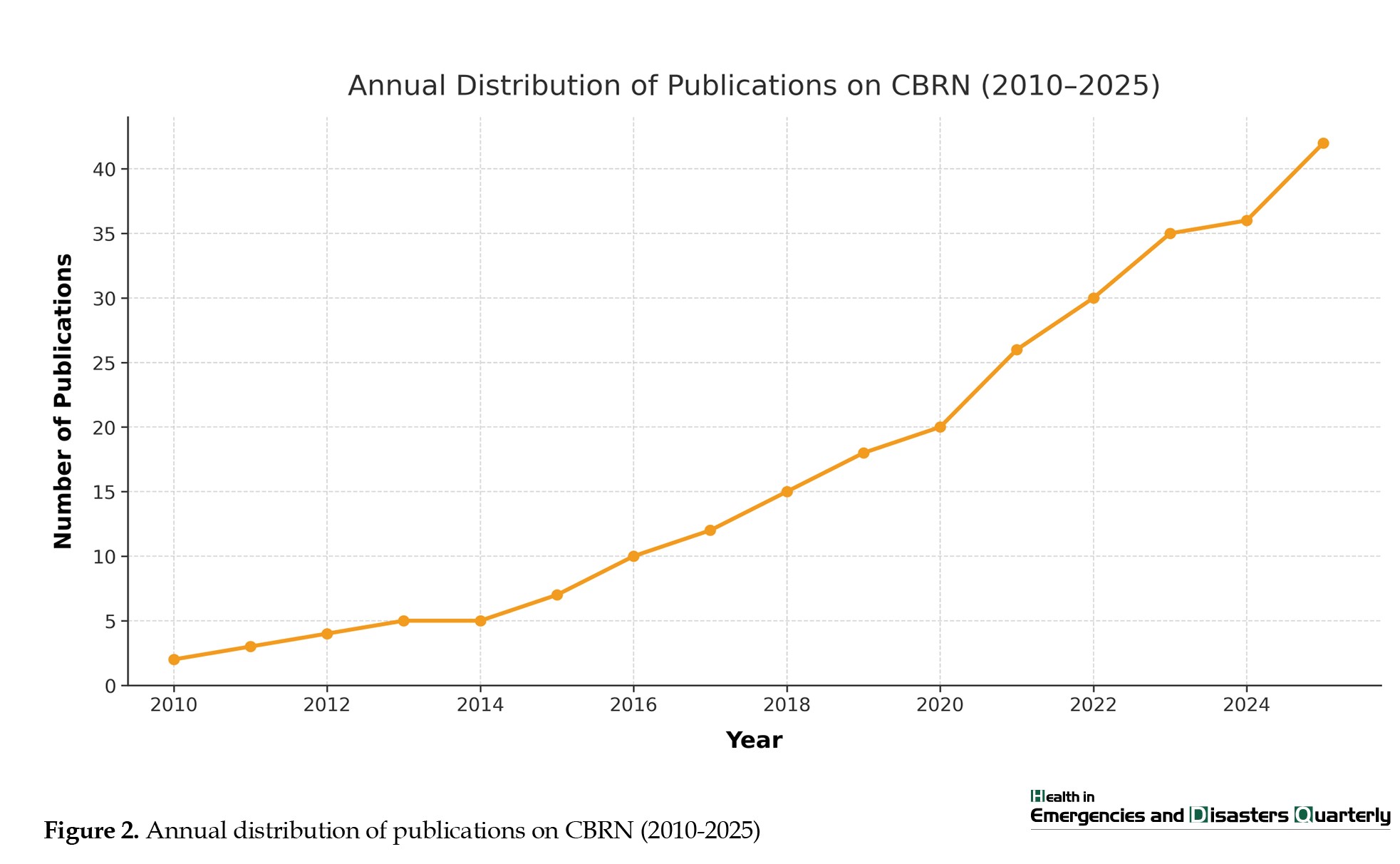
Figure 2 shows the annual trajectory of scholarly output on CBRN topics from 2010 to 2025.
Full-Text: (13 Views)
Introduction
The increasing complexity of global security dynamics has heightened attention to chemical, biological, radiological, and nuclear (CBRN) threats, which pose significant risks to public health, environmental safety, and geopolitical stability. Whether arising from deliberate attacks, accidental releases, or natural outbreaks, such incidents require sophisticated and coordinated responses [1, 2]. Consequently, a diverse and multidisciplinary research field has emerged, spanning medicine, environmental science, engineering, defense, and policy domains. This expansion reflects both the urgency of mitigating CBRN risks and the evolution of institutional and technological frameworks for preparedness [3, 4]. Given this multidimensional nature, bibliometric analysis provides an evidence-based means of assessing how CBRN scholarship has evolved, identifying influential works, and tracing thematic developments over time [5].
CBRN threats occupy a distinctive niche in contemporary disaster and security studies due to their high impact potential and complex operational requirements [6–9]. Beyond immediate physical damage, such events cause long-term psychosocial, economic, and environmental consequences. They therefore require integrated, interdisciplinary governance, and response structures that transcend traditional single-hazard paradigms [6, 10, 11]. Recent scholarship indicates that CBRN research is shifting from a predominantly military focus toward civilian health systems, emergency services, and public safety infrastructures [7, 12–14]. Notably, the tool for initial emergency response (TIER) model is a widely recognized framework for evaluating hospital-level readiness and quantifying institutional preparedness [15]. The evolution of such applied frameworks highlights an increasing emphasis on systematic evaluation and readiness metrics within the CBRN domain.
Systematic reviews of CBRN preparedness, particularly in high-risk settings, such as mass gatherings, have highlighted persistent limitations in existing emergency plans [10, 16–20]. Many studies report that contingency frameworks remain fragmented and event-specific, lacking the coherence required to respond to complex, multisectoral CBRN incidents [19, 20]. These findings reinforce the importance of comprehensive, coordinated preparedness models that integrate infrastructure, workforce training, and decision support systems—an area increasingly examined through bibliometric and systems-level approaches.
Technological advances, particularly in artificial intelligence (AI), sensor networks, and decision-support systems, have introduced transformative possibilities for CBRN incident management [21–24]. AI-driven models now enhance threat detection, early warning, and risk assessment, contributing to a more proactive preparedness approach [25–30]. Such developments demonstrate a broader convergence between technological innovation and disaster governance—an intersection that bibliometric mapping can elucidate by revealing emerging subfields and collaborations.
Collectively, these perspectives indicate that CBRN threat management has progressed from reactive response strategies to integrated, anticipatory preparedness architectures that encompass institutional planning, professional training, and technological infrastructure. Despite this progress, comprehensive bibliometric syntheses capturing temporal, collaborative, and conceptual patterns remain scarce. Most previous reviews focus narrowly on specific aspects, such as hospital preparedness or mass gatherings, leaving a gap for a methodologically transparent mapping of the field’s intellectual structure. Accordingly, this study presents a PRISMA-guided bibliometric analysis of peer-reviewed, English-language, open-access articles published between 2010 and mid-2025, primarily retrieved from Web of Science (WoS) and Scopus. The objectives were to: (i) Quantify temporal publication trends; (ii) identify leading authors, institutions, and countries; (iii) characterize international collaboration networks; (iv) map conceptual structures using keyword co-occurrence and thematic clustering; and (v) highlight research gaps and policy-relevant directions. Analyses were conducted in R (bibliometrix/Biblioshiny) and VOSviewer software, version 1.6.20.
Materials and Methods
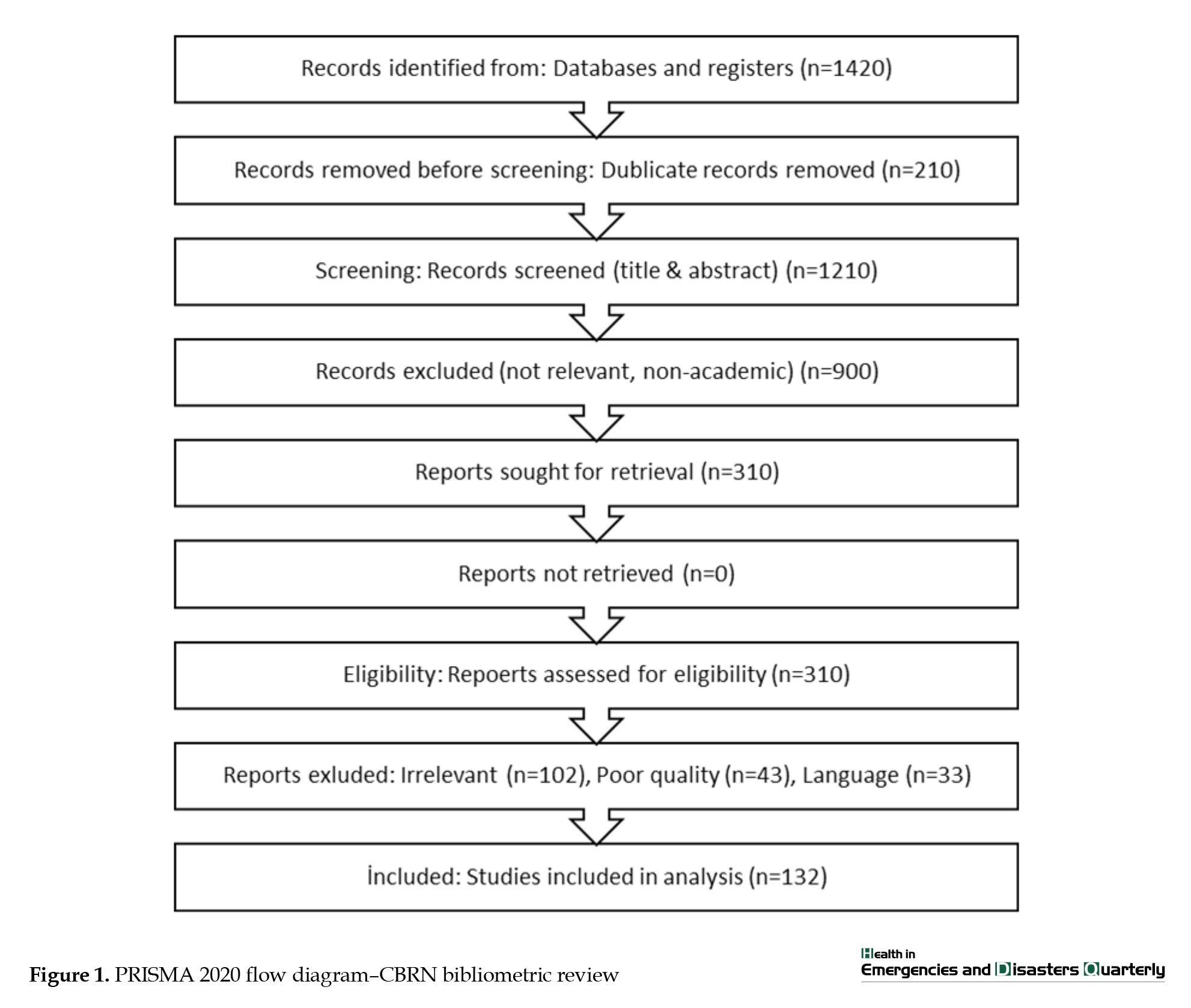
This study employed a bibliometric methodology to systematically delineate and critically examine the trajectory of scholarly research on CBRN threats from 2010 to May 2025. The review was designed and reported in accordance with the preferred reporting items for systematic reviews and meta-analyses (PRISMA) 2020 [31]. The eligibility criteria, information sources and search strategy, selection process, data items, and synthesis methods are detailed in the subsections below. The selection workflow is summarized in the PRISMA 2020 flow diagram (Figure 1).
Although the present study did not include clinical trials or health interventions and was therefore not registered with the International Prospective Register of Systematic Reviews (PROSPERO), the PRISMA flow diagram was used to standardize the literature selection protocol and document the exclusion criteria at each stage of the review process.
Data sources and search strategy
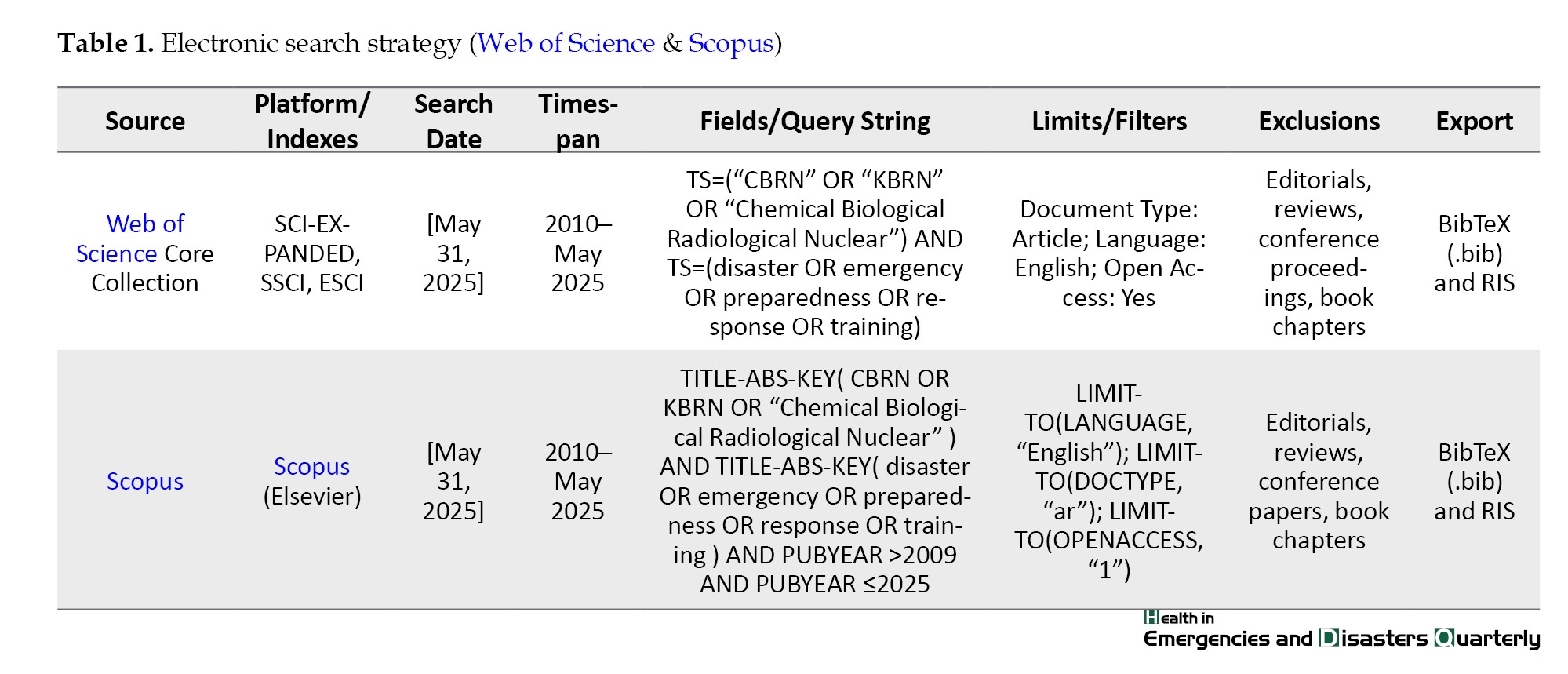
Two principal scientific databases, Web of Science (WoS) and Scopus, were selected as the primary sources for data retrieval. The complete electronic search strategy for Web of Science and Scopus is provided in Table 1 to ensure reproducibility.
These databases were selected for their extensive coverage of high-impact, peer-reviewed academic journals and their strong compatibility with widely used bibliometric analysis tools (e.g. VOSviewer and bibliometrix). The combined use of Web of Science (WoS) and Scopus aimed to reduce potential source bias and enhance the representativeness and comprehensiveness of the dataset across diverse disciplinary domains.
In addition to Web of Science (WoS) and Scopus, we conducted a supplementary coverage check in PubMed using the same Boolean query (May 2025). Due to the high overlap and our predefined inclusion criteria (peer-reviewed journal articles, English language, and open access), the PubMed search did not yield any additional unique records. The final dataset therefore remained at 132 articles. We did not use general search engines (e.g. Google) or national/domestic repositories, as these sources are not curated for bibliometric mapping, offer limited exportable metadata, and hinder reproducibility. This decision is consistent with common practice in bibliometric studies that focus on curated citation indexes.
A comprehensive Boolean search strategy was implemented using the following query string:
“CBRN” OR “KBRN” OR “Chemical Biological Radiological Nuclear” AND (“disaster” OR “emergency” OR “preparedness” OR “response” OR “training”)
The search was restricted to:
1) Peer-reviewed journal articles (document type: “Article”); 2) Publications in the English language; 3) Open-access documents to ensure broad accessibility and facilitate replicability.
This stringent filtering approach safeguards analytical consistency and prevents the inclusion of heterogeneous document types, such as editorials, reviews, conference proceedings, or book chapters, which could introduce distortions into co-authorship structures and citation network analyses. Although restricting the analysis to open-access publications enhances transparency and reproducibility, it may introduce potential selection bias by excluding non-open-access research outputs. This limitation was considered acceptable given the study’s emphasis on replicable bibliometric mapping across curated citation databases.
Data processing and cleaning
After data extraction, the bibliographic records retrieved from Web of Science and Scopus were exported in BibTeX (.bib) and RIS file formats. All records were then consolidated using EndNote, and a thorough manual de-duplication procedure was carried out to ensure the integrity and accuracy of the final dataset. Upon completion of the de-duplication process, a total of 132 unique articles were retained for subsequent analysis. In accordance with the PRISMA 2020 framework, a four-stage selection protocol—comprising Identification, Screening, Eligibility, and Inclusion—was rigorously applied. A corresponding PRISMA 2020 flow diagram was generated to transparently document the study selection pathway, as shown in Figure 1.
Analytical tools and procedure
Bibliometric analyses were conducted in the RStudio environment software, version 2025.05.1 using the bibliometrix package [32] and its graphical user interface, Biblioshiny. The analysis included the following key indicators:
1) Annual trends in scientific output; 2) Identification of the most prolific institutions and countries; 3) Examination of international collaboration networks; 4) Keyword co-occurrence patterns and thematic cluster development; 5) Identification of emerging research themes and policy-relevant directions
To enhance the interpretive value of the results, VOSviewer [33] was used to generate detailed co-authorship network maps and keyword density visualisations. Contextually appropriate minimum occurrence thresholds were set for inclusion in the network visualizations (e.g. ≥2 for keywords; ≥3 for authors) to maintain analytical rigor and visual clarity while avoiding the exclusion of substantively relevant nodes. For network analyses conducted in VOSviewer, standard parameter settings were used, including a minimum link strength of 2 for keyword co-occurrence and 3 for author-level co-authorship. Cluster resolution was set at the default value (1.00), with full parameter details provided in the Supplementary Material to ensure methodological transparency and replicability.
Network visualization and simplification
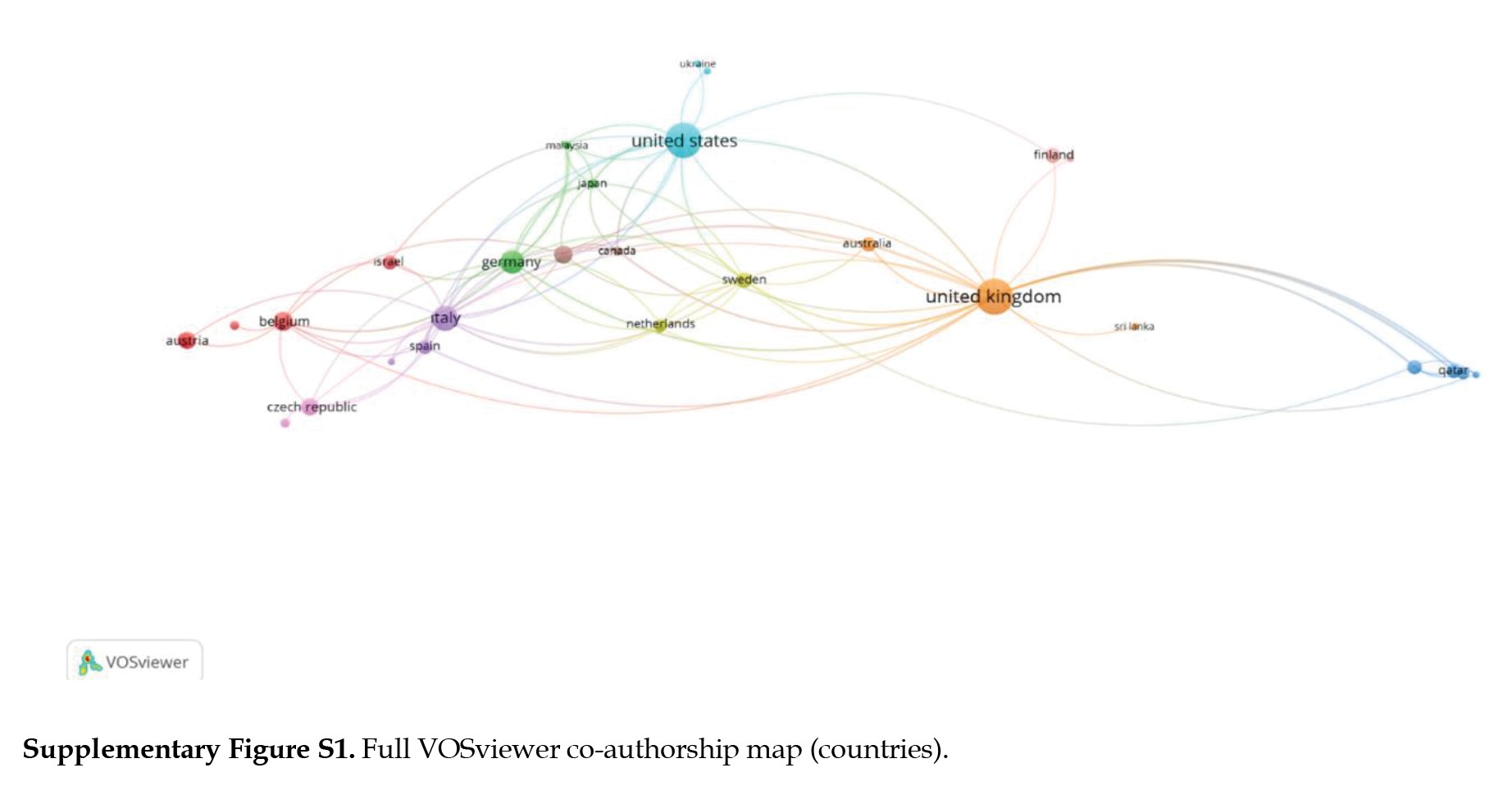
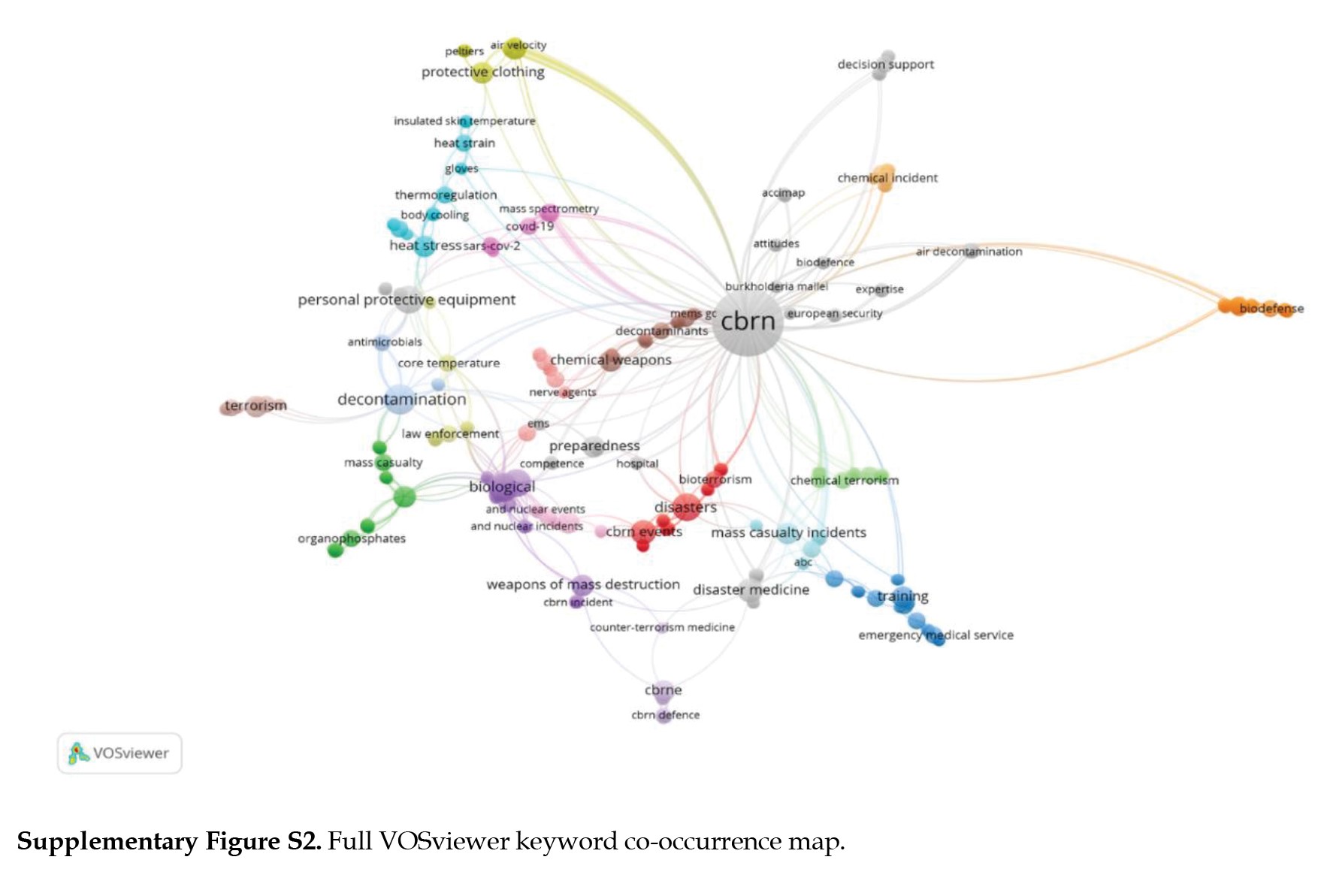
Raw co-authorship and keyword co-occurrence networks were generated in VOSviewer. To improve legibility in the main text, we produced simplified schematic renderings by applying objective filters, such as retaining countries with degree ≥3 and suppressing edges below the median link strength; for keywords, we kept the top 4–5 terms per VOSviewer cluster by total link strength. Cluster assignments and relative prominence followed the original VOSviewer results. The simplified figures were redrawn in R (bibliometrix/Biblioshiny) and Python (NetworkX/Matplotlib) for clarity. Full, unfiltered VOSviewer maps are provided in Supplementary Figures S1 and S2.
Data sources and search strategy
Two principal scientific databases, Web of Science (WoS) and Scopus, were selected as the primary sources for data retrieval. The complete electronic search strategy for Web of Science and Scopus is provided in Table 1 to ensure reproducibility.
These databases were selected for their extensive coverage of high-impact, peer-reviewed academic journals and their strong compatibility with widely used bibliometric analysis tools (e.g. VOSviewer and bibliometrix). The combined use of Web of Science (WoS) and Scopus aimed to reduce potential source bias and enhance the representativeness and comprehensiveness of the dataset across diverse disciplinary domains.
In addition to Web of Science (WoS) and Scopus, we conducted a supplementary coverage check in PubMed using the same Boolean query (May 2025). Due to the high overlap and our predefined inclusion criteria (peer-reviewed journal articles, English language, and open access), the PubMed search did not yield any additional unique records. The final dataset therefore remained at 132 articles. We did not use general search engines (e.g. Google) or national/domestic repositories, as these sources are not curated for bibliometric mapping, offer limited exportable metadata, and hinder reproducibility. This decision is consistent with common practice in bibliometric studies that focus on curated citation indexes.
A comprehensive Boolean search strategy was implemented using the following query string:
“CBRN” OR “KBRN” OR “Chemical Biological Radiological Nuclear” AND (“disaster” OR “emergency” OR “preparedness” OR “response” OR “training”)
The search was restricted to:
1) Peer-reviewed journal articles (document type: “Article”); 2) Publications in the English language; 3) Open-access documents to ensure broad accessibility and facilitate replicability.
This stringent filtering approach safeguards analytical consistency and prevents the inclusion of heterogeneous document types, such as editorials, reviews, conference proceedings, or book chapters, which could introduce distortions into co-authorship structures and citation network analyses. Although restricting the analysis to open-access publications enhances transparency and reproducibility, it may introduce potential selection bias by excluding non-open-access research outputs. This limitation was considered acceptable given the study’s emphasis on replicable bibliometric mapping across curated citation databases.
Data processing and cleaning
After data extraction, the bibliographic records retrieved from Web of Science and Scopus were exported in BibTeX (.bib) and RIS file formats. All records were then consolidated using EndNote, and a thorough manual de-duplication procedure was carried out to ensure the integrity and accuracy of the final dataset. Upon completion of the de-duplication process, a total of 132 unique articles were retained for subsequent analysis. In accordance with the PRISMA 2020 framework, a four-stage selection protocol—comprising Identification, Screening, Eligibility, and Inclusion—was rigorously applied. A corresponding PRISMA 2020 flow diagram was generated to transparently document the study selection pathway, as shown in Figure 1.
Analytical tools and procedure
Bibliometric analyses were conducted in the RStudio environment software, version 2025.05.1 using the bibliometrix package [32] and its graphical user interface, Biblioshiny. The analysis included the following key indicators:
1) Annual trends in scientific output; 2) Identification of the most prolific institutions and countries; 3) Examination of international collaboration networks; 4) Keyword co-occurrence patterns and thematic cluster development; 5) Identification of emerging research themes and policy-relevant directions
To enhance the interpretive value of the results, VOSviewer [33] was used to generate detailed co-authorship network maps and keyword density visualisations. Contextually appropriate minimum occurrence thresholds were set for inclusion in the network visualizations (e.g. ≥2 for keywords; ≥3 for authors) to maintain analytical rigor and visual clarity while avoiding the exclusion of substantively relevant nodes. For network analyses conducted in VOSviewer, standard parameter settings were used, including a minimum link strength of 2 for keyword co-occurrence and 3 for author-level co-authorship. Cluster resolution was set at the default value (1.00), with full parameter details provided in the Supplementary Material to ensure methodological transparency and replicability.
Network visualization and simplification
Raw co-authorship and keyword co-occurrence networks were generated in VOSviewer. To improve legibility in the main text, we produced simplified schematic renderings by applying objective filters, such as retaining countries with degree ≥3 and suppressing edges below the median link strength; for keywords, we kept the top 4–5 terms per VOSviewer cluster by total link strength. Cluster assignments and relative prominence followed the original VOSviewer results. The simplified figures were redrawn in R (bibliometrix/Biblioshiny) and Python (NetworkX/Matplotlib) for clarity. Full, unfiltered VOSviewer maps are provided in Supplementary Figures S1 and S2.
Ethical and methodological rigor
As this study did not involve human participants, experimental interventions, or the handling of sensitive data, formal ethical approval was not required. Nevertheless, methodological rigor was maintained through several measures, including:
1) Transparent and comprehensive documentation of all selection criteria; 2) Clearly articulated inclusion and exclusion parameters; 3) Employment of open-source, replicable analytical tools; 4) Provision of the PRISMA flow diagram and the underlying .bib dataset upon reasonable request.
Results
Temporal trends: scientific production and citation trajectories
The body of scholarly literature addressing CBRN-related themes has shown a marked and sustained upward trajectory over the past 15 years. In the early 2010s, annual publication output remained relatively modest, generally not exceeding ten articles per year. However, a clear inflection point appears after 2015, with a pronounced acceleration observable after 2020. This temporal surge closely aligns with the advent of the COVID-19 pandemic, which heightened global awareness of biological hazards and public health preparedness, thereby serving as a catalyst for intensified scholarly engagement in this domain [33]. Notably, although the overall volume of publications has increased, the average citation density per article has shown a declining trend over time. Articles published between 2013 and 2016 recorded the highest mean citation counts, reflecting their foundational nature and theoretical significance within the field. By contrast, more recent publications, despite their increasing numbers, have yet to achieve comparable citation impact. This outcome is attributable both to the inherent lag in citation accumulation and to a discernible shift toward more practice-oriented, operational, and technically focused research outputs. This pattern suggests that the field is undergoing a transition from primarily exploratory and conceptual scholarship to a more application-driven and solution-oriented research agenda.
Figure 2 shows the annual trajectory of scholarly output on CBRN topics from 2010 to 2025.
The figure reveals a clear and sustained upward trend, with a particularly marked acceleration beginning in 2020. In the initial phase (2010–2015), publication volumes remained relatively modest, ranging from two to five articles per year. From 2016 onwards, however, a steady increase is evident, culminating in a substantial surge coinciding with the onset of the COVID-19 pandemic, which significantly heightened global academic and policy interest in biological hazards and emergency preparedness [34].
The upward trajectory peaks in 2025, with a recorded total of 42 publications, underscoring the field’s sustained expansion and increased scholarly engagement. This evolving pattern suggests a transition from a relatively niche research domain to one of broader, multidisciplinary relevance. This shift is plausibly driven by the increased prominence of global health crises, advancements in modelling and simulation technologies, and a greater emphasis on preparedness for mass casualty and complex emergency scenarios [35].
Geospatial distribution and country-level contributions
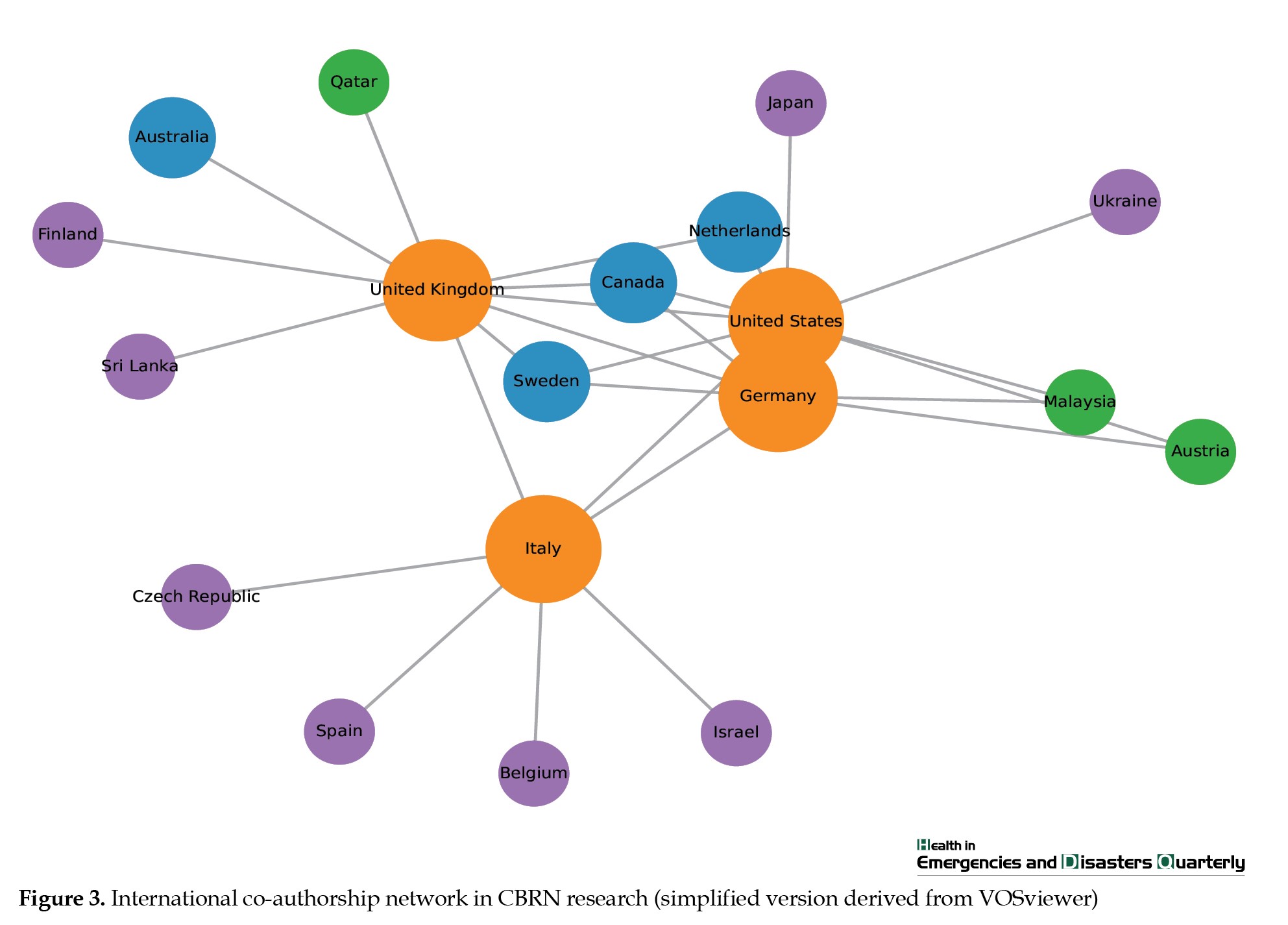
The country-level analysis highlights the dominance of a select group of nations in shaping the global CBRN research landscape. The United States is the leading contributor in both total publication output and network centrality, reflecting its sustained investments in biodefence, homeland security, and integrated emergency management infrastructures [34]. Prominent institutions, such as Harvard Medical School, Stanford University, and Johns Hopkins University frequently occupy central nodes within transnational collaborative networks, further amplifying the country’s influence.
The United Kingdom follows closely, with a strong emphasis on research in risk communication, simulation-based preparedness training, and evidence-informed public health policy. German institutions contribute significantly, primarily in radiological risk modelling and European :union:-aligned security governance. Canada plays a pivotal role in practice-oriented healthcare research, particularly in contamination control and the effective deployment of personal protective equipment (PPE) in clinical and emergency contexts.
Scientists at the European Commission’s joint research centre (JRC) implement nuclear education and training initiatives that support EU policy priorities and contribute to maintaining and developing the EU’s nuclear competence and expertise. Established under the Euratom Treaty, the JRC has extensive expertise in the nuclear field and offers scientific competencies across a wide range of disciplines to support nearly all EU policy areas [36]. Research is primarily conducted in nuclear research and information management activities at laboratories in Italy, Belgium, Germany, and the Netherlands, using advanced technologies. Researchers have opportunities to carry out their work at these institutes through doctoral and postdoctoral fellowships, project collaborations, national expert positions, workshops, and training. The researchers’ collective work contributes to the field’s methodological and practical continuity, encompassing several critical subfields, including emergency preparedness training, decontamination protocols, and medical simulation, and fosters international networking among authors [36, 37].
Qatar and Malaysia, historically less prominent within the CBRN research domain, have demonstrated a discernible increase in scholarly output since 2015. Their contributions are chiefly concentrated on hospital preparedness, civil defense training, and the curricular integration of CBRN competencies, reflecting growing academic engagement with regional security imperatives and disaster resilience objectives [38].
Figure 3 illustrates the international co-authorship network in CBRN research.
Node size reflects prominence; colours/groupings follow VOSviewer clusters, with the United States and the United Kingdom as the most central node and Germany and Italy occupying prominent positions. Peripheral yet ascending contributors (e.g. Qatar, Malaysia, and Austria) are retained to illustrate diversification. For readability, low-strength edges and isolated nodes were omitted. Supplementary Figures S1 represents the full VOSviewer map.
Conceptual structures and keyword co-occurrence
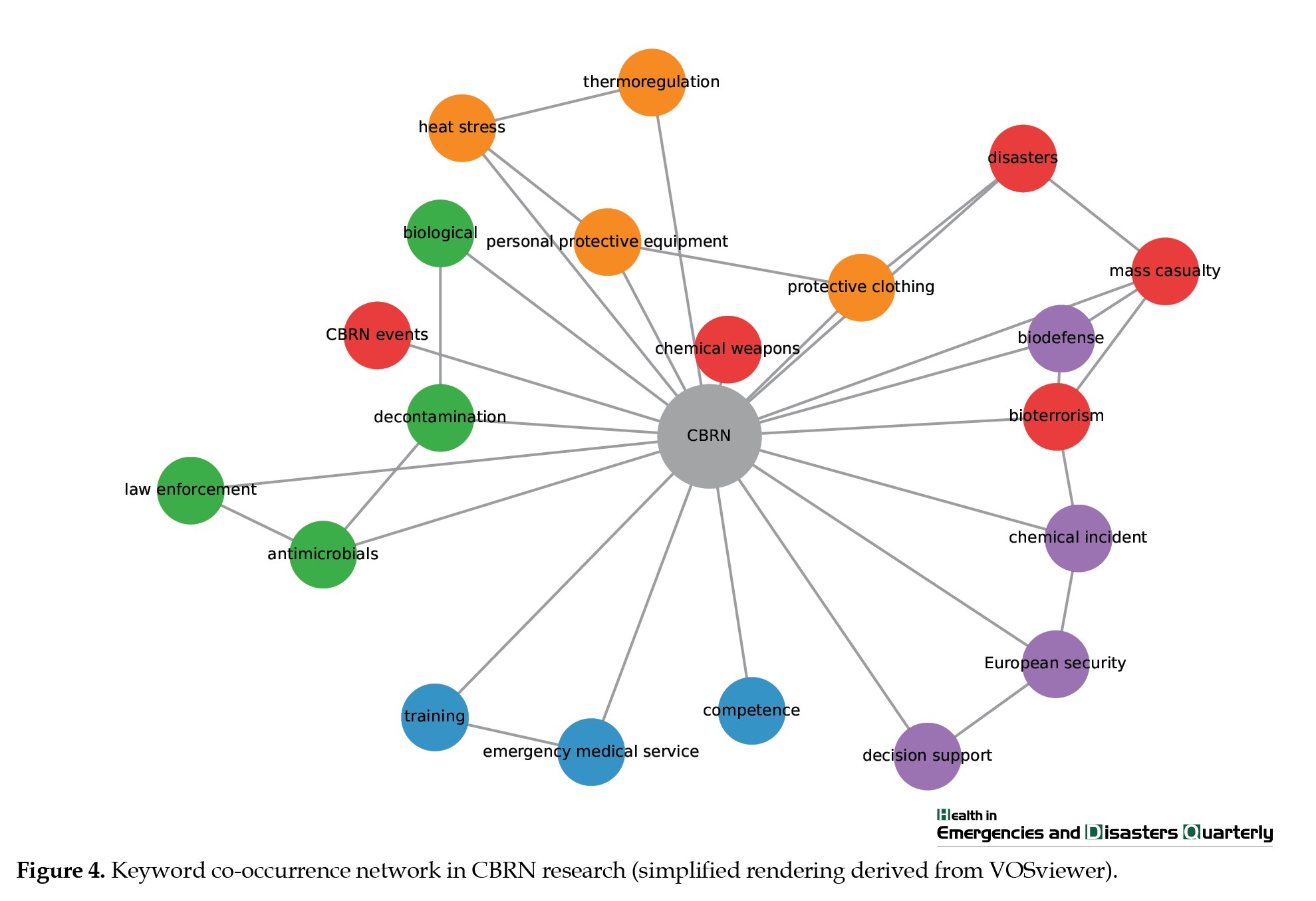
The keyword co-occurrence analysis uncovered a nuanced and multifaceted thematic structure that underpins the contemporary CBRN literature. Core terms, such as “preparedness,” “simulation,” “resilience,” and “training” emerged as highly interconnected nodes, collectively constituting the conceptual backbone of the field. These central terms converged around the imperative to strengthen institutional and societal capacities for anticipating, mitigating, and effectively responding to complex, large-scale threats.
The analysis further revealed the presence of several discrete yet interrelated thematic clusters, including: preparedness & simulation, biological threats, policy & security, and technological integration. These groupings underscore the inherently interdisciplinary nature of CBRN scholarship, which bridges domains as diverse as public health, engineering, political science, and emergency management. This thematic diversification affirms the field’s evolution from a narrowly focused security concern to a broader, integrated area of inquiry addressing multifaceted societal risks and resilience strategies.
Figure 4 presents the keyword co-occurrence network in CBRN research.
“CBRN” is shown as the central nexus connecting major thematic clusters (protective equipment & occupational safety; biological & decontamination; policy & preparedness; training & simulation; CBRN-specific threats & incidents). Representative top-link-strength keywords from each VOSviewer cluster are displayed; low-weight terms and edges are suppressed for clarity. Supplementary Figure S2 presents the full VOSviewer map.
Thematic clustering of CBRN keywords
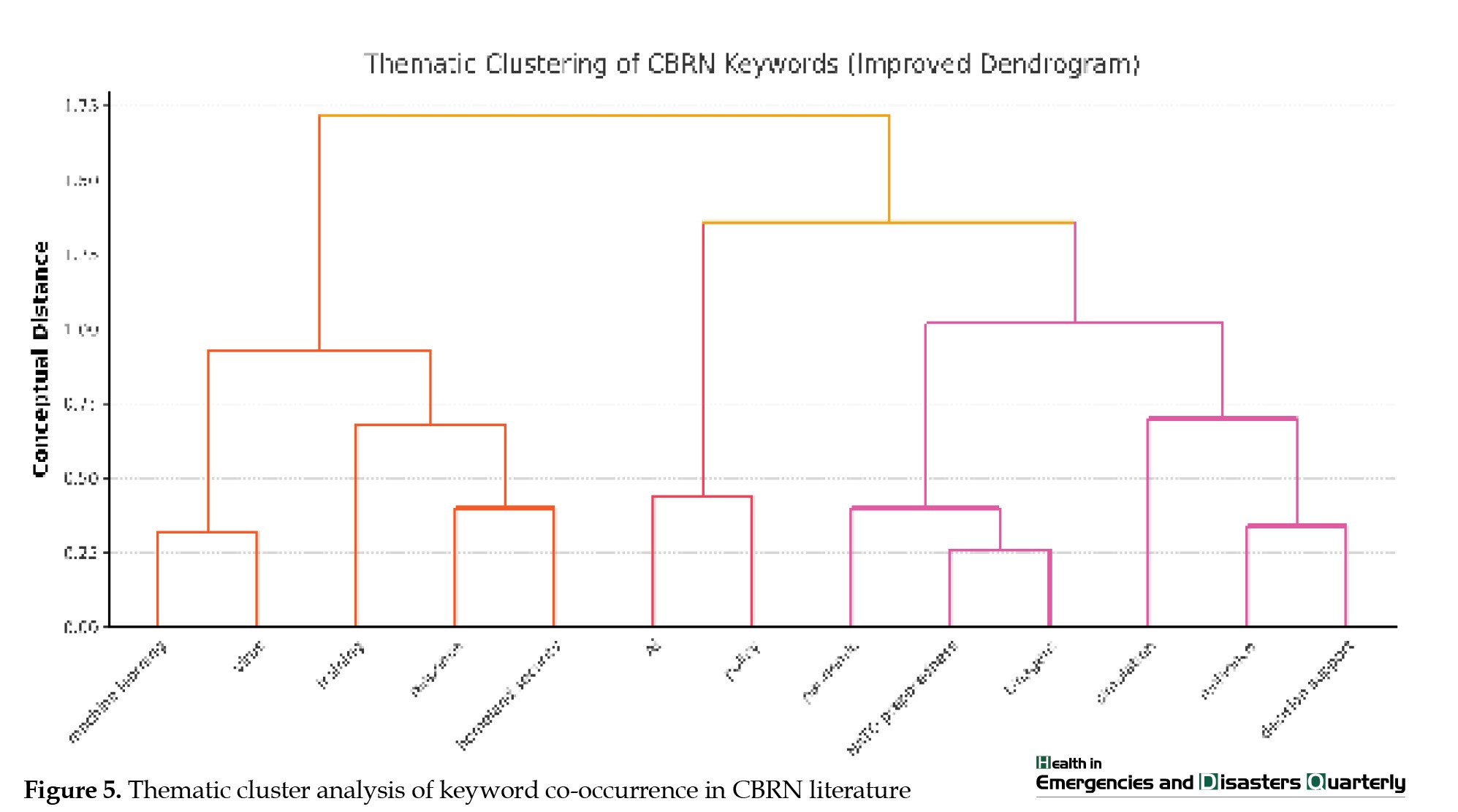
The dendrogram elucidates the conceptual proximities among frequently occurring keywords within the CBRN research domain. The identified clusters represent the field’s principal thematic pillars: Preparedness and training, biological threats, policy and security, and technological innovation. This visualization underscores the multidimensional expansion of CBRN scholarship and highlights the intricate interconnections among its strategic subdomains, reinforcing the imperative for integrated, cross-disciplinary approaches to complex threat management.
Figure 5 presents a hierarchical cluster analysis (dendrogram) constructed from keyword co-occurrence patterns in CBRN-related scholarly literature published between 2010 and 2025.
This dendrogram delineates four distinct conceptual clusters, each representing an intellectual domain that shapes the thematic contours of the field.
Cluster 1: Technological and simulation-based approaches: This grouping brings together terms, such as AI, resilience, simulation, and machine learning, signaling an emergent research trajectory that integrates advanced technologies into CBRN risk assessment and emergency response systems. The co-location of these terms underscores the growing influence of digital transformation and data-driven decision-making within disaster preparedness and crisis management discourse [39].
Cluster 2: Biosecurity and pandemic readiness: This cluster aggregates terms, including pandemic, virus, and bioagent, highlighting heightened scholarly attention to biological hazards, a trend notably catalyzed by global health crises, such as the COVID-19 pandemic. The thematic focus here centers on pathogen surveillance, biosecurity infrastructure, and epidemiological modelling, reflecting an intensified commitment to pandemic preparedness and response [20, 40].
Cluster 3: Strategic and policy-oriented focus: Encompassing keywords, such as NATO preparedness, response policy, decision support, and homeland security, this cluster points to the institutional and governance dimensions of CBRN scholarship. The thematic emphasis is on international cooperation, civil defense frameworks, and evidence-based policy development, underscoring the geostrategic and regulatory imperatives of effective CBRN management [41].
Cluster 4: Operational capacity and training: The proximity of terms, like training and decision support within this grouping highlights the operational core of CBRN preparedness. This cluster foregrounds workforce development, scenario-based learning, and simulation-driven capacity building as critical enablers of institutional readiness [42].
Collectively, the dendrogram shows that CBRN research transcends disciplinary silos, spanning technological innovation, biological threat mitigation, institutional governance, and operational capacity-building. This segmentation provides researchers and policymakers with a clear framework for identifying thematic priorities, pinpointing research gaps, and fostering interdisciplinary convergence to address increasingly complex and interconnected threat environments.
Discussion
This bibliometric analysis provides a comprehensive overview of the evolving landscape of CBRN research from 2010 to mid-2025, integrating temporal, geographical, and thematic dimensions that have shaped the field. Drawing on systematically extracted data from the Web of Science (WoS) and Scopus, the study identified key publication trajectories, influential institutions, collaborative networks, and the thematic structure of the domain. This discussion reflects on the five core objectives outlined earlier: To quantify annual trends in scientific output, identify the most prolific institutions and countries, analyze international collaboration networks, examine keyword co-occurrence patterns and thematic cluster development, and highlight emerging research fronts and policy-relevant directions.
The sustained increase in publication output, particularly after 2015 and accelerated by the COVID-19 pandemic, highlights the growing global attention to biological hazards and the imperative for comprehensive preparedness strategies. This trend aligns with earlier studies emphasizing gaps in emergency readiness and the necessity of integrative approaches combining public health, emergency management, and security perspectives [12, 19]. The surge in publications reflects a shift from traditional research on decontamination protocols and military security toward broader themes, such as simulation-based training, AI, and strategic governance, illustrating the field’s ongoing thematic diversification [43].
Analysis of co-authorship and institutional networks revealed an increasingly collaborative and interdisciplinary research ecosystem. The United States and the United Kingdom emerged as central contributors, while Germany, Italy, and other high-income countries maintain prominent positions within international collaborative frameworks [33, 34]. Simultaneously, the growing participation of Qatar, Malaysia and other emerging contributors indicates a gradual geographical expansion of the field [38]. Given the transboundary nature of CBRN threats, this diversification is critical for ensuring inclusive and context-sensitive knowledge production. Nevertheless, the concentration of intellectual leadership in Western countries suggests that further North–South collaborations are needed to balance global research capacity.
The conceptual network and keyword analyses indicated pronounced thematic clustering around preparedness, training, and technological innovation. Operationally focused themes, including protective equipment and occupational safety, coexist with policy-oriented topics, such as NATO preparedness and homeland security. This interdisciplinary integration reflects the field’s ability to inform both frontline practice and high-level governance, while also mirroring broader trends in disaster risk reduction, resilience-building, adaptive learning, and digital transformation [22, 25].
Despite these advances, several challenges remain. The declining citation density of recent publications, partly due to citation lag, may also suggest the proliferation of fragmented or practice-specific studies that lack theoretical cohesion. Gaps persist in longitudinal research on the psychosocial and environmental impacts of CBRN incidents, as well as in frameworks for harmonizing international response mechanisms beyond NATO or EU-centric contexts [44]. Moreover, although governance-related research is increasing, systematic mechanisms for translating scholarly findings into policy action remain limited, underscoring the need to strengthen the science–policy interface through interdisciplinary collaboration and sustained dialogue between researchers, practitioners, and policymakers [35].
Health systems constitute the front line of preparedness, response, and recovery in CBRN accidents. Besides surveillance and early warning, core functions include hospital-level readiness (decontamination corridors, isolation capacity, stockpiles, and safe use of PPE with heat-stress management), surge capacity and triage, continuity of essential services, and interoperable incident command with public health, EMS, and law-enforcement partners [12, 14, 15, 20]. Continuous training and simulation are pivotal to maintain competencies and coordination across prehospital and hospital teams, with technology-enhanced approaches increasingly used to standardize drills and decision support [13, 22, 23]. Collectively, these functions position the health system as a critical risk-governance actor that can translate scientific guidance into operational capability during mass-casualty and cross-border CBRN emergencies [10, 19]. Each of the study’s aims was addressed through quantitative and network-based analyses, offering an integrated understanding of how CBRN research has evolved over time and across regions.
Taken together, these findings indicate that CBRN research has matured into a multidimensional, globally interconnected scholarly domain. It increasingly integrates technological innovation, cross-sectoral collaboration, and evidence-based policy development to address the complex challenges posed by contemporary CBRN threats [45]. The study underscores the need for future research to maintain agility, foster balanced North–South collaborations, expand thematic coverage into underexplored areas, and enhance the practical applicability of research through stronger engagement with policy and operational frameworks. As global security dynamics continue to evolve, these measures will be pivotal for ensuring that CBRN scholarship remains relevant, inclusive, and impactful.
Limitations
This study is bounded by the coverage of Web of Science (WoS) and Scopus; domestic repositories, gray literature, and non-English outputs were excluded, and the open-access filter may introduce selection bias. Bibliometric indicators depend on database metadata, which may contain errors in author and affiliation disambiguation and country attribution. Network results are sensitive to parameter choices (e.g. thresholds, clustering resolution, and counting scheme). Citations are time-dependent and not field-normalized; thus, recent papers are affected by citation lag. For readability, main-text figures show simplified schematic renderings of the VOSviewer maps; full, unfiltered maps are provided in the Supplementary Material. Finally, the review offers a time-bounded snapshot up to May 2025 and does not appraise the methodological quality of individual studies.
Conclusion
This study presents a comprehensive bibliometric analysis of global CBRN research from 2010 to mid-2025, integrating temporal, geographical, and conceptual perspectives. The results showed steady growth in CBRN publications, with a significant surge after 2015, particularly following the COVID-19 pandemic. CBRN threats, bibliometric analysis, global health security, research trends, and public health were key topics in this research. The United States and the United Kingdom remain dominant contributors, while increased activity from emerging regions such as Qatar and Malaysia highlights the field’s expanding global reach. Thematic mapping revealed four primary clusters—preparedness and training, biosecurity, policy and governance, and technological innovation—underscoring the field’s growing interdisciplinarity and practical orientation.
Overall, CBRN research has evolved into a complex, interconnected domain that increasingly merges simulation technologies, AI, and governance frameworks. Sustaining this progress will require stronger North–South collaborations, broader open-access knowledge exchange, and closer integration between science, policy, and practice. The study also emphasizes the vital role of health systems in managing CBRN incidents, recommending investments in hospital preparedness assessments, decontamination and isolation capacity, adaptive surge protocols, and interagency simulation exercises supported by decision-support tools. Strengthening these capacities will enhance early detection, reduce secondary contamination, and improve response outcomes during future CBRN events.
Based on the findings of this bibliometric analysis, several strategic recommendations are advanced to guide future CBRN research and policy development:
Foster interdisciplinary integration: Future research should bridge technical, policy, and medical domains by integrating emerging tools, such as machine learning, simulation modelling, and decision-support systems into emergency preparedness and response.
Strengthen South–North collaboration: Enhancing research partnerships between high-income and underrepresented regions is essential to improve global preparedness, diversify perspectives, and promote equitable capacity building.
Promote open-access dissemination: Expanding open-access publishing and transparent data-sharing practices will facilitate the equitable diffusion of scientific knowledge, particularly in low-resource and developing contexts.
Prioritize simulation-based and virtual training: Greater investment in immersive, scenario-driven, and virtual reality–based training programs can significantly improve operational readiness and interagency coordination.
Enhance the science–policy interface: Establishing structured advisory mechanisms, policy briefs, and knowledge exchange forums can strengthen the translation of research evidence into effective policy and institutional practice.
Address thematic and methodological gaps: Future studies should incorporate longitudinal and mixed-methods designs to advance understanding of long-term risk modelling, psychosocial dimensions, and cross-border coordination mechanisms.
These recommendations underscore the need for an agile, interdisciplinary, and globally inclusive CBRN research ecosystem—one that effectively bridges science, policy, and practice to enhance resilience against evolving CBRN threats.
Ethical Considerations
Compliance with ethical guidelines
There were no ethical considerations to be considered in this research.
Funding
This research did not receive any grant from funding agencies in the public, commercial, or non-profit sectors.
Authors' contributions
Material preparation, data collection and data analysis: Tuncay Polat and Ali Nedim Yaşıtlı; drafting of the manuscript: Tuncay Polat; Conceptualization, study design and final approval: All authors.
Conflict of interest
The authors declared no conflict of interest.
References
- Koblentz GD. From biodefence to biosecurity: The Obama administration’s strategy for countering biological threats. International Affairs. 2012; 88(1):131-48. [DOI:10.1111/j.1468-2346.2012.01061.x] [PMID]
- Lentzos F. Biological threats in the 21st century: The politics, people, science and historical roots. London: Imperial College Press; 2016. [DOI:10.1142/p1081]
- Paté‐Cornell ME, Kuypers M, Smith M, Keller P. Cyber risk management for critical infrastructure: A risk analysis model and three case studies. Risk Analysis. 2018; 38(2):226-41. [DOI:10.1111/risa.12844] [PMID]
- Khorram-Manesh A, Lupesco O, Friedl T, Arnim G, Kaptan K, Djalali AR, et al. Education in disaster management: What do we offer and what do we need? Proposing a new global program. Disaster Medicine and Public Health Preparedness. 2016; 10(6):854-73. [DOI:10.1017/dmp.2016.88] [PMID]
- Donthu N, Kumar S, Mukherjee D, Pandey N, Lim WM. How to conduct a bibliometric analysis: An overview and guidelines. Journal of Business Research. 2021; 133:285-96. [DOI:10.1016/j.jbusres.2021.04.070]
- Benolli F, Guidotti M, Bisogni F. The CBRN threat: Perspective of an interagency response. In: Jacobs G, Suojanen I, Horton KE, Bayerl PS, editors. International security management. Advanced Sciences and Technologies for Security Applications. Cham: Springer International Publishing; 2021. [DOI:10.1007/978-3-030-42523-4_29]
- Coleman CN, Bader JL, Koerner JF, Hrdina C, Cliffer KD, Hick JL, et al. Chemical, biological, radiological, nuclear, and explosive (CBRNE) science and the CBRNE science medical operations science support expert (CMOSSE). Disaster Medicine and Public Health Preparedness. 2019; 13(5-6):995-1010. [DOI:10.1017/dmp.2018.163] [PMID]
- Morton H, Johnson C. Chemical, biological, radiological and nuclear major incidents. Surgery (Oxford). 2021; 39(7):416-22. [DOI:10.1016/j.mpsur.2021.05.005]
- Rose A, Djavadi B. Behavioral aspects of population mobility following a CBRN event and their implications for economic consequence analysis. International Journal of Disaster Risk Science . 2025; 16(2):139-64. [DOI:10.1007/s13753-024-00609-y]
- Farhat H, Alinier G, Chaabna K, El Aifa K, Abougalala W, Laughton J, et al. Preparedness and emergency response strategies for chemical, biological, radiological and nuclear emergencies in disaster management: A qualitative systematic review. Journal of Contingencies and Crisis Management. 2024; 32(3):e12592. [DOI:10.1111/1468-5973.12592]
- Nazari S, Sharififar S, Ahmadi Marzaleh M, Zargar S, Azarmi S, Akbari Shahrestanaki Y. Structural elements and requirements in forming prehospital health response teams in response to chemical, biological, radiation, and nuclear incidents (CBRN): A comparative review study. Disaster Medicine and Public Health Preparedness. 2023; 17:e300. [DOI:10.1017/dmp.2022.259] [PMID]
- Mortelmans LJ, Van Boxstael S, De Cauwer HG, Sabbe MB; Belgian Society of Emergency and Disaster Medicine (BeSEDiM) study. Preparedness of Belgian civil hospitals for chemical, biological, radiation, and nuclear incidents: Are we there yet? European Journal of Emergency Medicine. 2014; 21(4):296-300. [DOI:10.1097/MEJ.0000000000000072] [PMID]
- Kollek D, Wanger K, Welsford M. Chemical, biological, radiological and nuclear preparedness training for emergency medical services providers. CJEM. 2009; 11(4):337-42. [DOI:10.1017/S1481803500011386] [PMID]
- Gaskin S, Mehta S, Pisaniello D, Turczynowicz L, Bruschi S, Mitchell K. Hazardous materials emergency incidents: Public health considerations and implications. Australian and New Zealand Journal of Public Health. 2020; 44(4):320-3. [DOI:10.1111/1753-6405.12981] [PMID]
- Olivieri C, Ingrassia PL, Della Corte F, Carenzo L, Sapori JM, Gabilly L, et al. Hospital preparedness and response in CBRN emergencies: TIER assessment tool. European Journal of Emergency Medicine . 2017; 24(5):366-70. [DOI:10.1097/MEJ.0000000000000399] [PMID]
- Malizia A. Disaster management in case of CBRNe events: An innovative methodology to improve the safety knowledge of advisors and first responders. Defense & Security Analysis. 2016; 32(1):79-90. [DOI:10.1080/14751798.2015.1130319]
- DeLuca MA, Chai PR, Goralnick E, Erickson TB. Five decades of global chemical terror attacks: Data analysis to inform training and preparedness. Disaster Medicine and Public Health Preparedness. 2021; 15(6):750-61. [DOI:10.1017/dmp.2020.176] [PMID]
- Eyison RK, Pakdemirli A, Aydin E, Sayin Ozturk A, Kiliç Z, Demirbag B, et al. Evaluation of the medical chemical, biological, radiological, and nuclear awareness level of emergency healthcare professionals serving on different centres. Journal of Basic and Clinical Health Sciences. 2020; 4(2):174-9. [DOI:10.30621/jbachs.2020.1037]
- Patel SS, Neylan JH, Bavaro K, Chai PR, Goralnick E, Erickson TB. Chemical, biological, radiological, nuclear, and explosives (CBRNEs) preparedness for sporting event mass gatherings: A systematic review of the literature. American Journal of Disaster Medicine. 2022; 17(1):57-74. [DOI:10.5055/ajdm.2022.0420] [PMID]
- Qzih ES, Ahmad MM. Hospital-based preparedness measures for CBRNE disasters: A systematic review. Environmental Health Insights. 2024; 18:11786302241288859. [DOI:10.1177/11786302241288859] [PMID]
- Patel SS, Grace RM, Chellew P, Prodanchuk M, Romaniuk O, Skrebets Y, et al. Emerging technologies and medical countermeasures to chemical, biological, radiological, and nuclear (CBRN) agents in East Ukraine. Conflict and Health. 2020; 14(1):24. [DOI:10.1186/s13031-020-00279-9] [PMID]
- Maciejewski P, Gawlik-Kobylińska M, Lebiedź J, Ostant W, Aydın D. To survive in a CBRN hostile environment: Application of CAVE automatic virtual environments in first responder training. Paper presented at: Proceedings of the 3rd International Conference on Applications of Intelligent Systems (APPIS 2020). 2020 January 7; New York, United States. [Link]
- Regal G, Pretolesi D, Schrom-Feiertag H, Puthenkalam J, Migliorini M, De Maio E, et al. Challenges in virtual reality training for CBRN events. Multimodal Technologies and Interaction. 2023; 7(9):88. [DOI:10.3390/mti7090088]
- Galatas I. 2012 Olympic Games-Terrorist CBRE threat estimate and medical response. International Journal of Emergency Management. 2012; 8(3):228. [DOI:10.1504/IJEM.2012.047526]
- Bajwa A. AI-based emergency response systems: A systematic literature review on smart infrastructure safety. American Journal of Advanced Technology and Engineering Solutions . 2025; 1(1):174-200. [DOI:10.63125/xcxwpv34]
- Chen N, Liu W, Bai R, Chen A. Application of computational intelligence technologies in emergency management: A literature review. Artificial Intelligence Review. 2019; 52(3):2131-68. [DOI:10.1007/s10462-017-9589-8]
- Fernando RLS. Artificial intelligence and disaster management in Sri Lanka: Problems and prospects. In: Kumar TVV, Sud K, editors. AI and robotics in disaster studies. Disaster Research and Management Series on the Global South. Singapore: Palgrave Macmillan; 2020. [DOI:10.1007/978-981-15-4291-6_11]
- Lei Y, Rao Y, Wu J, Lin CH. BIM based cyber-physical systems for intelligent disaster prevention. Journal of Industrial Information Integration. 2020; 20:100171. [DOI:10.1016/j.jii.2020.100171]
- Nguyen WP, Nof SY. Collaborative response to disruption propagation (CRDP) in cyber-physical systems and complex networks. Decision Support Systems. 2019; 117:1-3. [DOI:10.1016/j.dss.2018.11.005]
- Xiao C, Chen N, Gong J, Wang W, Hu C, Chen Z. Event-Driven Distributed Information Resource-Focusing Service for Emergency Response in Smart City with Cyber-Physical Infrastructures. ISPRS International Journal of Geo-Information. 2017; 6(8):251. [DOI:10.3390/ijgi6080251]
- Page MJ, McKenzie JE, Bossuyt PM, Boutron I, Hoffmann TC, Mulrow CD, et al. The PRISMA 2020 statement: An updated guideline for reporting systematic reviews. BMJ. 2021; Page MJ, McKenzie JE, Bossuyt PM, Boutron I, Hoffmann TC, Mulrow CD, et al. The PRISMA 2020 statement: An updated guideline for reporting systematic reviews. BMJ. 2021; 372. . [DOI:10.1136/bmj.n71] [PMID]
- Aria M, Cuccurullo C. bibliometrix: An R-tool for comprehensive science mapping analysis. Journal of Informetrics. 2017; 11(4):959-75. [DOI:10.1016/j.joi.2017.08.007]
- Van Eck NJ, Waltman L. Software survey: VOSviewer, a computer program for bibliometric mapping. Scientometrics. 2010; 84(2):523-38. [DOI:10.1007/s11192-009-0146-3] [PMID]
- Terzi S, De Angeli S, Miozzo D, Massucchielli LS, Szarzynski J, Carturan F, et al. Learning from the COVID-19 pandemic in Italy to advance multi-hazard disaster risk management. Progress in Disaster Science. 2022; 16:100268. [DOI:10.1016/j.pdisas.2022.100268] [PMID]
- Itoh K, Kano S. International comparison of pandemic policies in the United States and Japan: Combination of all-hazards and single-hazard approaches as a realistic option to policymaking for public health emergency management system. International Journal of Disaster Risk Reduction. 2024; 113:104858. [Link]
- Choudary S, Xerri GP, Carestia M, Vybornova O, Gala JL, Van de Vorst MF, et al. Development of a methodology for pooling resources and optimising investments in the field of CBRN training and capacity building. International Journal of Safety and Security Engineering. 2024; 14(3):933-40. [DOI:10.18280/ijsse.140324]
- Michailidou E, Martin Ramos M, Galy J, Eriksen B, Eriksson A, Goulart M, et al. Nuclear education and training activities of the Joint Research Centre of the European Commission: Maintaining and enhancing nuclear skills and competences. Nuclear Engineering and Design. 2024; 423:113087. [DOI:10.1016/j.nucengdes.2024.113087]
- Farhat H, Alinier G, Bajow N, Batt A, Charbel Helou M, Campbell C, et al. Preparedness and response strategies for chemical, biological, radiological, and nuclear incidents in the Middle East and North Africa: An artificial intelligence-enhanced Delphi approach. Disaster Medicine and Public Health Preparedness. 2024; 18:e244. [DOI:10.1017/dmp.2024.160] [PMID]
- Yahya NY, Rahmat RB, Termizi MS, Zazali AK, Jamalluddin SN. Preparedness towards chemical, biological, radiological, nuclear, and explosive (CBRNE) threats among healthcare personnel in Pasir Gudang, Johor, Malaysia. International Journal of Disaster Risk Reduction. 2022; 82:103235.[DOI:10.1016/j.ijdrr.2022.103235]
- Kegyes T, Süle Z, Abonyi J. Machine learning-based decision support framework for CBRN protection. Heliyon. 2024; 10(4):e25946. [DOI:10.1016/j.heliyon.2024.e25946] [PMID]
- Bruinen de Bruin Y, Lequarre AS, McCourt J, Clevestig P, Pigazzani F, Zare Jeddi M, et al. Initial impacts of global risk mitigation measures taken during the combatting of the COVID-19 pandemic. Safety Science. 2020; 128:104773. [DOI:10.1016/j.ssci.2020.104773] [PMID]
- Gawlik-Kobylińska M. Current issues in combating chemical, biological, radiological, and nuclear threats to empower sustainability: A systematic review. Applied Sciences. 2022; 12(16):8315. [DOI:10.3390/app12168315]
- Hasan MK, Nasrullah SM, Quattrocchi A, Arcos González P, Castro-Delgado R. Hospital surge capacity preparedness in disasters and emergencies: A systematic review. Public Health. 2023; 225:12-21. [DOI:10.1016/j.puhe.2023.09.017] [PMID]
- Bovenkerk S, Mueller A, Rossaint R, Czaplik M, Follmann A. Telemedicine via data glasses in CBRN protection suit-Evaluation of medical qualification and technical feasibility. PLoS One. 2025; 20(5):e0324558. [DOI:10.1371/journal.pone.0324558] [PMID]
- Castriciones EV, Vijayan V. Biosecurity risk mapping and gap analysis in South East Asia. Journal of Biosafety and Biosecurity. 2020; 2(1):36-43. [DOI:10.1016/j.jobb.2020.03.001]
- Farhat H, Alinier G, Helou M, Galatis I, Bajow N, Jose D, et al. Perspectives on preparedness for chemical, biological, radiological, and nuclear threats in the Middle East and North Africa region: Application of artificial intelligence techniques. Health Security. 2024; 22(3):190-202. [DOI:10.1089/hs.2023.0093] [PMID]
Type of article: Review |
Subject:
General
Received: 2025/08/21 | Accepted: 2025/10/26 | Published: 2026/09/28
Received: 2025/08/21 | Accepted: 2025/10/26 | Published: 2026/09/28
Send email to the article author
| Rights and permissions | |
 |
This work is licensed under a Creative Commons Attribution-NonCommercial 4.0 International License. |

Copyright © The Author(s);
This is an open access article distributed under the terms of the Creative Commons Attribution-NonCommercial 4.0 (CC-By-NC 4.0), which permits use, distribution, and reproduction in any medium, provided the original work is properly cited and is not used for commercial purposes.
Contact Information
This is an open access article distributed under the terms of the Creative Commons Attribution-NonCommercial 4.0 (CC-By-NC 4.0), which permits use, distribution, and reproduction in any medium, provided the original work is properly cited and is not used for commercial purposes.
Contact Information
